
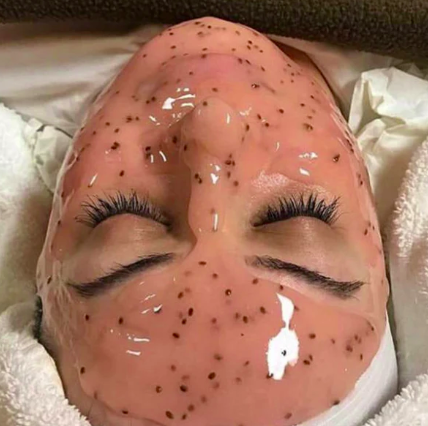
Facial masks have come a long way from the basic clay and paper sheet versions most of us grew up with. HydroJelly masks are part of that evolution, a jelly-like treatment that’s become a popular add-on at spas for its hydration and calming effects. Here’s what it actually is and why it’s different from a standard mask.
What Is a HydroJelly Mask?
A HydroJelly mask starts as a powder that’s mixed with water into a gel-like paste, then applied to the skin while still soft. Over roughly 15 to 20 minutes, it gradually sets into a jelly-like, rubbery texture, forming a seal over the skin. That seal is the key part of what makes this mask different: as it solidifies, it creates a gentle vacuum effect against the skin, which is designed to help push the mask’s beneficial ingredients into the surface layers rather than letting them evaporate the way a traditional mask often does.
Once fully set, the mask peels off in one piece, typically leaving little to no sticky residue behind.
What Makes It Different From a Regular Face Mask
Traditional clay or cream masks tend to dry out over time, which can actually pull moisture away from the skin rather than adding it. HydroJelly masks work differently. Because the gel stays moist throughout the treatment rather than drying out, it’s designed to continuously deliver hydration and other ingredients to the skin for the full duration of the mask, rather than losing effectiveness as it dries.
What HydroJelly Masks May Help With
Depending on the specific formula used, HydroJelly masks are generally associated with:
Hydration. Many formulas are designed to deliver a significant moisture boost, which can leave skin looking plumper and feeling smoother.
Calming irritation. Some formulas are chosen specifically to soothe skin that’s feeling reactive or irritated, including after treatments like chemical peels or retinoid use.
Locking in other treatments. Because the mask forms a seal over the skin, it’s often used at the end of a facial to help lock in serums or other active ingredients applied earlier in the treatment.
As with most facial add-ons, results are generally temporary and cumulative, meaning a single mask offers an immediate boost, while regular use as part of an ongoing routine tends to offer more lasting benefits for skin health.
What a Treatment Feels Like
Most people describe the application as a cool, soothing sensation, since the mask is applied while still soft and gradually firms up over the following minutes. There’s no discomfort involved, and many people find the setting process itself quite relaxing, especially when it’s paired with a facial or scalp massage during that waiting period.
How It’s Typically Used
HydroJelly masks are usually offered as an add-on to a broader facial treatment rather than a standalone service. They’re often layered in after cleansing, exfoliation, and any active serums have been applied, using the mask’s sealing effect to help lock those ingredients in. Some spas also offer specific formulas designed to pair with certain treatments, such as a calming version used after a chemical peel.
Is There Any Downtime?
No. HydroJelly masks are a purely non-invasive, relaxing addition to a facial, with no recovery time involved. Most people can return to their normal routine, including applying makeup, right after their appointment.
Who Might Want to Ask Questions First
HydroJelly masks are generally considered gentle and suitable for most skin types, which is part of their appeal. That said, it’s still worth mentioning any allergies or sensitivities to your esthetician beforehand, since specific mask formulas can vary in ingredients. If you have very reactive or broken skin, your esthetician may recommend a different, more targeted option instead.
Choosing a Provider
Since results depend on the quality of the mask formula and how thoughtfully it’s incorporated into your facial, it’s worth checking a few things before booking:
- Whether the spa uses reputable, professional-grade mask formulas
- Whether they select the specific formula based on your skin’s needs
- Whether the mask is paired thoughtfully with the rest of your facial rather than tacked on as an afterthought
HydroJelly Masks in Vienna, VA
If you’re in the Vienna, Virginia area and want to add an extra layer of hydration to your next facial, it’s worth choosing a spa that customizes the experience to your skin rather than offering a single generic option. Moon Lake Spa offers HydroJelly mask add-ons as part of its facial menu, and it’s often paired with their anti-aging facial for extra hydration and calming benefits.
Frequently Asked Questions
How long does a HydroJelly mask stay on? Typically around 15 to 20 minutes, giving the mask time to gradually set into its jelly-like texture before being peeled off.
Is a HydroJelly mask better than a regular sheet mask? It works differently rather than being strictly “better.” Because it stays moist and forms a seal over the skin, it’s designed to deliver hydration and ingredients more consistently throughout the treatment, compared to masks that dry out over time.
Does it hurt when it’s removed? No. Once fully set, the mask typically peels off in one piece without pulling on the skin or leaving much residue.
Can I get a HydroJelly mask on its own, or only as an add-on? This varies by spa, but it’s most commonly offered as an add-on to a broader facial treatment rather than a completely standalone service.
Is it suitable for sensitive skin? Many people with sensitive skin find HydroJelly masks comfortable, since formulas are often chosen specifically to calm and soothe. It’s still worth mentioning any known sensitivities to your esthetician beforehand.
Is there any downtime afterward? None. It’s a purely relaxing, non-invasive treatment, and most people can return to their normal routine, including makeup, right after.