
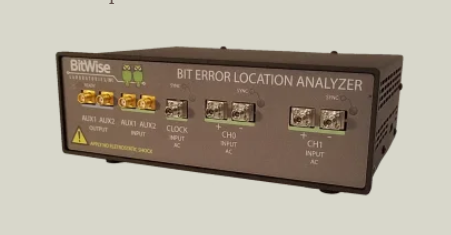
As digital systems become faster and more complex, reliable data transmission has become a major engineering priority. PCI Express (PCIe) technology is widely used in servers, storage systems, computers, networking equipment, GPUs, and other high-performance platforms. With every new PCIe generation bringing higher data rates, even small signal disturbances can affect communication accuracy. This makes careful electrical validation an important part of product development.
PCIe signal integrity and BER testing provide engineers with valuable information about whether a high-speed link can transmit and receive data reliably under demanding operating conditions. By examining signal quality and measuring transmission errors, engineers can identify weaknesses before they become costly field failures.
What Makes PCIe Signal Quality So Important?
PCIe links operate at extremely high speeds, leaving less room for electrical imperfections. Signals travel through traces, connectors, vias, cables, packages, and other components before reaching their destination. Each part of the transmission path can introduce losses, reflections, crosstalk, jitter, or distortion.
When signal quality deteriorates, the receiver may struggle to distinguish between logical ones and zeros. A system might appear to work under normal conditions but fail when operating at higher temperatures, longer channel distances, or maximum data rates.
Signal integrity analysis helps engineers understand how the complete channel behaves and where potential problems originate.
What Is BER Testing?
Bit Error Rate (BER) testing measures how frequently transmitted bits are received incorrectly. A known sequence is transmitted through a communication channel, and the received data is compared with the original sequence.
A lower BER generally indicates better communication reliability.
BER testing can reveal problems that may not be obvious from a simple visual inspection of a waveform. For example, a signal can appear relatively clean on an oscilloscope while still producing errors under specific stress conditions.
Engineers therefore use BER measurements as an important indicator of link performance.
Which Problems Can Affect PCIe Links?
Several electrical factors can reduce PCIe performance. Understanding them is essential when designing or troubleshooting a high-speed system.
Common issues include:
- Insertion loss
- Return loss
- Reflections
- Crosstalk
- Random and deterministic jitter
- Impedance discontinuities
- Power supply noise
- Connector losses
- Via transitions
- PCB material characteristics
- Electromagnetic interference
These problems can interact with one another, making high-speed debugging more complicated than simply examining one component.
How Do Signal Integrity and BER Testing Work Together?
Signal integrity measurements help engineers understand the physical behavior of a signal, while BER testing shows whether those physical imperfections are actually affecting data transmission.
For example, an engineer may discover excessive channel loss during signal integrity analysis. BER testing can then determine whether that loss causes an unacceptable increase in transmission errors.
This combination provides a more complete view of system performance.
PCIe signal integrity and BER testing can therefore be used together to evaluate both the electrical characteristics of a channel and its practical communication reliability.
Why Is PCIe Testing Becoming More Challenging?
Each new generation of PCIe increases the demands placed on the physical layer. As data rates rise, the available timing and voltage margins become increasingly limited.
At higher speeds, PCB layout decisions that were previously considered minor can become significant sources of failure. Connector selection, trace geometry, stack-up design, via structures, and material selection can all influence signal quality.
Engineers need accurate measurement tools and repeatable testing methods to identify these issues during development rather than after production.
What Does a Typical PCIe Test Process Include?
A comprehensive validation process can include several stages.
1. Channel Characterization
The transmission path is evaluated to understand losses, reflections, impedance behavior, and other characteristics.
2. Waveform Analysis
Engineers examine signal shapes, transitions, amplitude, timing, and other parameters to identify abnormalities.
3. Jitter Evaluation
Timing variations are measured to determine whether the receiver has sufficient timing margin.
4. BER Measurement
A controlled test pattern is transmitted through the channel, and errors are counted over a defined testing period.
5. Stress Testing
The system may be tested under challenging conditions to determine whether performance remains stable.
6. Troubleshooting
Measurement results are analyzed to identify the source of problems and determine possible design improvements.
What Are the Benefits of Early PCIe Validation?
Testing early in the product development process can save both time and resources. Detecting a signal integrity problem after a PCB has entered production may require expensive redesigns, additional manufacturing cycles, and extensive debugging.
Early validation allows engineers to identify potential weaknesses while design changes are still relatively easy to implement.
Benefits include:
- Improved link reliability
- Faster debugging
- Reduced redesign costs
- Better hardware validation
- Greater confidence in production
- More consistent performance
- Improved time to market
How Can BitWise Laboratories Help Engineers?
BitWise Laboratories focuses on high-speed digital testing and measurement solutions for engineers working with demanding electronic systems. Its expertise can support the analysis of communication channels, signal quality, BER performance, and other characteristics important to high-speed digital design.
Accurate instrumentation is particularly important when working with low error rates and high-frequency signals. Reliable measurements help engineering teams make decisions based on measurable performance rather than assumptions.
Whether the goal is troubleshooting an existing design or validating a new high-speed platform, appropriate testing can provide valuable insight into the behavior of the complete communication path.
What Should Engineers Consider Before Testing?
A successful test begins with clearly defined objectives. Engineers should determine which PCIe generation, data rate, channel configuration, operating conditions, and performance parameters need to be evaluated.
Test equipment should also be appropriately configured and calibrated. Fixtures, cables, probes, connectors, and other measurement components can influence results, so the complete measurement setup needs careful consideration.
Repeatable testing is equally important. Consistent procedures make it easier to compare different designs, identify improvements, and reproduce unexpected failures.
Conclusion
High-speed PCIe development requires more than simply confirming that a link can establish communication. Engineers need to understand how the physical channel behaves and whether it can maintain reliable data transmission under demanding conditions.
By combining detailed signal integrity measurements with BER analysis, development teams can uncover hidden weaknesses, improve designs, and increase confidence before products reach customers. BitWise Laboratories provides specialized testing expertise and measurement solutions that can help engineers evaluate high-speed digital systems with greater accuracy.
As data rates continue to increase, systematic PCIe signal integrity and BER testing will remain an important part of developing dependable, high-performance electronic products.