
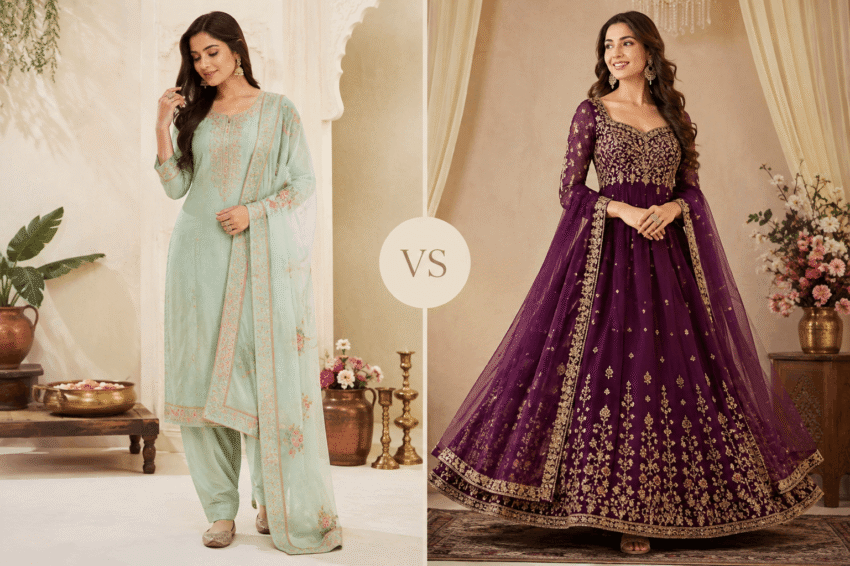
You’re standing in front of your wardrobe, the event’s in three hours, and you genuinely can’t decide between the two. I get asked this more than you’d think, and honestly, there’s no wrong answer here, just the right one for the occasion you’re dressing for. Both are absolute staples ethnically, but they carry completely different energy, and once you understand what each one is actually built for, the decision stops feeling so overwhelming. Let’s break down what sets these two apart and when each earns its spot in your closet.
What’s the Real Difference Between the Two?
At their core, both are ethnic staples, but they’re built completely differently.
The Classic Silhouette
A salwar kameez keeps things straightforward: a fitted or loose top paired with trousers and a dupatta. The cut stays close to the body through the top, then flows out through the bottom in whatever style you’ve chosen.
- Comes in straight, palazzo, or churidar bottoms
- Works with both short and long kurta lengths
- Easy to layer with a jacket or shrug for extra flair

The Dramatic Flare
An Anarkali takes a completely different approach. Instead of separate top and bottom pieces, you get one flowing, frock-style garment that flares dramatically from the waist or bust, usually worn over fitted leggings or a churidar.
- Ranges from knee-length to full floor-length
- Often layered with a jacket for a fusion look
- Naturally more voluminous, which means more movement when you walk
The easiest way to remember it — one is tailored and structured, the other is fluid and theatrical.

Which One Actually Suits the Occasion Better?
This is where most people get stuck, so here’s a quick side-by-side to make it easier:
|
Occasion |
Better Fit |
Why |
|
Office or daytime event |
The tailored two-piece |
Comfortable, easy to move in |
|
Wedding or festive night |
Anarkali |
Volume and drama photograph beautifully |
|
Casual outing |
Salwar suits |
Practical and easy to style quickly |
|
Reception or sangeet |
Adds a royal, statement-making presence |
|
|
Everyday wear |
Salwar kameez |
Breathable and low-maintenance |
If comfort and mobility matter more than anything, lean toward the tailored option. If you want to walk into a room and have heads turn, the flared silhouette wins every time.
Does Fabric Choice Actually Change the Look?
More than people realise, actually. The same silhouette can feel completely different depending on what it’s made from.
- Silk and velvet add structure and a richer, festive feel, perfect for winter weddings or evening events
- Georgette and net bring movement and lightness, ideal for anything with a lot of dancing involved
- Cotton and cotton blends keep things breathable, best suited for daytime or summer occasions
- Satin adds a subtle sheen without feeling too heavy, a nice middle ground for semi-formal events
Picking the right fabric for the season and event matters as much as picking the right silhouette.
How Do You Style Each One Properly?
Getting the fit right is only half the job; styling ties it together.
Styling a Salwar Suit
- Keep jewellery minimal if the kurta already has heavy embroidery
- Play with dupatta draping, over one shoulder for a modern look or across both for something more traditional
- Pair with juttis or block heels depending on how formal the event is
Styling an Anarkali Suit
- Let the outfit do the talking; statement earrings work better than a heavy necklace here
- A potli bag or clutch keeps the overall look clean instead of cluttered
- Structured heels elongate the silhouette, especially with floor-length styles
Real Situations Where People Get This Wrong
I’ve seen this play out more times than I can count. A friend once wore a heavily embellished Anarkali to a casual daytime lunch and spent half the afternoon adjusting the flare while trying to eat. Another showed up to a formal reception in a plain tailored suit and felt underdressed next to everyone else in flowing silhouettes. The outfit itself wasn’t wrong in either case; it just wasn’t a match for the setting. That’s really the whole game here: reading the room before you get dressed.
If you often shop for Indian suits online, this is honestly the most important lesson to learn early on. Half the “wrong choice” moments people talk about aren’t really about the outfit at all; they’re about the occasion it was picked for.
Conclusion
At the end of the day, neither style is objectively better; they’re just built for different moments. The classic two-piece offers comfort and practicality for everyday wear, while an Anarkali brings the drama for nights that call for it. Once you understand the shape, movement, and vibe each one carries, choosing among them stops feeling like guesswork and starts feeling instinctive.
Frequently Asked Questions
Can I wear an Anarkali to a casual event? You can, but a shorter, lighter version works better than a heavily embellished floor-length one for anything low-key.
Which is more comfortable for long hours, the tailored two-piece or an Anarkali? Generally, the two-piece option, since it’s less restrictive around the legs and easier to move in throughout the day.
Do Anarkali suits suit every body type? Yes, the flared cut is actually quite forgiving and tends to flatter most body shapes by skimming rather than clinging.
What fabric works best for festive wear? Velvet and silk hold structure beautifully for Anarkalis, while georgette and cotton blends are great for breathable, everyday salwar suits.
Is it okay to mix modern elements with either style? Definitely, a jacket, statement belt, or contemporary blouse cut can modernise either outfit without losing the traditional feel.