
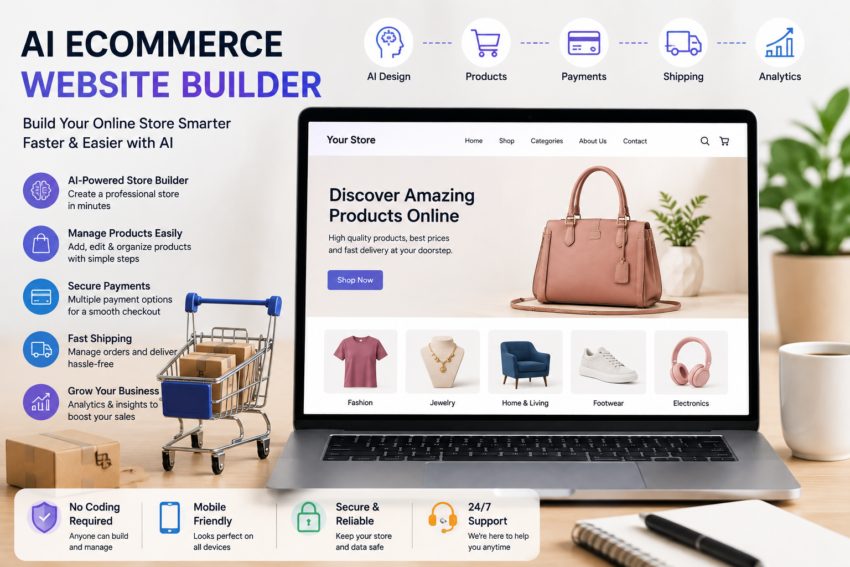
AI Store Builder for Shopify: A Practical Guide for Building an Online Store
Creating a Shopify store can be straightforward, but building a complete ecommerce website still involves many decisions. You need to choose a theme, organize products, create pages, write descriptions, configure navigation, optimize images, and make sure the store works properly on mobile devices.
An AI store builder for Shopify can simplify some of these tasks by using artificial intelligence to assist with website creation and content. For beginners and small businesses, this can reduce repetitive work and provide a useful starting point for building an online store.
However, AI should not replace business decisions. The best results come from combining automated assistance with accurate product information, thoughtful design, and a clear understanding of your customers.
What Is an AI Store Builder for Shopify?
An AI store builder for Shopify is a tool or feature that uses artificial intelligence to assist with creating and customizing a Shopify-based ecommerce store. Depending on the tool, it may help with layouts, product descriptions, website copy, images, navigation, collections, and other setup tasks.
The exact features vary, so businesses should evaluate what each solution actually provides before choosing one.
Why Use AI When Building a Shopify Store?
Setting up an online store involves many small tasks.
A business owner may know exactly what products they want to sell but have limited experience with website design or ecommerce content.
AI can help bridge that gap.
For example, it can generate an initial website structure based on a business category. It may also suggest homepage sections, create first drafts of product descriptions, or help organize products into collections.
This does not mean the store is automatically ready to launch.
Every important element should be reviewed before customers see it.
1. Start With Your Customer, Not the AI
Before using an AI-powered builder, define your target customer.
Ask yourself:
- Who will buy these products?
- What problem does the product solve?
- What information do customers need?
- What makes the product different?
- What concerns could prevent someone from purchasing?
These answers should influence your website structure.
For example, a jewelry store may need detailed information about materials, sizing, and care. A clothing store may need prominent size guides and product variations.
AI can assist with the structure, but your customers should determine what that structure needs to contain.
2. Use AI for the Repetitive Work
One of the biggest advantages of AI is its ability to speed up repetitive tasks.
Depending on the tool, AI can help create:
- Product-description drafts
- Homepage copy
- FAQ sections
- Collection descriptions
- Category ideas
- Navigation suggestions
- Basic SEO content
- Calls to action
These outputs should be treated as drafts rather than final content.
Review product specifications, prices, measurements, materials, shipping information, and other factual details manually.
An incorrect AI-generated product claim can create customer confusion and damage trust.
3. Choose a Design That Supports Shopping
A professional ecommerce website does not need an overly complicated design.
Customers should be able to understand what you sell within seconds.
Your homepage should provide a clear path toward important categories and products.
Product pages should make it easy to see:
Product → Price → Key Details → Variations → Add to Cart → Checkout
Avoid excessive pop-ups, confusing navigation, and unnecessary animation.
The purpose of ecommerce design is to help customers make decisions, not simply to demonstrate technical features.
4. Make Mobile Performance a Priority
A large number of shoppers browse ecommerce websites using smartphones.
Your store should therefore be tested on different screen sizes.
Pay particular attention to:
- Menu navigation
- Product images
- Product descriptions
- Search
- Add-to-cart buttons
- Cart pages
- Checkout
- Contact forms
A website that looks excellent on a desktop but feels difficult to use on a phone can lose potential customers.
5. Consider SEO From the Beginning
AI can help generate SEO ideas, but good ecommerce SEO still depends on useful content and a logical website structure.
Use descriptive product titles and original descriptions.
Optimize relevant page titles, meta descriptions, URLs, headings, and image alt text.
Create category pages that actually help customers understand the products within them.
You can also publish helpful content that answers questions related to your products.
Avoid creating dozens of nearly identical pages simply to target different keyword variations.
Quality and relevance matter more than repetition.
6. How to Choose the Best Website Builder for Ecommerce
Shopify is one option, but it is not automatically the right solution for every business.
When comparing the best website builder for ecommerce, consider the complete cost and workflow.
Look at:
- Ease of use
- Store customization
- Product management
- Payment options
- Shipping capabilities
- Inventory management
- SEO controls
- Mobile performance
- Customer support
- Available integrations
- Scalability
Also consider how much technical control you actually need.
A beginner may prefer a simple interface, while a larger business may require advanced integrations and customization.
7. What Makes the Best Ecommerce Platform in India?
If your target market is India, local business requirements should influence your platform choice.
When researching the best ecommerce platform in India, consider payment methods, shipping options, pricing, customer support, mobile usability, and inventory management.
Think about your expected customers and delivery areas as well.
A business selling within one city may have different requirements from a company shipping products throughout India.
If you eventually plan to sell internationally, check whether the platform can support your future payment, currency, tax, and shipping needs.
8. Don’t Let AI Make Your Store Look Generic
One common problem with AI-generated websites is that different businesses can end up with similar-looking content.
Your store should have its own identity.
Use your real product photographs, explain your actual processes, answer genuine customer questions, and include information that competitors may not provide.
For example, instead of saying a product is simply “high quality,” explain what it is made from, how it is produced, how it should be used, or what customers should know before ordering.
Specific information is more useful than generic promotional language.
Conclusion
An AI store builder for Shopify can make ecommerce website creation faster by assisting with repetitive design and content tasks.
But technology is only one part of building a successful online store.
Start with your customers and products. Build a simple website structure, provide accurate product information, optimize the mobile experience, and make checkout easy to understand.
When comparing the best website builder for ecommerce or researching the best ecommerce platform in India, look beyond AI features. Consider the complete experience, including pricing, payments, shipping, SEO, product management, and long-term scalability.
For businesses exploring AI-assisted ecommerce website creation, Shopiators is one option worth researching.
Frequently Asked Questions
Is an AI store builder for Shopify suitable for beginners?
Yes. AI assistance can reduce repetitive website-building tasks and provide starting points for layouts and content. Beginners should still review and customize the final store.
Can AI build a complete Shopify store automatically?
AI can assist with many aspects of store creation, but important tasks such as product verification, payment configuration, shipping, policies, and final quality checks still require human involvement.
Is Shopify the best website builder for ecommerce?
There is no universal best platform. The right choice depends on your budget, products, technical requirements, payment needs, shipping model, SEO strategy, and growth plans.
What should Indian businesses consider when choosing an ecommerce platform?
Consider payment support, shipping, pricing, inventory, mobile performance, SEO, customer service, and scalability for the Indian market.
Can AI help with ecommerce SEO?
Yes. AI can help brainstorm keywords, create content drafts, suggest FAQs, and improve content structure. However, SEO content should be reviewed for accuracy, originality, and usefulness.