
Introduction
When a couple struggles to conceive, IVF is often one of the first treatments they hear about. This can create the impression that IVF is the only solution for every fertility problem. In reality, the right approach depends on what is affecting conception.
Infertility in men can result from problems with sperm production, sperm movement, hormone balance, ejaculation, or sperm transport. Some causes may be treatable, while others may require assisted reproductive techniques. A proper evaluation helps determine which option is most appropriate.
Is IVF Always Necessary?
No. IVF is not automatically the first or only treatment for male fertility problems. Some men may benefit from lifestyle changes, medication, treatment of an underlying condition, or surgery.
The best option depends on factors such as semen analysis results, the cause and severity of the problem, the female partner’s reproductive health, and the couple’s age and fertility history.
In some situations, natural conception may still be possible. In others, treatments such as IUI or IVF may be considered.
Start With a Proper Fertility Evaluation
Before choosing treatment, doctors usually try to identify the cause. An evaluation may include a medical history, physical examination, and semen analysis.
Depending on the findings, additional tests may include hormone testing, ultrasound, or genetic testing. Since fertility involves both partners, evaluating the couple can provide a clearer picture.
An abnormal semen result does not automatically mean IVF is required. Sometimes the result is repeated because sperm parameters can vary.
Can Lifestyle Changes Help?
Lifestyle changes may support general and reproductive health, especially when factors such as smoking, excessive alcohol use, obesity, poor sleep, or certain drug use are involved.
A balanced diet, regular physical activity, healthy weight management, and avoiding smoking can support overall well-being. However, lifestyle changes cannot correct every cause of reduced fertility.
It is important to avoid supplements marketed as guaranteed fertility cures. The underlying cause should be evaluated before relying on any treatment.
Can Medication or Hormone Treatment Help?
Some fertility problems are related to hormonal or medical conditions that may be treatable. In selected cases, medication can help address an underlying problem.
However, treatment must be individualized. Taking testosterone without appropriate medical guidance may reduce sperm production rather than improve it.
Doctors may recommend blood tests before considering hormone-related treatment.
When Is Surgery an Option?
Surgery may be considered for specific physical causes. For example, some men with a clinically significant varicocele or an obstruction affecting sperm transport may be evaluated for a surgical procedure.
Surgery is not suitable for every fertility problem. The potential benefits depend on the diagnosis and individual circumstances.
What About Erectile Dysfunction?
Erectile dysfunction can make regular intercourse difficult and may therefore affect the chances of natural conception. However, erection difficulties and sperm production are separate issues.
Treatment may focus on identifying possible physical, psychological, hormonal, or lifestyle factors affecting sexual function. Improving the ability to have intercourse may help some couples, but sperm testing may still be needed when pregnancy does not occur.
When Might IUI Be Considered?
Intrauterine insemination, or IUI, may be considered in selected situations. During this procedure, prepared sperm is placed into the uterus around the time of ovulation.
IUI may be an option when enough healthy, moving sperm are available and other fertility factors are suitable. Its appropriateness depends on the couple’s individual assessment.
It is not effective for every type of severe sperm problem.
When Is IVF Recommended?
IVF may be considered when other treatments are unlikely to be successful or when there are significant fertility factors affecting either partner.
For some severe male-factor problems, intracytoplasmic sperm injection (ICSI) may be used alongside IVF. This technique involves injecting a single sperm directly into an egg in a laboratory.
In certain cases where sperm are absent from the ejaculate, specialists may consider procedures to retrieve sperm directly from the reproductive tract or testicles.
These options are recommended based on the specific diagnosis and should be discussed with a fertility specialist.
How Do Couples Choose the Right Option?
There is no single treatment pathway for everyone. Couples may need to consider the cause of the fertility problem, test results, age, time trying to conceive, previous pregnancies, and personal preferences.
Asking clear questions about the purpose, possible benefits, limitations, risks, and expected steps of each option can make decision-making easier.
A treatment plan should be based on medical findings rather than assuming that IVF is always necessary.
Conclusion
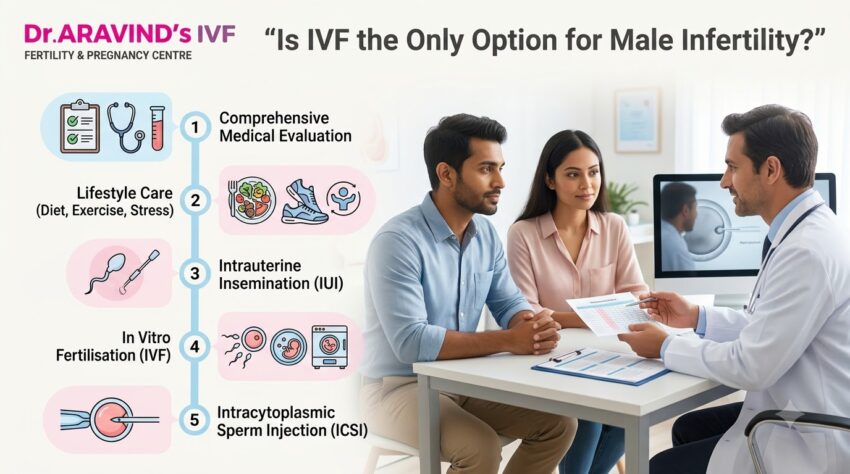
IVF can be an important treatment option, but it is not the only answer for Infertility in men. Depending on the cause, options may include lifestyle changes, medical treatment, surgery, IUI, IVF, or IVF with ICSI.
A proper fertility assessment is the best starting point. Understanding the underlying cause can help couples explore the options that are appropriate for their individual situation.