
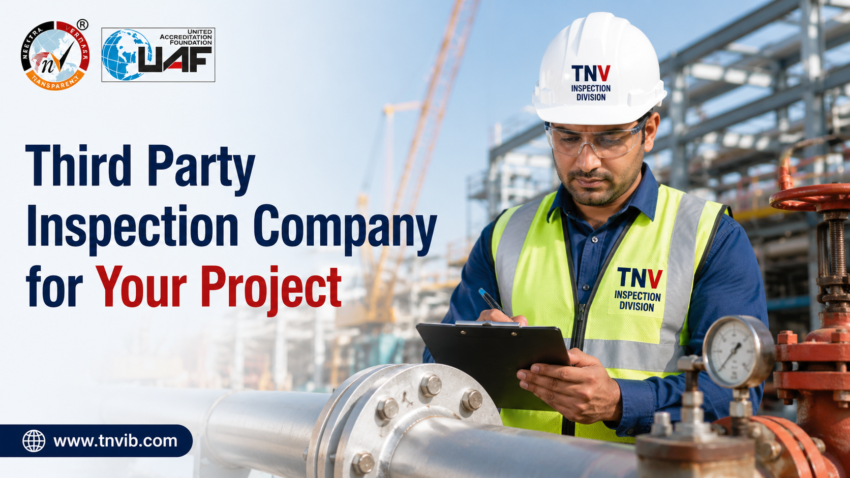
Choosing the right inspection partner can directly affect how effectively a business identifies quality concerns before products, equipment, or materials are accepted, shipped, or installed. For manufacturers, buyers, exporters, EPC contractors, and project owners, selecting a third party inspection company should therefore involve more than comparing prices or choosing the first provider available.
Different inspection companies may have different technical capabilities, industry experience, accreditation scopes, geographic coverage, and reporting practices. A company suitable for inspecting consumer products may not necessarily have the technical competence required for industrial machinery, fabricated equipment, construction materials, or engineering projects.
The right inspection company should be independent, technically competent, experienced in the relevant sector, and capable of performing the required inspection according to clearly defined criteria.
This guide explains the key factors businesses should consider when selecting a third-party inspection provider for a project.
What Does a Third Party Inspection Company Do?
A third party inspection company independently examines products, materials, equipment, manufacturing activities, or other defined requirements on behalf of a client.
The organization is separate from the manufacturer or supplier and the buyer.
Depending on the project, inspection may involve checking:
- Raw materials
- Components
- Finished products
- Industrial equipment
- Fabricated items
- Manufacturing activities
- Workmanship
- Dimensions
- Quantity
- Packaging and identification
- Relevant technical documentation
The inspection is performed against requirements established for the assignment.
These requirements may come from purchase orders, specifications, approved drawings, inspection and test plans, contracts, applicable standards, or buyer-defined acceptance criteria.
Why Choosing the Right Inspection Company Matters
Third-party inspection is valuable only when the inspection organization has the appropriate capability for the assignment.
An inspector who does not understand the product, manufacturing process, technical specifications, or inspection requirements may fail to provide useful findings.
Choosing the right provider can help a business:
- Improve visibility into supplier quality
- Identify specified quality concerns earlier
- Verify products before shipment
- Monitor manufacturing activities
- Obtain independent inspection findings
- Support procurement decisions
- Reduce the risk of unexpected problems after delivery
For technically complex or high-value projects, the selection of an inspection provider becomes even more important.
1. Start by Defining Your Inspection Requirements
Before searching for a third party inspection agency, businesses should first understand exactly what needs to be inspected.
A vague request such as “inspect our equipment” may not provide enough information for an inspection company to determine the appropriate scope.
Define the Product or Equipment
Clearly identify what requires inspection.
For example:
- Raw materials
- Steel structures
- Fabricated components
- Electrical equipment
- Machinery
- Automotive components
- Construction materials
- Finished consumer products
Different products require different inspection knowledge.
Define the Inspection Stage
Businesses should also determine when inspection is required.
Inspection may take place:
- Before production
- When raw materials arrive
- During manufacturing
- At specified inspection points
- After production
- During loading
- Before shipment
The appropriate stage depends on the product, project risk, and contractual requirements.
2. Check Technical Competence
Technical competence should be one of the most important considerations when selecting a third-party inspection provider.
The inspector should understand the product and inspection requirements involved.
Questions to Ask About Technical Capability
Before appointing a provider, consider asking:
- Has the company inspected similar products?
- Does it have inspectors with relevant technical experience?
- Does it understand the applicable manufacturing process?
- Can it interpret the required specifications and drawings?
- Does it have experience in the relevant industry?
For example, inspecting textile products requires different knowledge from inspecting industrial machinery or fabricated steel equipment.
Relevant technical competence helps make inspection findings more meaningful.
3. Evaluate Independence and Impartiality
One of the fundamental reasons for using independent third party inspection is to obtain an assessment that is separate from the parties directly involved in manufacturing and purchasing.
The inspection organization should be able to report findings objectively.
This means inspection decisions should not be influenced by:
- Production pressure
- Supplier relationships
- Sales targets
- Commercial interests
- Buyer pressure
Independence helps businesses obtain inspection findings based on observed evidence and defined requirements.
4. Check Accreditation and Its Applicable Scope
Accreditation can be an important indicator when businesses compare inspection providers.
An accredited inspection body has undergone independent assessment against defined requirements for its inspection activities within a specified accreditation scope.
However, businesses should not simply ask, “Are you accredited?”
They should ask a more important question:
Is the required inspection activity covered by the relevant accreditation scope?
Why Accreditation Scope Matters
An inspection organization may provide several services, but accreditation does not necessarily apply automatically to every service it offers.
Businesses should therefore review:
- Accreditation status
- Accreditation body
- Applicable standard
- Accredited inspection scope
- Relevance to the required service
This provides a more accurate basis for evaluating an inspection organization.
5. Consider ISO/IEC 17020 When Independent Inspection Is Required
ISO/IEC 17020 establishes requirements for bodies performing inspection activities.
Where genuine independent third-party inspection is required, businesses may encounter ISO 17020 Type A inspection body terminology.
A Type A inspection body operates as a third-party inspection body and is subject to independence requirements under the ISO/IEC 17020 framework.
For businesses comparing inspection providers, this can be particularly relevant when impartiality and independence are important elements of the project.
6. Evaluate Relevant Industry Experience
Experience should be evaluated based on relevance rather than simply the number of years an inspection company has operated.
A provider may have significant experience in one industry but limited knowledge of another.
Industries May Require Different Expertise
Third-party inspection can be used across sectors such as:
- Manufacturing
- Engineering
- Oil and gas
- Construction
- Infrastructure
- Steel and metal
- Railway
- Electrical equipment
- Automotive
- Textiles
- Industrial machinery
- Import and export
Businesses should determine whether the inspection company has experience relevant to their specific sector, product, and technical requirements.
7. Review the Range of Third Party Inspection Services
Projects may require more than one inspection activity.
A business might initially need a supplier evaluated, followed by inspection during manufacturing and then a final pre-shipment inspection.
Choosing a provider with relevant third party inspection services can simplify coordination when multiple inspection stages are required.
Product Inspection
Product inspection can verify specified characteristics such as:
- Workmanship
- Dimensions
- Quantity
- Condition
- Identification
- Packaging
Vendor Inspection
Vendor inspection can provide independent monitoring at a supplier’s facility during relevant manufacturing or project stages.
Material Inspection
Material inspection may involve verifying identification, dimensions, physical condition, traceability, and relevant documentation.
Factory Inspection
Factory inspection can assess defined aspects of a supplier’s manufacturing capability, equipment, processes, resources, and quality controls.
Pre-Shipment Inspection
Pre-shipment inspection provides an opportunity to inspect finished goods before they leave the supplier’s facility.
Industrial Inspection
Industrial inspection can cover machinery, equipment, fabricated products, materials, and defined technical activities associated with engineering projects.
8. Examine the Inspection Company’s Reporting Process
An inspection visit has limited value if the findings are unclear or poorly documented.
Businesses should therefore evaluate the reporting practices of the inspection company before assigning the project.
What Should an Inspection Report Include?
Depending on the assignment, a report may contain:
- Inspection date and location
- Identification of inspected products
- Inspection scope
- Reference specifications
- Observations and findings
- Measurements where applicable
- Photographs
- Documents reviewed
- Identified deviations or non-conformities
The report should make it easy for quality, procurement, engineering, or project teams to understand what was actually inspected.
9. Consider Geographic Coverage and Inspector Availability
Inspection requirements are often time-sensitive.
A supplier may inform the buyer that products will be ready for inspection on a particular date. Equipment may reach an important manufacturing stage, or a shipment may need to leave according to a fixed schedule.
The inspection provider should therefore be able to coordinate effectively with the supplier and client.
Businesses should consider:
- Inspector availability
- Geographic presence
- Ability to reach supplier locations
- Communication process
- Coordination capability
- Reporting arrangements
For companies managing multiple vendors, wider geographic coverage can be especially useful.
10. Do Not Select a Third Party Inspection Company on Price Alone
Cost is important, but it should not be the only selection criterion.
A low-cost inspection provides little value if the provider lacks the competence required to understand the product or project.
Businesses should compare the overall value of the service.
Consider:
- Technical expertise
- Inspection scope
- Accreditation where relevant
- Industry experience
- Independence
- Reporting quality
- Geographic availability
- Responsiveness
The cheapest provider may not always represent the lowest overall quality risk.
11. Check How the Company Handles Inspection Criteria
Before an inspection begins, the provider should understand what criteria will be used.
The client may need to provide:
- Purchase order
- Technical specifications
- Approved drawings
- Inspection and test plan
- Quantity information
- Acceptance criteria
- Packaging requirements
- Relevant standards
- Specific inspection instructions
The clearer the inspection criteria, the easier it becomes to determine whether observed conditions correspond with the defined requirements.
12. Ask for a Clear Inspection Scope Before Confirming
Businesses should understand exactly what is included in the proposed inspection.
For example, does the scope include only visual inspection, or are dimensions also being checked? Will documents be reviewed? Is packaging included? Are specific tests witnessed?
These details should be established before the inspector arrives at the supplier’s facility.
A clear scope reduces misunderstanding between:
- Buyer
- Supplier
- Inspection company
- Inspector
- Project team
It also makes the resulting report more useful.
Warning Signs When Choosing an Inspection Provider
Businesses should be cautious when an inspection provider:
- Cannot clearly explain its inspection scope
- Makes unrealistic quality guarantees
- Cannot demonstrate relevant technical capability
- Provides unclear information about accreditation
- Cannot explain its reporting process
- Claims accreditation without identifying the applicable scope
- Offers extremely low pricing without explaining what is included
Third-party inspection should provide objective information, not unrealistic promises that every quality risk will be eliminated.
Questions to Ask a Third Party Inspection Company
Before confirming an inspection provider, ask:
- Have you handled similar products or equipment?
- What inspection activities will be performed?
- What technical documents do you require?
- What accreditation applies to this inspection?
- Is this activity within the applicable accreditation scope?
- What experience does the assigned inspector have?
- What will the final report contain?
- How will deviations be documented?
- What geographic locations can you cover?
- What is included and excluded from the quotation?
These questions can reveal much more than simply asking for the inspection price.
How TNV Inspection Division Supports Inspection Requirements
TNV Inspection Division provides independent third-party inspection services for manufacturers, exporters, importers, suppliers, buyers, procurement organizations, EPC contractors, and project owners.
Depending on the applicable scope and project requirements, inspection activities can support products, materials, equipment, vendors, manufacturing processes, industrial projects, and pre-shipment requirements.
TNV Inspection Division operates as a UAF accredited inspection body and an ISO 17020 Type A inspection body, providing an independent framework for applicable third-party inspection activities.
The purpose of inspection is to provide objective, documented findings based on the agreed scope rather than replace the manufacturer’s quality management system or make commercial decisions for the client.
Making the Final Selection
There is no single inspection provider that will automatically be the right choice for every project.
The appropriate third party inspection company should match the technical and commercial needs of the particular assignment.
Before making a final decision, compare providers based on:
- Relevant technical competence
- Industry experience
- Independence and impartiality
- Accreditation and applicable scope
- Required inspection capabilities
- Reporting quality
- Geographic availability
- Responsiveness
- Clearly defined pricing and scope
This approach is more reliable than selecting a company based solely on a search ranking, marketing claim, or low quotation.
Conclusion
Selecting the right third party inspection company starts with understanding your own project requirements.
Businesses should first define what needs to be inspected, when the inspection should take place, what specifications apply, and what evidence is required. They can then evaluate inspection providers based on technical competence, independence, industry experience, accreditation, inspection capability, reporting practices, and geographic availability.
A well-selected inspection provider can give manufacturers, buyers, exporters, EPC contractors, and project owners greater visibility into products, equipment, materials, suppliers, and manufacturing activities before critical decisions are made.
For organizations requiring independent inspection support, TNV Inspection Division provides structured third-party inspection services across applicable scopes, helping businesses obtain documented information for quality, procurement, shipment, and acceptance decisions.
Frequently Asked Questions
What should I look for in a third party inspection company?
Look for relevant technical competence, independence, industry experience, appropriate accreditation where applicable, a clearly defined inspection scope, reliable reporting, and suitable geographic coverage.
Why is accreditation important when selecting an inspection company?
Accreditation provides independent recognition of an inspection body’s competence for activities covered by its accredited scope. Businesses should verify that the relevant inspection requirement falls within the applicable scope.
What is an ISO 17020 Type A inspection body?
A Type A inspection body under ISO/IEC 17020 is a third-party inspection body subject to specific independence requirements, making the designation relevant when independent inspection is required.
What information should I provide before requesting an inspection?
Provide details such as the product or equipment, quantity, location, technical specifications, drawings, purchase requirements, inspection criteria, relevant standards, and preferred inspection stage.
When should third party inspection be performed?
It can be performed before production, during manufacturing, at defined inspection points, after production, during loading, or before shipment. The appropriate stage depends on the product and project risks.
Should I choose the cheapest third party inspection agency?
Not necessarily. Price should be considered together with technical competence, inspection scope, independence, accreditation, industry experience, and reporting quality.
Can a third party inspection company guarantee that there will be no defects?
No. Inspection provides findings based on the agreed scope, inspection method, items examined, and conditions at the time of inspection. It should not be treated as a guarantee that every possible defect will be eliminated.
Why choose TNV Inspection Division for third party inspection?
TNV Inspection Division provides independent inspection services for applicable product, material, equipment, vendor, manufacturing, and project requirements. Its UAF accreditation and ISO 17020 Type A inspection body framework are relevant considerations for businesses seeking independent third-party inspection within the applicable scope.