
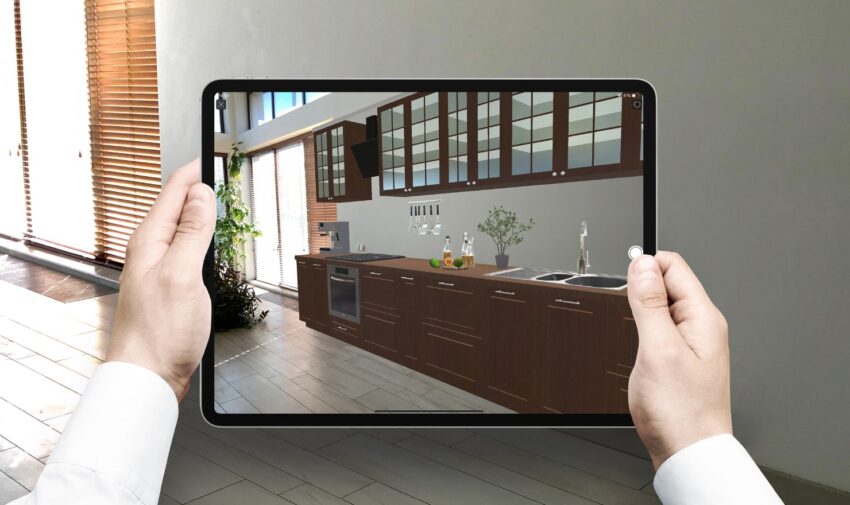
The product page used to have a straightforward job. It displayed a few photographs, listed important specifications, explained the main features, showed the price, and provided a button for purchasing. For many years, this formula was enough because customers had relatively limited expectations from online shopping. They needed accurate information and a convenient way to complete a transaction.
That expectation is changing.
Modern shoppers increasingly want to understand products before they buy them. They want to examine details, compare alternatives, visualize objects in their surroundings, and discover how a product might fit into their everyday lives. As a result, product pages are gradually becoming more than informational screens. They are evolving into interactive environments where customers can explore products instead of simply looking at them.
This development is helping create a new category of ecommerce experiences: experiential product pages. Rather than relying entirely on static photography and written descriptions, these pages can combine interactive 3D content, augmented reality, video, contextual information, and other forms of digital exploration.
The objective is not to make shopping complicated. It is to make product understanding easier.
The Old Product Page Was Built for Information
A traditional ecommerce product page is highly structured. Customers usually encounter a product title, photographs, price, description, specifications, reviews, shipping details, and purchasing options.
This structure is useful because it gives shoppers the information required to make a decision. However, information and understanding are not always the same thing.
A customer may know that a table is 120 centimeters wide, for example, without having a clear sense of how that size will look in a particular room. Someone may read the dimensions of a television without being able to visualize how large it will appear on their wall. A shopper may understand the features of a decorative object but still be uncertain about whether its appearance will suit their home.
Experiential product pages attempt to address this gap.
Instead of asking customers to translate written specifications and flat images into a mental picture, they can provide more direct ways to explore the product.
Discovery Can Begin Before the Product Page
The evolution of product experiences is not limited to what happens after a customer opens an ecommerce page. The journey can begin much earlier.
A customer may first encounter a product on a physical package, printed advertisement, retail display, brochure, event booth, or poster. Traditionally, these touchpoints provide limited opportunities for continued exploration.
Mobile technology can change that relationship.
An augmented reality qr code can give a customer a direct path from a physical surface into a digital product experience. Instead of simply scanning to visit another ordinary webpage, shoppers can enter an environment where they can explore the product from additional perspectives or access interactive information.
This creates a more connected journey between physical marketing and digital commerce.
The scan becomes a transition point rather than the destination. A printed package can lead to a product demonstration. A retail display can introduce an interactive visualization. A promotional card can connect customers with a richer digital version of the product they have just discovered.
This makes the product experience less dependent on where discovery begins.
A Photograph Does Not Have to Be the Final Asset
Product photography remains one of the foundations of ecommerce. High-quality images communicate design, color, texture, and important visual details. But the same images can increasingly support other forms of product content.
This is especially valuable for brands with extensive product catalogues.
Creating a completely new 3D asset from scratch for every item can be difficult when hundreds or thousands of products are involved. A more flexible approach is to consider how existing visual material can contribute to interactive content workflows.
Technology that can convert image to 3D model creates a pathway from familiar product photography toward three-dimensional visualization. This can help businesses explore richer product experiences without treating 3D content as an entirely separate production discipline.
The significance of this approach goes beyond convenience. It can change how brands think about their existing content libraries.
Photographs are no longer simply images that sit on product pages. They can become useful inputs for creating new digital representations and experiences.
This could make experiential commerce more scalable, particularly for businesses that need to continuously update large inventories.
Exploration Becomes Part of the Shopping Process
A conventional product page generally expects the customer to inspect information and make a decision. An experiential page gives them reasons to stay curious.
A shopper could rotate a three-dimensional representation to inspect an item from another angle. They could explore a product at different scales. They might place it into their environment through augmented reality or interact with a visual demonstration.
These actions are valuable because they give customers greater control over the discovery process.
Physical stores naturally encourage this kind of behavior. Customers pick products up, walk around them, compare them with alternatives, and examine details from different viewpoints.
Digital interfaces can now recreate some of those behaviors.
The important point is that interaction should have a purpose. A product page does not become better simply because it contains more animations or interactive buttons. The experience should help customers answer questions they already have.
Product Pages Can Become Decision Spaces
One of the strongest possibilities for experiential product pages is their ability to support decision-making.
Many ecommerce purchases involve uncertainty. Customers may wonder whether an item will fit, whether its proportions are right, whether the design will look appropriate, or whether the product will work in their environment.
Interactive content can reduce some of this uncertainty before the purchase.
Consider a customer shopping for home furniture. Static photographs can show the product beautifully, but an interactive experience can provide additional information about how it relates to the customer’s surroundings.
The same concept applies to appliances, electronics, décor, equipment, accessories, and other products where physical characteristics matter.
The product page becomes a place where customers can test their understanding rather than simply consume information.
Bringing Context Into Digital Shopping
Context has always played an important role in physical merchandising.
A sofa displayed inside a furnished room feels different from the same sofa photographed against a blank background. A kitchen appliance shown inside a kitchen communicates something that a standalone product image may not.
Experiential product pages can bring this contextual thinking into ecommerce.
Products can be presented within realistic environments, connected to related items, or shown through interactive scenarios. This allows customers to think about products in terms of use rather than appearance alone.
Instead of asking only, “What does this product look like?” the experience can help answer questions such as, “How might this product work for me?”
That is a significant shift in digital merchandising.
Interaction Does Not Have to Mean Complexity
There is sometimes an assumption that experiential commerce requires elaborate interfaces. In reality, useful interaction can be simple.
A customer may only need the ability to rotate a product. Another might benefit from an AR placement feature. Someone else may want to inspect individual components or access a short visual explanation.
The best experience depends on the product and the customer’s needs.
This means brands do not necessarily need to transform every product page into a highly sophisticated digital environment. They can identify products where uncertainty is high and introduce interactive capabilities where those capabilities have the greatest potential value.
This selective approach can also make experiential content easier to scale.
The Mobile Browser Becomes an Important Gateway
For interactive product experiences to become widely useful, access needs to be simple.
Customers are unlikely to embrace experiences that require complicated installations or unfamiliar processes for ordinary shopping decisions. The mobile browser can therefore play an important role because it allows customers to access digital experiences through a familiar interface.
A shopper can move from a product link, physical scan, advertisement, or ecommerce page into an interactive experience without fundamentally changing how they use their device.
This accessibility is particularly important when brands want to connect online and offline commerce.
A customer might discover a product in a store, explore it on their phone, leave the store, return to the product page later, and eventually purchase it online.
The experience can follow the customer rather than remaining locked inside one channel.
Product Content Can Work Across the Customer Journey
Experiential product pages also encourage brands to reconsider how product assets are created.
A 3D model or interactive representation can potentially support more than a single webpage. The same digital asset may contribute to advertising, product demonstrations, mobile AR, retail displays, sales presentations, or other customer touchpoints.
This creates a more connected content ecosystem.
Instead of producing one image for a website, another asset for an advertisement, and another experience for a physical campaign, brands can begin building reusable product content that serves multiple purposes.
That can improve consistency while reducing the need to repeatedly recreate information.
Over time, the product itself becomes the center of the content strategy, while different channels become different ways of presenting or exploring it.
Experiential Commerce Can Extend Beyond Retail
The principles behind interactive product pages can apply outside conventional ecommerce.
Restaurants, hospitality brands, entertainment businesses, and service providers can also use interactive digital content to improve customer understanding.
For example, augmented reality restaurant menus could give restaurants another way to present dishes and help customers explore visual information before ordering. The same underlying concept applies: instead of asking customers to interpret a static description, digital content can provide additional context.
This demonstrates why experiential content is becoming broader than a specific ecommerce feature. It is part of a larger movement toward making digital information more interactive and easier to understand.
Measuring Engagement Differently
Experiential product pages also introduce new questions for ecommerce analytics.
Traditional metrics such as visits, clicks, add-to-cart actions, and purchases remain important. But interactive experiences can provide additional behavioral signals.
Brands can examine whether shoppers use 3D visualization, whether customers engage with AR features, how long they explore interactive content, and which products attract deeper investigation.
These measurements can help businesses identify whether experiential content is genuinely useful.
A customer spending additional time exploring a product may indicate stronger interest. A shopper returning to an interactive experience could suggest that the visualization helped keep the product under consideration.
The goal is not to create interaction for its own sake. It is to understand whether interaction improves the shopping journey.
A More Human Direction for Ecommerce
The rise of experiential product pages reflects a broader change in digital commerce. Customers do not simply want more product information. They want information that helps them understand what owning, using, or placing a product might actually feel like.
That is why interactive visualization has such potential.
It gives shoppers more control over discovery. It allows products to be examined from multiple perspectives. It can bring products into real-world environments and connect physical encounters with digital exploration.
At the same time, experiential product pages do not have to replace traditional ecommerce conventions. Product descriptions, photographs, reviews, prices, and specifications will continue to matter. Interactive experiences can simply add another layer where it provides meaningful value.
The future of product pages may therefore be less about adding more content and more about making existing content more useful.
Where Product Pages Could Go Next
The product page is unlikely to disappear. Instead, its role may continue to expand.
What was once a digital catalogue entry could become a small interactive showroom. Customers might explore a product visually, understand its dimensions, compare configurations, view it within a familiar environment, and access additional information without leaving the experience.
As tools for creating interactive content become easier to use, more brands may be able to introduce these capabilities across larger portions of their catalogues.
The biggest opportunity lies in reducing the distance between seeing a product and understanding it.
Experiential product pages can make that distance shorter by turning passive viewing into active exploration. They can connect physical discovery with digital content, transform existing visual assets into richer experiences, and give customers more confidence before they purchase.
The evolution of ecommerce has always been driven by attempts to make online shopping more convenient. The next stage may be driven by something equally important: making it more understandable.
When a product page allows customers to explore rather than simply observe, the digital storefront begins to feel less like a catalogue and more like a place where decisions can actually take shape.