

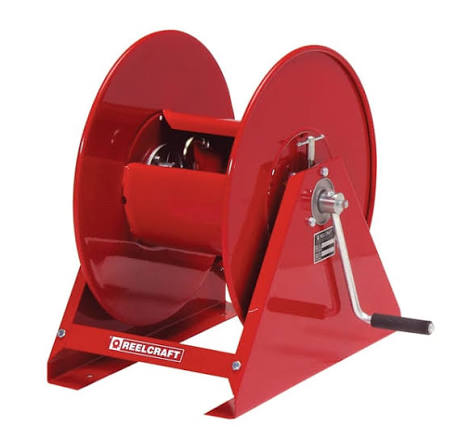
Walk through a fuel dispensing site, an aircraft refueling apron, or a tank truck yard, and you’ll spot a Fuel Hose Reel mounted somewhere near every transfer point. It looks like a simple piece of equipment, and in some ways it is, but the details buyers overlook, swivel joint quality, hose sizing, and a fairly common mix up with a completely different piece of safety equipment, are exactly what separate a reel that lasts for years from one that causes problems within months.
This article covers what a fuel hose reel actually needs to do well, a distinction that trips up more buyers than you’d expect, and how to match the right configuration to your specific site.
What a Fuel Hose Reel Actually Does On Site
Storage and Protection, Not Just Convenience
The obvious job of a fuel hose reel is keeping a long length of hose neatly stored and ready to deploy, rather than left coiled on the ground where it’s exposed to abrasion, dirt, and accidental damage from vehicle traffic. What’s less obvious is how much this protection extends the hose’s working life. A hose repeatedly dragged across concrete or left kinked in a pile wears out considerably faster than one properly wound and supported on a reel between uses, which means the reel itself is a meaningful factor in your total cost of hose replacement over time.
The Swivel Joint Most Buyers Overlook
The swivel joint, where the hose connects to the fixed fuel supply line while still being able to rotate freely as the reel turns, is one of the most failure prone points on the entire assembly, and it’s also the detail most buyers pay the least attention to during purchase. A swivel machined from solid brass with a full flow NPT connection handles both the mechanical stress of repeated rotation and constant fuel exposure far better than a lower grade fitting, and a leak at this specific joint is one of the more common, and more preventable, issues reported after a few years of heavy use.
Fuel Hose Reel vs Static Grounding Reel: Two Different Pieces of Safety Equipment
This is a genuinely common point of confusion worth clearing up directly. A fuel hose reel manages the hose that physically carries fuel from one point to another. A static grounding reel, sometimes called a static discharge reel, is an entirely separate piece of equipment holding a bonding cable used to dissipate static electricity buildup between the fuel source and the receiving vehicle or vessel before transfer begins. Fuel moving through a hose generates static charge, and without proper bonding, that static charge can discharge as a spark, which is a genuine ignition risk in an environment saturated with flammable vapor. Many fueling operations need both pieces of equipment working together, and assuming a fuel hose reel alone covers your site’s static safety requirements is a mistake worth avoiding before an inspection or, worse, an incident reveals the gap.
Spring Rewind, Hand Crank, or Motorized: Which Actually Fits Your Site
Spring Rewind for Frequent, Lighter Use
Spring rewind reels use tension built up during hose extension to automatically retract the hose once released, which makes them well suited to sites with frequent, shorter fuel transfers where speed and simplicity matter more than handling extremely long hose runs. Because there’s no separate motor involved, these reels also tend to need less maintenance over time, though the automatic retraction speed needs a properly functioning brake mechanism to avoid the hose snapping back too quickly and creating a safety hazard for whoever is standing nearby.
Motorized for Long Hose Runs and High Volume Operations
For sites running longer hose lengths or handling higher transfer volumes throughout the day, a motorized reel reduces physical strain on staff who would otherwise be manually retracting a heavy, fuel filled hose repeatedly across a shift. Motorized options generally cost more upfront and introduce an additional mechanical component that can fail, but for high throughput fuel operations, the reduction in manual handling and the associated injury risk over time often justifies that added cost and complexity.
Matching Hose Length and Pressure Rating to the Application
A fuel hose reel needs to be sized against both the physical distance your operation actually requires and the pressure rating of the fuel system it’s connected to, not simply the longest or highest rated option available. Oversizing a reel for a shorter application adds unnecessary bulk and cost, while undersizing one for the actual hose length needed leaves staff working with an awkward, overextended setup that increases both wear and handling risk. Pressure rating matters just as much, since a reel rated below your system’s operating pressure isn’t just an inconvenience, it’s a genuine safety failure waiting to happen under load.
Mounting Configuration Changes More Than People Expect
Fixed pedestal mounts work well for stationary fuel dispensing points where the reel’s position never needs to change, offering a stable, low maintenance setup for permanent installations. Wall mounted reels suit sites with limited floor space or where the fueling point sits against a fixed structure, keeping the reel out of the way of vehicle and foot traffic passing through the area. Truck and trailer mounted reels serve an entirely different need, supporting mobile fuel and lube delivery operations where the reel has to withstand constant vibration and movement rather than sitting in one place. Choosing the wrong mounting configuration for your actual operational pattern is one of the more common reasons a reel underperforms despite being mechanically sound on paper.
Materials That Actually Matter in UAE Conditions
Given the UAE’s combination of intense heat, humidity, and in coastal or marine applications, salt exposure, material selection genuinely affects how long a reel performs reliably rather than just how it looks when new. Standard powder coated steel frames hold up reasonably well in typical inland industrial settings, but marine environments or sites near the coast generally benefit from stainless steel construction specifically to resist the accelerated corrosion that salt air causes on standard finishes. High temperature seals also matter more here than in cooler climates, since prolonged exposure to direct sun and high ambient temperatures can degrade standard seal materials faster than their rated service life would suggest in a more moderate climate.
Why Choose Advanced Flow Controls
Advanced Flow Controls supplies fuel hose reels built to handle the specific demands of fueling stations, aviation refueling, marine bunkering, and tank truck operations across the UAE, with configuration recommendations based on your actual hose length, pressure requirements, and mounting needs rather than a single default model. Our team distinguishes clearly between fuel hose reel requirements and static grounding reel requirements during consultation, since operations sometimes need both pieces of equipment and a site assessment that only addresses one leaves a genuine safety gap. Material and finish recommendations account for the UAE’s specific environmental conditions, including coastal salt exposure and sustained high temperatures, rather than applying a standard specification regardless of where the equipment will actually be installed. Ongoing technical support extends to swivel joint and seal maintenance guidance after installation, since these are the components most likely to need attention over the equipment’s working life.
Frequently Asked Questions
Do I need both a fuel hose reel and a static grounding reel? In most fuel transfer operations, yes. They serve different safety functions, and a site handling flammable fuel typically needs proper bonding equipment alongside the hose reel itself, not as an optional extra.
How do I know if I need a spring rewind or motorized reel? This generally comes down to hose length and transfer frequency. Shorter, frequent transfers usually suit spring rewind, while longer hose runs or high volume daily use tend to justify a motorized option despite the higher upfront cost.
What’s the most common cause of a fuel hose reel failing early? Swivel joint leaks are among the most frequently reported issues, often linked to lower grade fittings that can’t withstand sustained rotation and fuel exposure as well as a solid brass NPT swivel.
Does the reel material actually matter if it’s installed indoors? It matters less for temperature and salt exposure, but hose wear from friction and mechanical stress affects any reel regardless of indoor or outdoor placement, so build quality still influences service life either way.