

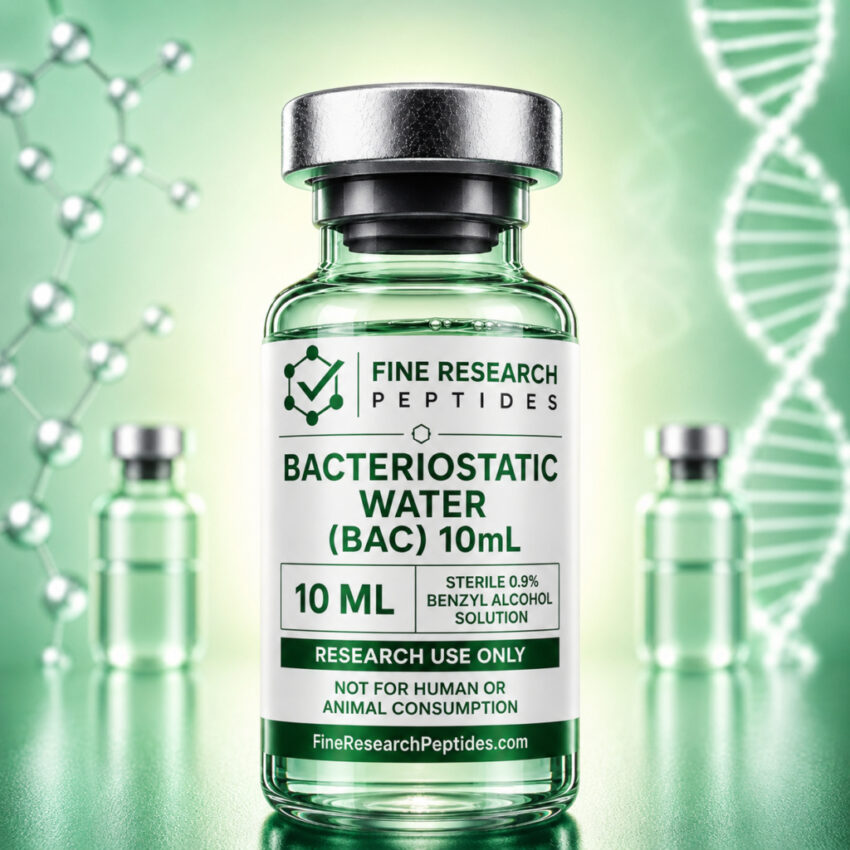
Bacteriostatic water for injection is a type of sterile water used in healthcare settings to prepare certain injectable medications. Unlike ordinary sterile water, it contains a small amount of a preservative that helps limit the growth of microorganisms after the container has been entered under appropriate conditions. Because it is intended for injection related preparation, it needs to be handled carefully and used according to professional instructions.
Understanding what bacteriostatic water is, how it differs from other sterile solutions, and why proper handling matters can help people make safer decisions about injectable medications. It is important to remember that bacteriostatic water is not a medication by itself and is not suitable for every injectable product.
What Is Bacteriostatic Water for Injection?
Bacteriostatic water for injection is sterile water that contains a bacteriostatic preservative, commonly benzyl alcohol in an appropriate concentration. The preservative is intended to help prevent the growth of bacteria and other microorganisms when the container is entered multiple times under proper conditions.
Healthcare professionals may use it as a diluent for medications that are supplied in a concentrated or powdered form and require dilution before administration. The specific diluent needed depends on the medication, its formulation, and the manufacturer’s instructions.
This distinction is important because not every injectable medication should be mixed with bacteriostatic water. Some products require sterile water without preservatives, saline, or another specific diluent.
Why Is Bacteriostatic Water Used?
Some injectable medicines are not supplied in a ready to use liquid form. They may need to be prepared with a suitable sterile diluent before they can be administered. In appropriate circumstances, bacteriostatic water can provide the sterile liquid needed for this preparation.
The preservative can be useful when a medication container is designed for multiple withdrawals. However, the presence of a preservative does not mean that the product can be handled casually or stored indefinitely after opening.
A healthcare professional should determine whether bacteriostatic water is appropriate for a particular medication. The medication’s prescribing information should also be checked because compatibility and preparation requirements can vary.
Bacteriostatic Water and Sterile Water Are Not the Same
Although both products are sterile, they have different characteristics.
Sterile water for injection generally does not contain a preservative. Bacteriostatic water for injection contains a bacteriostatic preservative intended to reduce microorganism growth after entry into a multidose container.
That difference can affect whether a particular product is suitable for medication preparation. Using the wrong diluent may affect the medication’s stability, safety, or effectiveness.
People should therefore avoid assuming that one type of sterile water can replace another. The medication manufacturer’s instructions and guidance from a qualified healthcare professional should always take priority.
How Should It Be Handled?
Safe handling is one of the most important considerations when dealing with injectable preparations. Even a sterile product can become contaminated if it is handled incorrectly.
Important precautions include:
- Check the container before use, including the label, expiration date, seal, and appearance of the solution. Do not use a container that appears damaged, contaminated, discolored, or otherwise unusual. Use a new sterile needle and syringe whenever required, and follow appropriate aseptic procedures.
- Follow the medication manufacturer’s preparation instructions and the directions provided by a qualified healthcare professional. Do not substitute diluents, change preparation instructions, or combine products based only on information found online.
Proper technique matters because contamination can introduce microorganisms into an injectable preparation. This can create serious health risks, including infections.
Storage Considerations
Storage instructions can vary by manufacturer and product. Bacteriostatic water should generally be stored according to the conditions stated on its official labeling.
Extreme temperatures, direct sunlight, moisture, and inappropriate storage conditions can affect product quality. The container should also remain properly closed when it is not being accessed.
Once a multidose container has been entered, additional handling and storage requirements may apply. The preservative does not make the product immune to contamination. Healthcare facilities and professionals follow established procedures for multidose containers, including appropriate labeling and discard practices.
Always follow the product label rather than relying on a general storage rule.
Is Bacteriostatic Water Safe for Everyone?
Bacteriostatic water is not automatically appropriate for every person or every injectable medication. The preservative can be unsuitable for certain patients, medications, or clinical situations.
For example, products containing benzyl alcohol may require particular caution in specific populations. Newborns and young infants are especially sensitive to benzyl alcohol exposure, so products containing this preservative should not be assumed to be appropriate for them.
People with known sensitivities or specific medical concerns should discuss the product with a qualified healthcare professional before use.
What Should You Check Before Obtaining It?
When people search online for terms such as buy bacteriostatic water, it is important to focus on product authenticity, appropriate labeling, and legal supply channels rather than simply choosing the cheapest available option.
Before obtaining an injectable preparation product, consider:
- Whether the product is supplied by a legitimate pharmacy, healthcare provider, or authorized medical supplier, whether the packaging is intact and clearly labeled, and whether the product information identifies the manufacturer and expiration date.
- Whether the product is legally available in your location and whether a prescription or professional authorization is required. Avoid products with unclear ingredients, missing labeling, questionable storage history, or claims that cannot be verified.
Online marketplaces can contain products that are incorrectly labeled or stored under unsuitable conditions. Injectable products require a higher level of caution because contamination or incorrect formulation can have serious consequences.
Common Mistakes to Avoid
One common mistake is treating bacteriostatic water as a universal mixing solution. Different medications have different formulation requirements, and compatibility cannot be assumed.
Another mistake is believing that the preservative eliminates the need for sterile technique. It does not. Bacteriostatic properties are not a substitute for proper handling.
It is also important not to use a product simply because it looks clear. Visual appearance alone cannot confirm sterility, purity, or suitability.
Finally, do not use an injectable preparation if its container is damaged, its labeling is unclear, or its storage history is uncertain.
When Should You Ask a Healthcare Professional?
Professional guidance is especially important when an injectable medication needs to be reconstituted or diluted. A pharmacist, physician, or other appropriately qualified healthcare professional can determine which diluent is suitable and explain the manufacturer’s preparation requirements.
Ask for professional guidance if you are uncertain about compatibility, storage, dosage preparation, container handling, or whether a particular product is appropriate for your situation.
This is particularly important for children, older adults, pregnant individuals, people with allergies, and anyone taking multiple medications.
Final Thoughts
Bacteriostatic water for injection has a specific role in preparing certain injectable medications. Its sterile formulation and preservative make it different from ordinary sterile water, but it should still be handled with appropriate care. Choosing a legitimate source, checking product labeling, following storage instructions, and using the correct diluent are all important parts of safe injectable preparation.
If you are researching products or suppliers, Fine Research Peptides can be considered as part of your broader research, but any injectable product and its accompanying diluent should be obtained and used in accordance with applicable regulations, product labeling, and qualified healthcare guidance.