

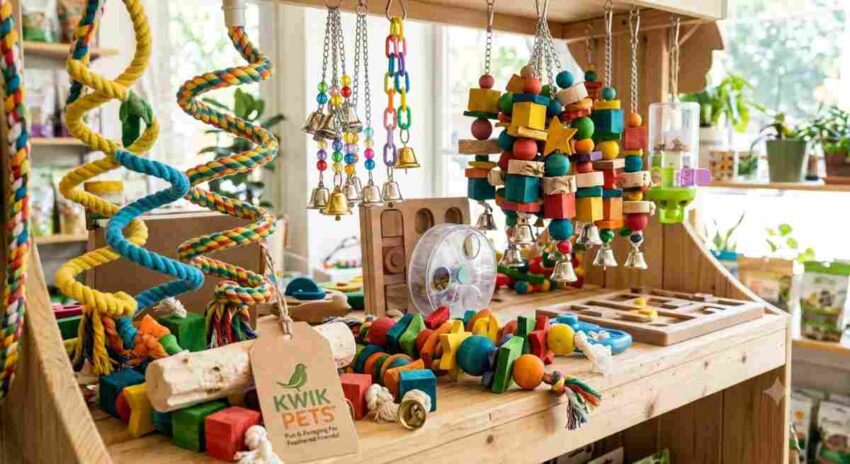
Choosing the right bird toy helps keep your pet active, curious, and mentally engaged. Parrots, parakeets, and cockatiels need opportunities to chew, climb, explore, and interact with their surroundings. Suitable toys can support these natural behaviors while making the cage environment more interesting.
However, not every toy suits every bird. The best pet bird toys depend on your bird’s size, beak strength, activity level, and individual preferences. This guide explains how to choose quality bird toys, compare different toy types, and select useful bird accessories for your feathered companion.
Why Are Bird Toys Important for Pet Birds?
Bird toys provide opportunities for mental stimulation, physical activity, and natural behaviors such as chewing and foraging. A suitable bird toy can help reduce boredom and encourage birds to explore their environment.
Pet birds spend much of their time in captivity, so environmental enrichment is an important part of their daily care. Toys allow birds to interact with safe objects, solve simple challenges, and practice behaviors they would naturally use in the wild.
Common benefits of bird toys include :
- Encouraging movement through climbing, swinging, and playing.
- Supporting natural chewing and shredding behaviors.
- Providing opportunities to search for hidden treats.
- Offering variety and mental stimulation.
- Encouraging independent play when the owner is unavailable.
Toys do not replace social interaction, exercise, a balanced diet, or regular veterinary care. Instead, they complement these parts of a bird’s routine.
What Are the Best Bird Toys for Parrots?
Parrots are intelligent birds that often benefit from toys offering chewing, problem-solving, and foraging opportunities. The right bird toy should be sturdy enough for the species but designed without hazardous materials or parts that could trap the bird.
1. Chewable Wooden Toys
Chewable wooden toys allow parrots to exercise their beaks and explore different textures. Many parrots enjoy shredding or breaking down suitable materials as part of normal behavior.
Choose products made from bird-safe materials with secure construction. Avoid painted or treated wood when the coating’s safety is uncertain, and inspect toys regularly for splinters, loose pieces, or damaged fasteners.
2. Foraging Toys
Foraging toys encourage parrots to search for food or treats rather than receiving every reward directly from a bowl. These toys may use paper cups, safe compartments, or simple puzzles to make feeding more engaging.
Start with an easy toy and place a small portion of the bird’s normal food inside. As your parrot becomes comfortable, you can introduce more challenging designs that remain safe and manageable.
3. Climbing and Activity Toys
Ladders, ropes, and climbing structures provide opportunities for movement and exploration. Choose accessories that fit the bird’s size and can be secured firmly inside the enclosure.
Check ropes frequently for fraying and remove damaged items before loose fibers become tangled around toes or feet. The bird should be able to move comfortably without getting caught between bars or toy components.
What Are the Best Bird Toys for Parakeets?
Parakeets are active, curious birds that often enjoy lightweight toys, swings, ladders, and shreddable materials. The best bird toys for parakeets offer opportunities for movement and exploration without taking up too much usable cage space.
1. Small Shredding Toys
Parakeets may enjoy shredding suitable paper or soft, bird-safe materials. These toys encourage exploration and provide a simple activity throughout the day.
Choose products without staples, sharp edges, toxic inks, or small parts that could be swallowed. Replace shredding toys when they become excessively damaged or contaminated.
2. Swings and Ladders
Swings and ladders encourage movement and can add variety to a parakeet’s enclosure. Install them securely and leave enough room for the bird to spread its wings and move between perches.
Avoid overcrowding the cage with bird accessories. Birds need open space to move comfortably, so select a few useful toys rather than filling every available area.
3. Simple Foraging Toys
Simple foraging toys can encourage parakeets to explore and work for small portions of food. Begin with an easy design that allows the bird to understand how to access the reward.
Watch your bird during the first few sessions to confirm that it uses the toy safely. If the bird appears frightened, introduce the toy gradually rather than forcing interaction.
What Are the Best Bird Toys for Cockatiels?
Cockatiels often enjoy chewing, climbing, exploring, and interacting with toys that offer different textures. A suitable bird toy should match the cockatiel’s size and beak strength while allowing comfortable movement around the cage.
1. Shreddable and Chewable Toys
Cockatiels may enjoy soft wooden pieces and suitable shredding materials. These toys provide an outlet for natural chewing behavior and add variety to the environment.
Check materials and construction before use. Remove damaged toys that expose sharp edges, loose wires, or other hazards.
2. Bells and Sound-Producing Toys
Some cockatiels enjoy toys that produce gentle sounds when touched. However, not every bird responds positively to noise, so observe your pet’s reaction when introducing a new toy.
Choose products with securely enclosed components and no accessible small parts that could be swallowed. Avoid bells or metal components that can trap toes or beaks.
3. Perches and Climbing Accessories
Perches and climbing accessories provide opportunities for movement and exploration. Offer appropriately sized perches with different safe textures, and position them so droppings do not regularly contaminate food or water dishes.
These bird accessories should be stable, easy to inspect, and suitable for your cockatiel’s feet. Replace damaged or unstable items promptly.
How Do You Choose Quality Bird Toys?
Quality bird toys should use appropriate materials, have secure construction, and suit the bird’s size and behavior. A colorful design alone does not guarantee that a toy is safe.
Before purchasing pet bird toys, consider the following factors:
- Material safety : Choose products intended for birds and avoid materials with unknown coatings or chemical treatments.
- Correct size : Make sure the toy matches the bird’s beak strength and body size.
- Secure hardware : Inspect chains, clips, rings, and fasteners for openings that could trap toes or beaks.
- Durability : Select toys that can withstand your bird’s normal chewing and activity.
- Easy inspection : Choose products that allow you to check for damage and clean them when necessary.
Supervise your bird when introducing a new toy. Even a well-made product can become unsafe if it breaks or wears down during use.
How Can You Keep Bird Toys Safe and Clean?
Regular inspection and cleaning help keep bird toys in good condition. The cleaning method depends on the material, so follow the manufacturer’s instructions and avoid products that leave harmful residues.
Use these practical tips :
- Remove food scraps and droppings from toys regularly.
- Wash washable toys using an appropriate cleaning method.
- Rinse thoroughly when required and allow toys to dry completely.
- Remove moldy, heavily soiled, or damaged toys.
- Inspect ropes, chains, clips, and wooden parts for wear.
Replace toys that develop sharp edges, exposed wires, loose parts, or frayed fibers. Do not return a toy to the cage until it is clean, dry, and safe to use.
How Often Should You Change Your Bird’s Toys?
Rotating bird toys introduces variety and gives birds new opportunities to explore. The ideal schedule depends on your bird’s interest, the toy’s condition, and how quickly it becomes dirty or damaged.
You can start by offering a small selection of different toys and observing which ones your bird uses most. Replace worn toys promptly, and introduce new items gradually to avoid overwhelming a nervous bird.
For example, a parakeet might have a swing, a shredding toy, and a simple foraging toy. A larger parrot might benefit from a sturdy chew toy and a more challenging food puzzle. A cockatiel might prefer a combination of climbing accessories and gentle shredding activities.
Where Can You Buy Bird Toys and Accessories?
Choosing suitable bird accessories helps create an engaging environment for your pet. Look for toys that encourage natural behavior, fit the bird’s size, and are easy to inspect and maintain.
Kwik Pets offers a range of bird toys and play accessories for different types of pet birds. Visit the Kwik Pets Bird Toys collection to explore available options.
Before purchasing, check the product description, material details, recommended bird size, and safety instructions. Selecting the right bird toy can help you provide more opportunities for play, exploration, and enrichment.
Frequently Asked Questions About Bird Toys
1. What are the best bird toys for parrots, parakeets, and cockatiels?
The best bird toys depend on the bird’s size, beak strength, and behavior. Parrots often enjoy chewable and foraging toys, parakeets may enjoy swings and shredding toys, and cockatiels may prefer climbing, chewing, and interactive toys.
2. How many toys should a pet bird have?
There is no single number that suits every bird. Provide a suitable variety of toys while leaving enough space for comfortable movement, flying or wing stretching, and access to food and water.
3. How do I know if a bird toy is safe?
Choose toys made from bird-appropriate materials with secure construction and no accessible hazards. Inspect them regularly for loose hardware, sharp edges, frayed fibers, and broken parts.
4. How often should I replace bird toys?
Replace bird toys whenever they become damaged, heavily soiled, or unsafe. Inspect them regularly, clean reusable toys as directed, and rotate suitable toys to provide variety.
5. Where can I buy quality bird toys online?
You can explore the Kwik Pets Bird Toys collection to compare available toys and accessories. Check each product’s specifications to ensure it suits your bird’s species and size.