
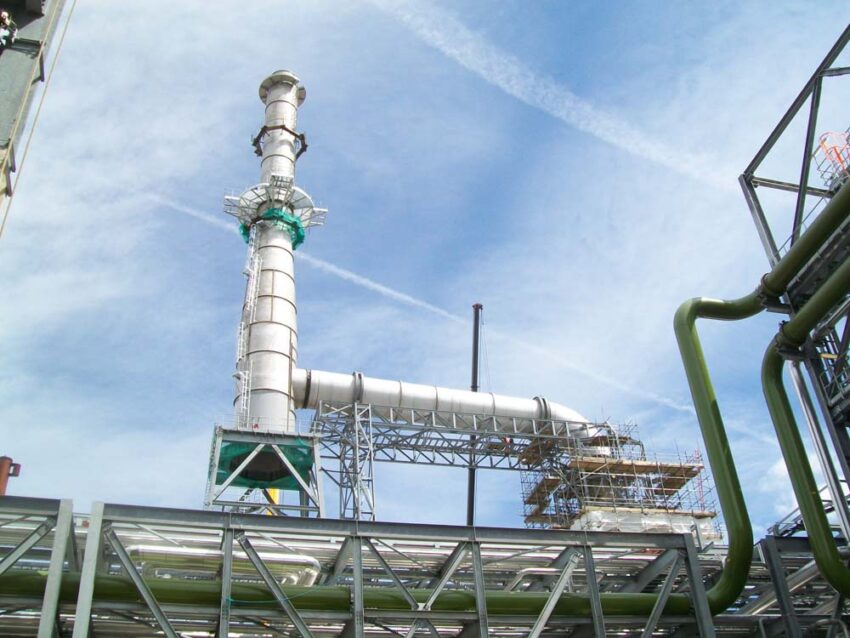
In industrial construction, steel structures form the backbone of factories, warehouses, and processing plants. While primary steelwork—such as beams, columns, and main frames—provides the core structural support, secondary steelwork plays an equally important role in enhancing functionality, safety, and accessibility. Secondary steelwork refers to non-load-bearing or lightly loaded steel components that complement the primary framework and enable efficient operation of industrial facilities.
One of the most common applications of secondary steelwork is in the creation of access platforms and walkways. Industrial environments often require workers to operate and maintain equipment at elevated levels. Platforms made from steel provide safe and durable working spaces, while walkways ensure smooth movement across different sections of a facility. These structures are typically fitted with handrails, toe boards, and anti-slip surfaces to meet safety regulations and reduce workplace hazards.
Another important use is the installation of staircases and ladders. In multi-level industrial setups, safe vertical movement is essential. Steel staircases are widely preferred due to their strength, longevity, and ability to withstand heavy usage. They can be customized to fit tight spaces or specific design requirements, making them ideal for complex industrial layouts. Similarly, fixed ladders and cage ladders are used for accessing rooftops, tanks, or maintenance zones where space is limited.
Secondary steelwork also plays a vital role in supporting cladding and roofing systems. Steel purlins, girts, and rails are commonly used to hold wall panels and roof sheets in place. These components distribute loads evenly and ensure the stability of the building envelope. In addition to structural support, they contribute to insulation and weather protection, which are critical for maintaining controlled environments in industries such as manufacturing and food processing.
Equipment support structures are another key application. Industrial facilities often house heavy machinery, pipelines, and ducting systems that require stable support. Secondary steel frameworks are designed to hold and position this equipment securely, ensuring proper alignment and reducing vibration. These supports can be tailored to specific machinery requirements, making them an essential part of efficient plant operation.
Cable trays and pipe racks are also integral components of secondary steelwork. Modern industrial plants rely on extensive networks of electrical cables and pipelines. Steel cable trays help organize and protect wiring systems, preventing damage and simplifying maintenance. Pipe racks, on the other hand, provide a structured pathway for transporting liquids and gases across the facility. Both applications improve operational efficiency and contribute to a cleaner, more organized workspace.
Safety barriers and guardrails are widely used forms of secondary steelwork that enhance workplace safety. These installations protect workers from hazardous areas, moving machinery, or elevated edges. In high-risk environments, steel barriers are designed to withstand impact and prevent accidents. Their robust nature and ease of installation make them a preferred choice in industrial settings.
Mezzanine floors represent another practical application. When space is limited, industries often expand vertically by adding intermediate floors within existing structures. Steel mezzanines are cost-effective and quick to install, providing additional storage or workspace without the need for major structural changes. They are commonly used in warehouses, distribution centers, and production units to maximize usable space.
In addition, secondary steelwork is frequently used for framing around doors, windows, and openings. These frames provide structural stability and ensure proper fitting of industrial doors, ventilation systems, and other fixtures. They also help maintain the integrity of the building structure over time.
In conclusion, secondary steelwork is an essential component of industrial construction, supporting a wide range of functional and safety-related applications. From access systems and equipment supports to cladding frameworks and safety features, these elements enhance the efficiency and usability of industrial facilities. By integrating well-designed secondary steelwork, industries can create safer, more organized, and highly productive environments.