
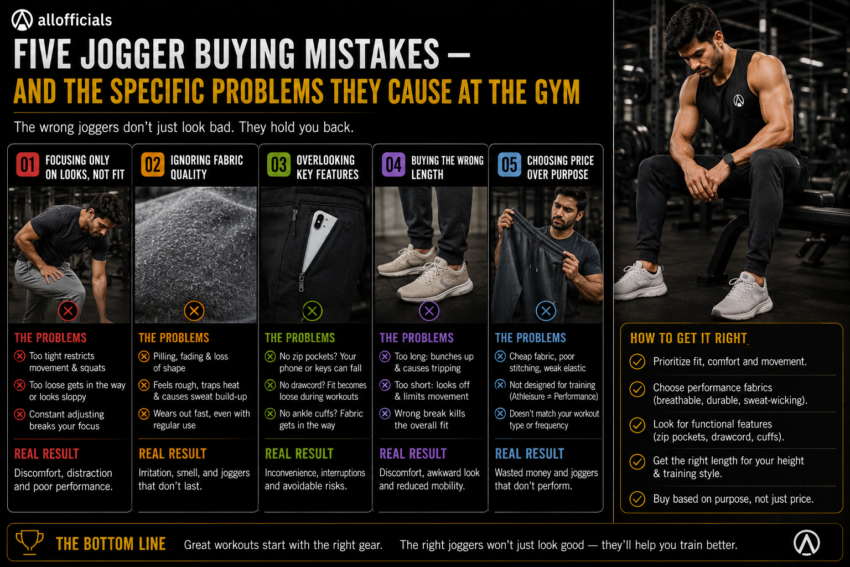
Why Buying Joggers Well Is Harder Than It Looks
Buying gym clothing seems simple until small details start affecting the workout itself. Online pictures often show clean fits, perfect lighting, and models standing still. They rarely show what happens after thirty minutes of squats, walking between machines, or sitting on a bench after a heavy set.
Sizing is another problem. Different brands use different patterns, even when the waist measurement looks identical. A medium from one brand can feel loose around the hips while another feels tight near the thighs. Many buyers only notice the difference after wearing them for a full session.
Indian gym routines make these issues more obvious. Someone training in Mumbai humidity, a person lifting early morning in Delhi winter, and an office worker squeezing in a workout in Bangalore evening traffic all put different demands on their clothing.
Small design choices create real consequences. A pocket angle can decide whether your phone stays safe. A slightly wrong taper can affect how easily you move. Good joggers should disappear during a workout, not become something you keep adjusting.
Mistake 1 and 2: Sizing by Waist Alone and Skipping the Stretch Test
A common buying mistake is choosing joggers only by waist size. Many people check the label, compare numbers, and assume the fit will work. The issue is that waist measurement tells only one part of the story.
Rise and leg shape matter just as much. A pair can fit around the waist but feel tight when you sit, squat, or bend. Some designs sit higher on the body, while others leave more space through the seat and thigh. Those differences change how the joggers feel during training.
Skipping the stretch test creates another problem. Standing in front of a mirror does not show how fabric behaves during movement. Deadlifts, lunges, and deep squats reveal whether seams pull or whether the ankle area bunches up.
A practical test is simple. Sit down, bend your knees, and move as you would during a workout. If the fabric immediately feels under pressure, the problem usually gets worse after a full session.
Mistake 3: Judging Fit From How They Look Hanging Up
A pair of joggers can look excellent on a hanger and still perform poorly in the gym. Flat photos hide important details like how fabric stretches around the knees or how the waistband sits during movement.
Many buyers focus on appearance first. A sharp taper may look clean while standing, but if the calf area becomes restrictive during training, the style stops being useful. A good fit should balance shape with freedom.
The mens gym joggers range from AllOfficials is worth exploring if you want something built for Indian gym conditions.
A useful pair should handle real exercises, not just mirror checks. Watch how the fabric reacts during squats, step-ups, and seated movements. The best designs usually feel natural because they are built around motion instead of only appearance.
Another detail people miss is ankle behaviour. Joggers that stay in place reduce distractions during floor exercises. Constantly pulling fabric down between sets becomes irritating quickly.
Mistake 4 and 5: Ignoring Pocket Security and Not Pre-Washing Before First Use
Pockets seem like a minor feature until something goes wrong. Many gym users keep their phone, locker key, or card inside their joggers. A shallow pocket or loose opening can turn into a problem during jumping exercises or fast movement.
A phone sliding out during a workout is not just inconvenient. It can damage the device or interrupt the session. Zip pockets help in some situations, but even regular pockets need enough depth and structure to hold items securely.
Another mistake is wearing new joggers without washing them first. Fresh fabric often feels slightly stiff because of finishing treatments used during manufacturing. That stiffness may reduce flexibility during the first workout.
A cold wash before use usually softens the material and gives a more realistic idea of the fit. It also removes any temporary coating from production. Worth noting — this matters more with some fabrics than others. Polyester blends usually behave differently from cotton-heavy options.
Skipping this step can make someone think a pair is uncomfortable when the fabric simply has not settled yet.
A Better Starting Point for Your Next Purchase
A smarter purchase begins with understanding your own routine. Someone training twice a week has different needs from someone washing workout clothes every other day. There is no benefit in paying for features you will not use.
Think about your location too. A person training in Chennai may prioritise lighter fabric because of heat and humidity. Someone in Jaipur or Delhi may value a little more coverage during cooler months. Your environment changes what matters.
The Gym Bottoms section covers most of what a practical gym wardrobe needs beyond the top half.
A reliable rotation often works better than owning one expensive pair. Three or four pairs allow proper washing and reduce wear on each item. It also means you always have something ready for the next workout.
Budget choices can also be reasonable. A beginner buying a lower-priced pair is not making a bad decision if the expectations match the price. Problems usually happen when buyers expect a budget item to handle daily intense training for years.
Frequently Asked Questions
Q: Why does sizing by waist measurement alone often lead to a poor fit in gym joggers?
A: Joggers vary significantly in rise — how high they sit above the hips — and in the taper angle below the knee. Two pairs with the same waist size can fit completely differently through the seat and calf, which affects both comfort and range of motion.
Q: Should gym joggers be washed before wearing them for the first time?
A: Yes — new joggers often contain a sizing or finishing treatment applied during manufacturing that stiffens the fabric. A cold wash before first use removes this and makes the fabric softer and more flexible from the first session.
Q: What is the stretch test and why does it matter before buying joggers?
A: The stretch test means physically moving in them before purchase — squatting, sitting cross-legged, or stepping into a lunge — to check that the seams and fabric handle real movement without pulling or restricting. Static try-on only tells you about standing fit.
Final Thoughts
Most jogger buying regrets do not come from choosing the wrong colour or style. They come from missing practical details that only appear after regular use. Fit, movement, storage, and fabric behaviour decide whether a pair becomes part of your routine or stays unused.
A good pair of training joggers should support the way you actually exercise. Taking a few extra minutes before buying can prevent months of adjusting, replacing, and settling for something that never felt right.