

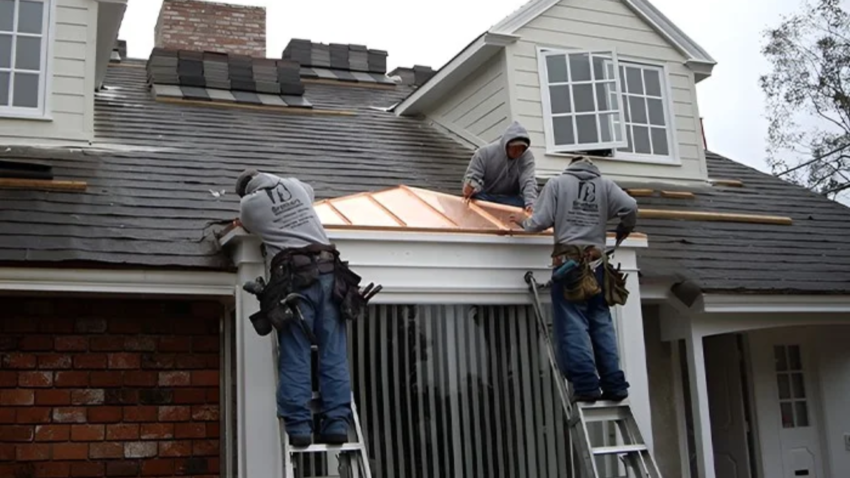
Most homeowners schedule a gutter installation expecting a straightforward transaction. A contractor shows up, puts up some gutters, and leaves. The reality of a proper installation is more involved than that, and understanding what it actually requires helps you evaluate whether the contractor you hire is doing the job correctly. If you are searching for gutter installation near Los Angeles, here is what the full process should look like from start to finish.
A proper installation begins well before any material goes up.
The contractor needs to assess the existing fascia condition, measure the full roofline, determine the correct gutter profile and size for the roof area and pitch, and plan downspout placement based on where water needs to discharge. Skipping any of these steps creates problems that show up within one or two rain seasons.
Does Fascia Condition Affect Gutter Performance?
Directly and significantly. The fascia board is the mounting surface for every hanger in the system. A hanger driven into deteriorated or soft fascia wood does not hold under load. When a gutter fills with water and debris, it can weigh several pounds per linear foot. Hangers anchored in compromised fascia pull out, the gutter sags, and the system loses its slope and structural integrity.
Every installation we perform at Rain Gutters Los Angeles includes a fascia inspection before we mount anything. If we find deterioration, we address it first. A new gutter system should outlast the contractor who installed it. Mounting it over damaged wood shortens that timeline dramatically.
What Does Proper Gutter Sizing Actually Mean?
Sizing a gutter system means matching the gutter’s cross-sectional area and the downspout capacity to the volume of water the roof generates during a design rainfall event. The calculation uses the roof area in square feet, the roof pitch (which increases the effective drainage area for steeper roofs), and the local rainfall intensity data for the area.
For most single-story residential homes in the Los Angeles area, 5-inch K-style gutters with 3-by-4-inch downspouts handle the load correctly. Larger homes, homes with complex rooflines that funnel water into concentrated areas, and properties with flat or low-pitch roofs often require 6-inch gutters or multiple downspouts per run to prevent overflow.
Here is what determines the full specification for a proper installation:
- Roof surface area in square feet per drainage zone
- Roof pitch coefficient applied to account for effective drainage area increase on steep roofs
- Maximum rainfall intensity for the Los Angeles area, typically applied at a one-inch-per-hour design rate
- Gutter profile selected, K-style, half-round, or box, based on architectural compatibility and volume requirements
- Downspout sizing and number per run to match the calculated flow rate
Getting these numbers right at the design stage is what separates an installation that performs correctly from one that overflows during a moderate rain event.
How Do You Verify That Slope and Mounting Were Done Correctly?
The two most important installation variables after sizing are slope and hanger spacing. Slope determines whether water travels toward the downspout or sits in the channel. Hanger spacing determines whether the gutter maintains its profile and mounting integrity over time.
Correct slope is a quarter inch of drop per ten linear feet in the direction of the downspout. Our team verifies slope with a level during installation rather than estimating by eye. Hangers are spaced at 18 to 24 inches depending on the run length and expected debris load, using concealed hanger hardware that provides stronger support than legacy spike-and-ferrule mounting.
Gutters in Los Angeles installed to these specifications perform reliably for 20 to 30 years for aluminum systems, and significantly longer for copper. The investment in getting the details right at installation pays off consistently over the life of the system.
Ready to Get Your Installation Started?
Rain Gutters Los Angeles has been installing gutter systems across Southern California since 1992. We are licensed under Lic. #643514 and bring on-site fabrication capability to every job. Call 323-464-1853 or visit raingutterlosangeles.com/contact-us to schedule your free estimate.