
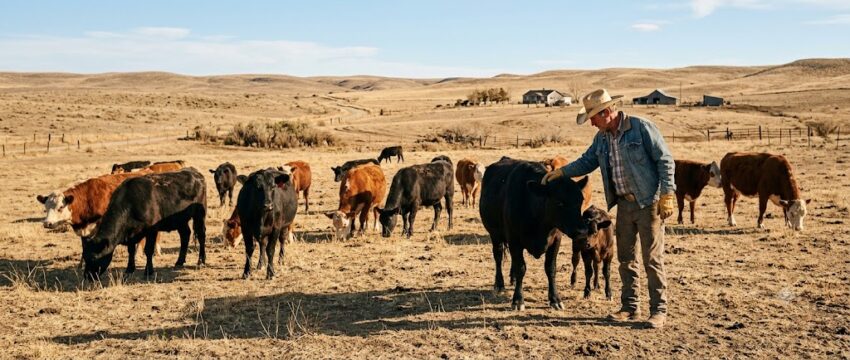
For farmers and ranchers, selling livestock because of drought is often a business decision made under pressure. Feed costs rise, water becomes harder to secure, and maintaining a herd may no longer be practical. The IRS has now extended an important tax provision that can give qualifying producers more time to replace livestock and defer recognition of certain gains.
What did the IRS announce?
On September 15, 2026, the IRS issued Notice 2026-54, extending the replacement period for certain livestock sold because of drought. The guidance applies to specified counties and other regions where exceptional, extreme, or severe drought was reported during the 12 months ending August 31, 2026.
The IRS announcement covers affected areas in 49 states and other regions. However, eligibility is determined by the applicable location and the circumstances surrounding the livestock sale. Simply being located in a state experiencing drought does not automatically qualify a taxpayer.
Which livestock sales are covered?
The tax rule generally applies to livestock held for draft, breeding, or dairy purposes when the sale or exchange occurred solely because of drought, flooding, or another qualifying weather-related condition.
Poultry is excluded. Livestock raised for slaughter or held for sporting purposes generally does not qualify under this provision.
There is another important requirement. The applicable area must have been designated as eligible for federal assistance because of the qualifying weather conditions.
How does the replacement period work?
Under Section 1033(e), qualifying livestock sales can receive a replacement period of four years, rather than the usual two-year period that generally applies to certain involuntary conversions. The IRS may extend that period when qualifying drought conditions continue.
The 2026 notice is particularly relevant for producers whose four-year replacement period would otherwise expire at the end of 2026. If their applicable region includes a county listed in Notice 2026-54, the replacement period can continue until the end of the taxpayer’s first tax year ending after a drought-free year for that region.
That extra time can matter when livestock prices, availability, or operating conditions make immediate replacement difficult.
What should affected producers do?
Farmers and ranchers should not treat the extension as an automatic tax exemption. Instead, they should review the details of each livestock transaction.
Useful records include:
- The date and proceeds from the livestock sale.
- The type and purpose of the livestock.
- Evidence showing that drought caused the sale.
- The county or applicable region where the drought occurred.
- Previous tax returns showing how the gain was reported.
- Records of replacement livestock purchases.
The IRS says taxpayers can use weekly U.S. Drought Monitor maps or its annual county list to determine whether exceptional, extreme, or severe drought affected an applicable region.
For taxpayers dealing with broader IRS disputes or related tax matters, a tax relief lawyer Los Angeles may help review how this provision fits with the rest of their tax situation. A tax lawyer consultation can also help identify documentation issues before a return or amended filing is submitted.
Why Does the Extension Matter?
The relief does not simply cancel tax on livestock sales. Instead, Section 1033 can allow qualifying taxpayers to defer recognition of gain when the replacement requirements are satisfied. The timing of the replacement therefore becomes important.
Producers should also remember that the applicable region can include the county where the drought occurred and contiguous counties. Notice 2026-54 provides the specific list of qualifying locations.
The IRS recommends Publication 225, Farmer’s Tax Guide, along with Notice 2006-82, for additional information about reporting drought-related livestock sales and replacement periods.