

“Natural,” “eco-friendly,” and “chemical-free” have become some of the most common words on air freshener packaging — and also some of the most loosely used. As more buyers actively search for genuinely natural alternatives, it’s worth knowing what actually makes a product eco-friendly versus what’s simply marketed that way.
Common Greenwashing Tactics in Air Freshener Marketing
“Natural fragrance” isn’t the same as chemical-free. Many products labeled “natural” still use synthetic fragrance oils blended with a small percentage of essential oil, or use the word “natural” to describe the scent profile (like “ocean breeze”) rather than the ingredients themselves.
Green packaging doesn’t equal green contents. Earthy colors, leaf icons, and words like “pure” or “fresh” are marketing choices, not certifications. None of these terms are regulated in the way “organic” is for food.
“Odor eliminating” spray claims. Some sprays market themselves as odor eliminators, when the underlying mechanism is still fragrance-based masking — the technical difference between removing and covering up a smell.
What to Actually Check Before Buying
1. Ingredient list, not the front label. Flip the package over. If it lists “fragrance,” “parfum,” or a long list of chemical names without specifying the actual material, it’s likely a synthetic-fragrance product regardless of front-label claims.
2. How the product physically works. Ask whether the product’s mechanism is releasing scent (spray, gel, oil diffuser) or trapping odor molecules (activated charcoal, certain mineral absorbers). This tells you immediately whether you’re buying a masking product or a genuine odor absorber.
3. Reusability. Genuinely eco-friendly products tend to be reusable or rechargeable rather than single-use, since disposability itself has an environmental cost regardless of what’s inside the product.
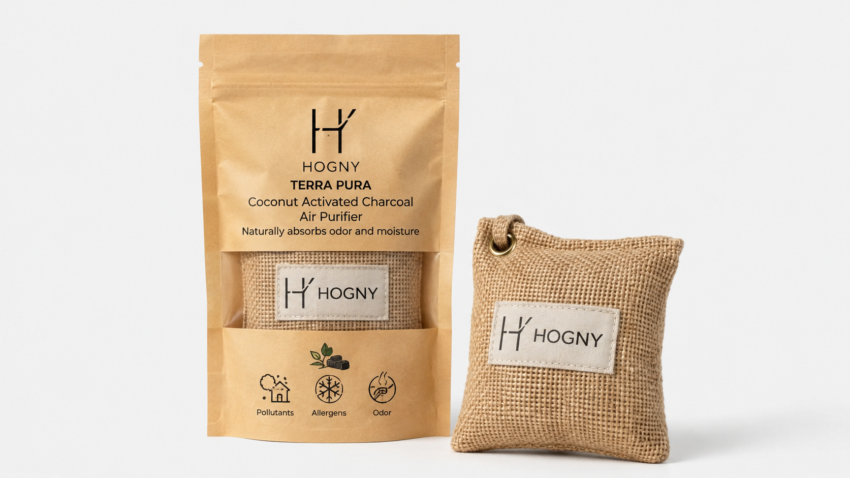
4. Source material. Materials like activated coconut charcoal are byproducts of an existing food industry (coconut processing), making them a renewable resource. Compare this to synthetic fragrance oils, which are typically petroleum-derived.
5. Packaging. Aerosol cans and multi-layer plastic packaging carry their own environmental footprint, separate from the ingredients inside.