
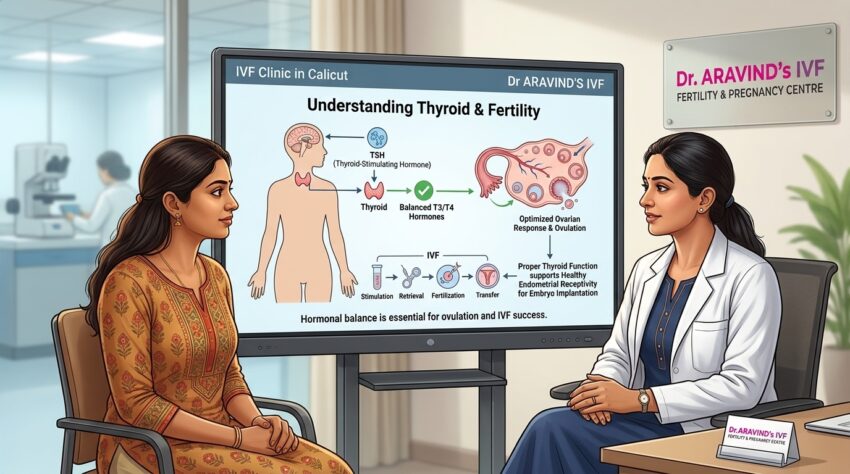
Thyroid health is an important consideration for couples planning pregnancy or seeking fertility treatment. The thyroid gland releases hormones that affect various body functions, including metabolism, menstrual regularity, and reproductive health.
For some women, thyroid disorders may affect ovulation or make it more difficult to maintain a healthy pregnancy. When undergoing IVF, thyroid function may also be reviewed as part of the overall fertility assessment.
However, having a thyroid problem does not automatically mean that IVF will be unsuccessful. With appropriate evaluation and medical management, many women with thyroid disorders go on to have successful pregnancies.
If you are searching for an IVF Clinic in Calicut, understanding the relationship between thyroid health and fertility can help you prepare for treatment with greater confidence.
What Does the Thyroid Do?
The thyroid is a small, butterfly-shaped gland located in the neck.
It produces hormones that influence:
- Metabolism
- Energy levels
- Body temperature
- Heart function
- Brain development
- Reproductive health
Thyroid hormones interact with other hormones involved in the menstrual cycle and reproductive function.
When thyroid hormone levels are too high or too low, the body’s normal hormonal balance may be affected.
What Is TSH?
TSH stands for thyroid-stimulating hormone.
It is released by the pituitary gland and plays a role in controlling the production of thyroid hormones.
A TSH blood test is commonly used to assess thyroid function.
Depending on the situation, doctors may also evaluate thyroid hormones such as free T4 and, when indicated, thyroid antibodies.
The interpretation of results depends on the individual’s health, symptoms, pregnancy status, and laboratory reference ranges.
Can an Underactive Thyroid Affect Fertility?
An underactive thyroid, also called hypothyroidism, occurs when the thyroid does not produce enough thyroid hormones.
In some women, untreated hypothyroidism may be associated with:
- Irregular menstrual cycles
- Problems with ovulation
- Changes in menstrual bleeding
- Difficulty conceiving
The effect depends on the severity of the thyroid disorder and whether it is adequately treated.
Some women may have mild thyroid abnormalities without noticeable symptoms, which is why thyroid testing may sometimes be included in fertility evaluation.
What About an Overactive Thyroid?
An overactive thyroid, or hyperthyroidism, occurs when the thyroid produces excessive thyroid hormones.
It can also affect menstrual patterns and overall reproductive health.
Women with uncontrolled hyperthyroidism may require medical treatment before attempting pregnancy or undergoing fertility treatment.
The treatment approach is determined based on the underlying cause and how severe the condition is.
Why Is Thyroid Health Important During IVF?
IVF involves carefully coordinated hormonal treatment and embryo transfer.
The thyroid is part of the body’s overall endocrine system, so thyroid function may be reviewed before or during fertility treatment.
An abnormal TSH level may prompt further assessment or medical management, particularly when a woman is planning pregnancy.
The goal is to identify and manage thyroid disorders appropriately rather than assuming that every thyroid variation will affect IVF outcomes.
Can Thyroid Problems Affect IVF Success?
Thyroid disorders may influence reproductive health, particularly when they are untreated or poorly controlled.
However, IVF success is determined by many factors, including:
- Age
- Ovarian reserve
- Egg quality
- Sperm quality
- Embryo development
- Uterine health
- Underlying medical conditions
Therefore, thyroid function is one part of a much larger picture.
A woman with a well-managed thyroid condition may have a different fertility outlook from someone with an untreated thyroid disorder.
What TSH Level Is Suitable Before IVF?
There is no single TSH value that applies identically to every woman.
The target may depend on whether a woman is preparing for pregnancy, undergoing IVF, or already pregnant.
Fertility specialists and endocrinologists may use specific treatment targets based on clinical guidelines and individual circumstances.
If the TSH level is outside the desired range, thyroid medication may be adjusted before or during fertility treatment.
It is important not to change thyroid medication without medical advice.
Can Thyroid Medication Improve Fertility?
If hypothyroidism is contributing to reproductive problems, appropriate thyroid hormone replacement may help restore normal thyroid function.
When thyroid function improves, menstrual regularity and ovulation may also improve in some women.
However, thyroid medication should be taken under medical supervision.
Treatment is not intended to improve fertility in women who have normal thyroid function simply by lowering TSH unnecessarily.
Does Hashimoto’s Disease Affect IVF?
Hashimoto’s thyroiditis is an autoimmune disease in which the immune system mistakenly targets and damages the thyroid gland.
Some women with Hashimoto’s disease may have normal thyroid hormone levels, while others develop hypothyroidism over time.
The fertility implications can vary.
Women with known thyroid autoimmune conditions may benefit from appropriate monitoring before and during pregnancy.
The presence of thyroid antibodies alone does not necessarily mean that IVF will fail.
What Tests May Be Recommended?
Depending on medical history, fertility specialists may recommend:
- TSH
- Free T4
- Thyroid antibody testing when indicated
- Other hormone assessments
Thyroid testing may be considered alongside evaluation of ovarian reserve, ovulation, uterine health, and male fertility.
The purpose is to understand the overall reproductive health of the couple.
Can Thyroid Problems Cause Miscarriage?
Uncontrolled thyroid disorders have been associated with pregnancy complications, including an increased risk of pregnancy loss in certain circumstances.
This is one reason why appropriate thyroid management is important before and during pregnancy.
However, miscarriage can occur for many different reasons, and thyroid problems are not responsible for every pregnancy loss.
Women with a history of miscarriage may require a broader evaluation based on their individual medical history.
Should Thyroid Medication Be Stopped During IVF?
No.
Women should not stop prescribed thyroid medication without consulting their doctor.
Thyroid hormone requirements can change during pregnancy, and medication doses may need to be monitored and adjusted.
Anyone undergoing IVF should inform the fertility team about existing thyroid conditions and all medications they are taking.
When Should You Check Your Thyroid?
Thyroid testing may be considered if you:
- Have irregular menstrual cycles
- Have symptoms of thyroid disease
- Have a known thyroid condition
- Have a history of recurrent pregnancy loss
- Are preparing for fertility treatment
- Have previously abnormal thyroid test results
Your doctor can determine which tests are appropriate based on your history.
Conclusion
Thyroid problems can sometimes affect menstrual cycles, ovulation, fertility, and pregnancy health, particularly when the condition is untreated or poorly controlled. However, having a thyroid disorder does not automatically mean that IVF will fail. Appropriate testing, medical management, and regular monitoring can help women prepare for pregnancy and fertility treatment.
If you are looking for an IVF Clinic in Kerala, discussing your thyroid history with your fertility specialist can help ensure that your treatment plan considers your overall reproductive health. Book an Appointment with a fertility specialist to review your thyroid function, understand your fertility needs, and discuss the next steps toward pregnancy.
Frequently Asked Questions
1. Can hypothyroidism affect fertility?
Yes. Untreated or poorly controlled hypothyroidism may affect menstrual cycles and ovulation in some women, potentially making conception more difficult.
2. Can I undergo IVF if I have a thyroid disorder?
Yes. Many women with thyroid conditions undergo IVF successfully. The condition should be appropriately evaluated and managed before and during fertility treatment.
3. What is TSH, and why is it checked before IVF?
TSH is a hormone that helps regulate thyroid function. Testing it can help identify thyroid abnormalities that may require further assessment or treatment before pregnancy.
4. Should I stop thyroid medication during IVF?
No. Do not stop or change prescribed thyroid medication without medical advice. Your doctor may monitor your thyroid levels and adjust the dose if necessary.
5. Can thyroid problems cause IVF failure?
Thyroid disorders may influence reproductive health when they are uncontrolled, but IVF outcomes depend on many factors. Proper thyroid management is one part of comprehensive fertility care.