

Lifeguarding is a skill-based profession where readiness can make the difference between life and death. Because of this, certification is not permanent. Lifeguard recertification ensures that trained professionals maintain their physical ability, refresh critical rescue skills, and stay updated with current safety standards.
If you’re already certified and your credentials are nearing expiration—or have recently expired this guide will walk you through everything you need to know about lifeguard recertification.
What Is Lifeguard Recertification?
Lifeguard recertification is a shorter, refresher course designed for previously certified lifeguards. It focuses on reinforcing essential skills rather than teaching everything from scratch.
The goal is simple:
- Ensure lifeguards remain competent and confident
- Update them on new protocols or guidelines
- Maintain high safety standards in aquatic environments
Most employers require valid certification at all times, so staying current is essential.
How Long Does Lifeguard Certification Last?
In most cases, lifeguard certification is valid for two years.
After that:
- You must complete a recertification course before or shortly after expiration
- Some organizations allow a grace period, while others require a full course if expired too long
Organizations like the American Red Cross and the American Lifeguard Association follow similar timelines.
When Should You Take Recertification?
It’s best to renew your certification:
- Before it expires (recommended)
- Or within a short grace period (if allowed)
Important:
If your certification has been expired for too long, you may need to:
- Retake the full lifeguard course instead of a refresher
Planning ahead helps you avoid this extra time and effort.
What Are the Requirements for Lifeguard Recertification?
To enroll in a recertification course, you typically need:
- A previous lifeguard certification (current or recently expired)
- Ability to pass a swim test
- Physical fitness to perform rescues
- Basic knowledge of CPR and first aid
Even though it’s a refresher, the expectations are still high.
What Is Covered in a Lifeguard Recertification Course?
Recertification courses focus on reviewing and testing core skills.
1. Water Rescue Skills
- Active and passive rescues
- Use of rescue equipment
- Handling distressed or unconscious victims
2. CPR and AED Refresher
- Adult, child, and infant CPR
- AED usage
- Updated emergency response protocols
3. First Aid Review
- Injury and illness response
- Bleeding control and shock management
- Emergency care updates
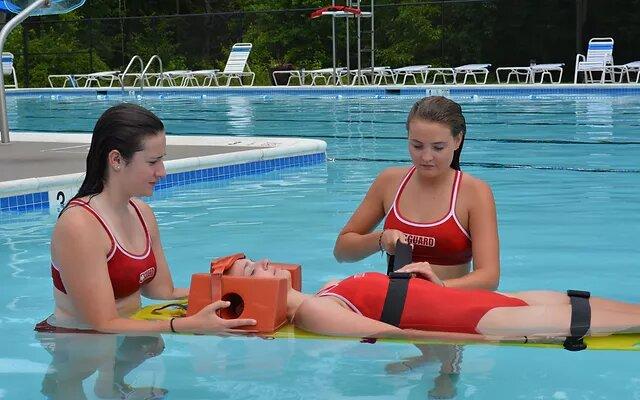
4. Spinal Injury Management
- Head and neck stabilization
- Backboarding techniques
- Team coordination
5. Emergency Action Plans (EAP)
- Reviewing emergency procedures
- Communication and teamwork
- Scenario-based drills
How Long Is Lifeguard Recertification?
Recertification courses are shorter than full training programs.
Typical duration:
- 6 to 12 hours
- Often completed in 1–2 days
This condensed format focuses on refreshing skills rather than teaching them from scratch.
Is Lifeguard Recertification Difficult?
Recertification can be challenging if you haven’t practiced your skills regularly.
Common difficulties:
- Physical endurance during swim tests
- Remembering proper rescue techniques
- Performing CPR correctly under pressure
Tips to succeed:
- Review your previous training materials
- Practice swimming and endurance
- Refresh CPR and first aid knowledge
- Stay physically active
If you’ve kept your skills sharp, recertification is usually straightforward.
Why Is Lifeguard Recertification Important?
Lifeguarding is not a “learn once and forget” skill. Regular updates are essential.
Key reasons:
- Skill retention: Prevents loss of critical abilities
- Updated protocols: Ensures compliance with current standards
- Confidence: Keeps lifeguards ready to act
- Safety: Reduces risk for both lifeguards and swimmers
Without recertification, even experienced lifeguards can become less effective over time.
What Happens If Your Certification Expires?
If your certification expires:
Short-term expiration:
- You may still qualify for recertification (depending on organization)
Long-term expiration:
- You’ll likely need to retake the full lifeguard course
Important:
You cannot legally or professionally work as a lifeguard with an expired certification.
Where Can You Take Lifeguard Recertification?
You can complete recertification through recognized providers such as:
Many local pools, aquatic centers, and training institutes also offer certified recertification courses.
Cost of Lifeguard Recertification
Costs vary depending on location and provider.
Typical range:
- Lower than full course fees
- Usually between $50–$150 (or local equivalent)
Some employers may cover the cost for their staff.
Benefits of Staying Certified
Maintaining your certification offers several advantages:
- Continued job eligibility
- Increased confidence and competence
- Better performance in emergencies
- Professional credibility
It also demonstrates responsibility and commitment to safety.
Career Impact of Recertification
For many lifeguards, recertification is not just a requirement it’s part of professional growth.
It helps you:
- Stay competitive in the job market
- Qualify for promotions (e.g., head lifeguard)
- Transition into related careers like EMS or firefighting
Final Thoughts
Lifeguard recertification is a crucial step in maintaining your ability to protect lives. It ensures your skills remain sharp, your knowledge stays current, and your confidence remains strong in high-pressure situations.
If your certification is approaching expiration, don’t wait—schedule your recertification early. Staying prepared isn’t just about keeping a job; it’s about being ready when someone needs you most.