

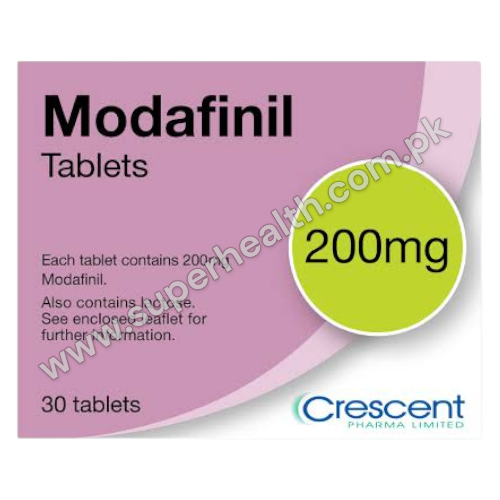
Modafinil 200mg is a prescription medicine used to promote wakefulness in adults with excessive daytime sleepiness associated with narcolepsy, with or without cataplexy. It works on the central nervous system to increase wakefulness and reduce the tendency to fall asleep during the daytime. In the UK, treatment should be started by, or under the supervision of, a doctor experienced in managing sleep disorders.
Although modafinil is sometimes discussed online as a medicine for improving concentration or productivity, its licensed UK indication is considerably narrower. It should not be used simply as a general-purpose stimulant or as a substitute for adequate sleep.
What Is Modafinil 200mg?
Modafinil is a wake-promoting medicine. It is available in tablet form and is commonly prescribed to adults diagnosed with narcolepsy who experience excessive daytime sleepiness.
Excessive sleepiness associated with narcolepsy can interfere with work, education, driving and everyday activities. Modafinil can help improve wakefulness, although it does not cure narcolepsy itself.
UK product information states that a diagnosis of narcolepsy should be established following an appropriate clinical assessment, including consideration of other potential causes of excessive sleepiness.
What Is Modafinil 200mg Used For?
The licensed indication for modafinil 200mg tablets in the UK is the treatment of excessive sleepiness associated with narcolepsy in adults, whether or not cataplexy is present.
Narcolepsy is a long-term neurological sleep disorder that can cause excessive daytime sleepiness and sudden episodes of falling asleep. Treatment is usually individualised and may involve medicines, lifestyle measures and specialist follow-up.
Modafinil is therefore best understood as part of a broader treatment plan rather than a replacement for good sleep habits or specialist care.
Dosage Considerations
The recommended starting daily dose in UK product information is 200mg. Depending on a person’s response and clinical circumstances, the total daily dose may be taken as one dose in the morning or divided between morning and midday. In selected patients who have an insufficient response, doses up to 400mg per day may be considered by a doctor.
The appropriate dose should always be determined by the prescribing clinician. Patients should not increase their dose because they feel tired or believe that a larger amount would improve concentration.
Older adults may require a lower starting dose. UK product information recommends that patients over 65 years of age commence treatment at 100mg daily because clearance of the medicine may be reduced. People with severe liver impairment may also require a reduced dose.
How Modafinil Works
Modafinil promotes wakefulness through effects on the brain and central nervous system. Its precise mechanism is not completely understood, but its effects differ from those of traditional amphetamine-type stimulants.
After oral administration, modafinil is absorbed relatively well, with peak blood concentrations generally occurring around two to four hours after a dose. Food does not significantly change overall exposure, although it can delay absorption by approximately one hour.
The medicine has a relatively long elimination half-life, meaning its effects can persist for many hours.
Common Side Effects
Like all medicines, modafinil can cause unwanted effects. Headache is the most commonly reported adverse reaction, occurring in approximately 21% of patients in clinical trials described in the UK product information. It is generally mild to moderate and may improve after several days.
Other reported adverse effects can include:
- Nausea
- Nervousness
- Anxiety
- Insomnia
- Dizziness
- Dry mouth
- Reduced appetite
- Abdominal discomfort
- Diarrhoea
- Palpitations
- Increased heart rate
- Blurred vision
NHS guidance also identifies headache, nausea, nervousness, difficulty sleeping and stomach problems among possible stimulant-related side effects.
Persistent or troublesome symptoms should be discussed with a doctor or pharmacist.
Important Skin-Reaction Warning
One of the most important safety warnings associated with modafinil concerns serious skin reactions.
Rare cases of serious or potentially life-threatening reactions, including Stevens-Johnson syndrome, toxic epidermal necrolysis and DRESS, have been reported. UK product information states that modafinil should be stopped at the first sign of a rash and should not be restarted.
A rash accompanied by fever, facial swelling, blistering, peeling skin, mouth ulcers or other unusual symptoms requires urgent medical assessment.
Because serious reactions may initially appear similar to an ordinary rash, patients should not ignore new skin reactions after starting modafinil.
Cardiovascular Safety
Modafinil can affect blood pressure and heart rate. UK product information recommends an ECG before treatment begins and regular monitoring of blood pressure and heart rate during treatment.
Modafinil is contraindicated in patients with uncontrolled moderate-to-severe hypertension or cardiac arrhythmias. People with cardiovascular disease or a history of abnormal blood pressure should discuss their medical history carefully with their doctor before treatment.
The NHS similarly notes that modafinil has been associated with irregular heart rhythms and increased blood pressure and advises regular monitoring during treatment.
Symptoms such as chest pain, fainting, a racing or irregular heartbeat, or significant shortness of breath should receive prompt medical attention.
Psychiatric Effects
Buy Modafinil 200mg in UK can occasionally cause or worsen psychiatric symptoms. The UK product information recommends caution in people with a history of psychiatric disorders, including depression, psychosis, mania, significant anxiety or substance misuse.
Possible warning signs include:
- Severe anxiety or agitation
- Unusual aggression or hostility
- Hallucinations
- Delusional thinking
- Manic symptoms
- Significant mood changes
- Suicidal thoughts or behaviour
Anyone experiencing significant psychiatric symptoms while taking modafinil should contact their healthcare professional promptly. The UK product information advises discontinuation if psychiatric symptoms develop in association with treatment.
Modafinil and Sleep
Because modafinil promotes wakefulness, taking it too late in the day can contribute to difficulty sleeping at night.
Good sleep hygiene remains important during treatment. Modafinil should not be viewed as a way to compensate for consistently inadequate sleep.
Reducing excessive caffeine intake and maintaining a regular sleep schedule may be useful components of an overall sleep-management plan.
If insomnia develops or becomes worse, the prescribing clinician may need to review the timing, dose or continued need for treatment.
Drug Interactions
Modafinil can interact with other medicines because it affects certain liver enzymes involved in drug metabolism.
For example, it can reduce the effectiveness of some hormonal or steroidal contraceptives. UK product information recommends alternative or additional contraception during modafinil treatment and for two months after stopping.
Modafinil can also interact with certain anticonvulsants and other medicines. Anyone prescribed modafinil should provide their doctor or pharmacist with a complete list of prescription medicines, over-the-counter products and supplements.
Do not assume that a medicine is safe to combine with modafinil simply because it is available without a prescription.
Pregnancy and Breastfeeding
Modafinil should not be used during pregnancy because available evidence indicates a potential risk of congenital abnormalities. UK product information advises women of childbearing potential to use effective contraception during treatment.
The NHS states that effective contraception should continue during treatment and for at least two months after stopping modafinil because the medicine can reduce the effectiveness of some hormonal contraceptives.
Modafinil should also not be used during breastfeeding according to the UK product information.
Anyone who becomes pregnant while taking modafinil should contact their doctor promptly to discuss appropriate treatment.
Modafinil and Driving
Modafinil can improve wakefulness, but it does not necessarily restore normal alertness in every person with excessive sleepiness.
UK product information states that patients with abnormal sleepiness should be regularly reassessed and, where appropriate, advised to avoid driving or other potentially dangerous activities. Dizziness and blurred vision can also affect driving ability.
People with narcolepsy also have specific responsibilities concerning driving and should follow current DVLA requirements and their specialist’s advice.
A person should never drive simply because they have taken modafinil if they remain excessively sleepy or otherwise impaired.
Dependence, Misuse and Responsible Use
Modafinil has a different pharmacological profile from traditional stimulant medicines, but its potential for abuse, misuse, diversion and dependence cannot be completely excluded.
UK product information advises caution when prescribing modafinil to people with a history of alcohol, drug or illicit-substance misuse.
Patients should take the medicine exactly as prescribed and should never share tablets with another person. Taking larger amounts without medical supervision can increase adverse effects and does not necessarily provide better treatment.
Who Should Not Take Modafinil?
Modafinil is not suitable for everyone. UK product information lists hypersensitivity to modafinil or its ingredients, uncontrolled moderate-to-severe hypertension and cardiac arrhythmias among contraindications.
It is also not recommended for people under 18 because safety and effectiveness have not been established and there are concerns about serious skin and psychiatric reactions.
Doctors may need to take additional precautions in patients with cardiovascular disease, liver problems, psychiatric conditions or a history of substance misuse.
Monitoring During Treatment
Regular medical reviews are an important part of responsible modafinil treatment. Doctors may assess:
- Daytime sleepiness and treatment response
- Blood pressure
- Heart rate
- Psychiatric symptoms
- Sleep patterns
- Side effects
- Potential medicine interactions
- The continuing need for treatment
UK product information recommends periodic clinical assessment of the need for ongoing treatment. It also notes that long-term efficacy beyond nine weeks has not been established in the relevant product information, reinforcing the importance of regular reassessment rather than automatically continuing treatment indefinitely.
What Happens If Too Much Modafinil Is Taken?
Taking more modafinil than prescribed can result in symptoms such as restlessness, anxiety, confusion, agitation, hallucinations, nausea, insomnia and cardiovascular effects including changes in heart rate, blood pressure or chest pain. Serious outcomes have been reported with overdose, particularly when other medicines are involved.
If someone has taken substantially more than prescribed, urgent medical advice should be obtained. Severe symptoms such as chest pain, severe agitation, loss of consciousness or serious breathing problems require emergency medical attention.
Obtaining Modafinil Safely in the UK
Modafinil is a prescription-only medicine in the UK. It should be prescribed following appropriate medical assessment and obtained through legitimate pharmacy services.
Online sellers offering modafinil without appropriate prescribing safeguards can create additional risks because the identity, strength, purity and contents of medicines obtained from unverified sources may not be reliable.
Using a legitimate prescription also provides an opportunity for a doctor or pharmacist to assess interactions, cardiovascular risks, pregnancy considerations and other factors relevant to safe treatment.
Frequently Asked Questions
Is 200mg a standard modafinil dose?
UK product information lists 200mg as the recommended starting daily dose for adults with narcolepsy. However, treatment must be individualised by a healthcare professional.
Can modafinil be used to replace sleep?
No. Modafinil promotes wakefulness but is not a replacement for adequate sleep. Maintaining good sleep hygiene remains important during treatment.
Does modafinil affect contraception?
Yes. Modafinil can reduce the effectiveness of steroidal hormonal contraceptives. Alternative or additional contraception is recommended during treatment and for two months after stopping.
Can modafinil be taken during pregnancy?
No. UK product information advises against using modafinil during pregnancy because of the potential risk of congenital malformations.
What should I do if I develop a rash?
Stop modafinil and seek medical advice promptly. UK product information specifically recommends discontinuing treatment at the first sign of rash because serious skin reactions, although rare, have been reported.
Conclusion
Modafinil 200mg is an important wake-promoting medicine used in the UK for excessive daytime sleepiness associated with narcolepsy. Its benefits need to be balanced against possible side effects and safety concerns, including headache, insomnia, cardiovascular effects, psychiatric reactions, drug interactions and rare but serious skin reactions.
The medicine should be used under appropriate medical supervision, with regular assessment of effectiveness and safety. Patients should follow their prescribed dose, inform healthcare professionals about other medicines they take, use appropriate contraception where applicable, and seek medical advice about significant side effects.
Modafinil is not a substitute for healthy sleep and should not be used simply to overcome ordinary tiredness. For people who have been appropriately assessed and prescribed the medicine, careful monitoring and responsible use are central to achieving its intended therapeutic benefits while reducing avoidable risks.