
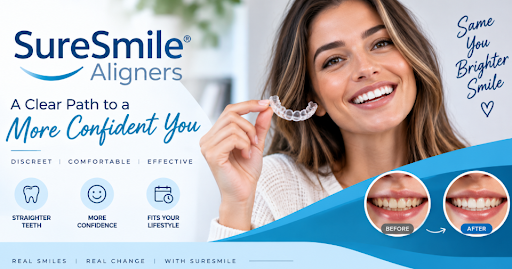
Orthodontic treatment is no longer limited to traditional metal braces. Many patients now have access to removable systems that gradually reposition teeth using a series of transparent trays. SureSmile aligners are one example of this approach, offering a digitally planned treatment method designed to move teeth in controlled stages. For adults and teenagers who want a less noticeable orthodontic option, aligner therapy can be appealing, but successful treatment still depends on accurate diagnosis, consistent wear, regular monitoring, and realistic expectations about what the system can correct.
What Are SureSmile Aligners?
SureSmile aligners are custom-made transparent trays designed to move teeth gradually over time.
The treatment process typically begins with a digital scan or impression of the patient’s teeth. Orthodontic planning software is then used to map the desired tooth movements and create a sequence of aligners.
Each tray applies gentle pressure to selected teeth. After wearing one set for the prescribed period, the patient progresses to the next aligner in the series.
Because the trays are removable and transparent, they are generally less visible than conventional metal braces. However, they still function as orthodontic appliances and should be worn according to the treatment plan.
What Dental Problems Can Aligners Correct?
Aligner therapy can be used for many common orthodontic concerns, although suitability depends on the complexity of the case.
Potential treatment goals include:
- Mild to moderate crowding
- Spaces between teeth
- Certain overbite problems
- Some underbite cases
- Crossbite correction
- Rotated teeth
- Minor relapse after previous orthodontic treatment
SureSmile aligners may also be used as part of a broader treatment plan when bite alignment needs to be improved along with tooth position.
Not every orthodontic problem is best treated with removable trays. Severe skeletal discrepancies, complex tooth movements, or certain difficult bite relationships may require traditional braces, specialist orthodontic care, or a combined approach.
A clinical examination is therefore essential before treatment begins.
How Does the Treatment Process Work?
The first stage is assessment.
A dental professional examines the teeth, gums, jaw relationship, and bite. Digital scans, photographs, and X-rays may be taken to help identify the current tooth positions and underlying dental structures.
A digital treatment plan can then estimate how the teeth may move over time.
Once SureSmile aligners are manufactured, patients receive a sequence of trays. Each aligner is worn according to a prescribed schedule before being replaced with the next one.
Regular checkups allow the dentist or orthodontic provider to monitor progress and determine whether tooth movement is following the plan.
In some cases, small tooth-colored attachments may be bonded to selected teeth to help the aligners apply specific forces more effectively.
How Many Hours a Day Should Aligners Be Worn?
Consistent wear is one of the most important factors in aligner treatment.
Removable trays only move teeth when they are being worn. Patients are typically instructed to keep their aligners in place for most of the day and night, removing them primarily for eating, drinking certain beverages, brushing, and flossing.
The exact daily wear requirement should be determined by the treating provider.
A major advantage of SureSmile aligners is removability, but this can also be a disadvantage for patients who frequently forget to put the trays back in.
Insufficient wear may slow treatment, reduce the accuracy of planned tooth movements, or require additional aligners.
Are SureSmile Aligners More Comfortable Than Braces?
Many patients find removable aligners more comfortable than fixed braces because there are no metal brackets or wires rubbing against the cheeks.
However, aligner treatment is not completely sensation-free.
Patients may experience temporary pressure or mild soreness when beginning a new tray. This discomfort usually reflects the force being applied to move the teeth.
The edges of an aligner may occasionally cause irritation, particularly when treatment begins.
Because SureSmile aligners are removable, patients also avoid some of the food restrictions associated with fixed braces. The trays should generally be removed before eating so they are not damaged or stained.
Can You Eat Normally During Treatment?
One of the practical benefits of removable orthodontic treatment is that patients can usually continue eating most of their normal foods.
Aligners should typically be removed before meals and snacks. Eating while wearing them can damage or distort the trays and may trap food against the teeth.
Before reinserting SureSmile aligners, patients should ideally clean their teeth to prevent food particles and sugars from being trapped beneath the trays for extended periods.
Drinking water while wearing aligners is generally straightforward, but hot beverages can potentially distort some plastic materials, while colored or sugary drinks may contribute to staining or tooth decay.
Patients should follow the specific instructions provided by their dental professional.
How Should Aligners Be Cleaned?
Proper cleaning helps keep trays clear and reduces odor or buildup.
Aligners should usually be rinsed when removed and cleaned using methods recommended by the treating provider. Very hot water should generally be avoided because heat can affect the shape of the plastic.
Patients should also maintain excellent oral hygiene throughout treatment.
Because aligners fit closely over the teeth, plaque and food debris can become trapped if teeth are not cleaned properly. This can increase the risk of tooth decay, gum inflammation, and unpleasant odors.
Daily brushing and interdental cleaning remain essential while using SureSmile aligners.
How Long Does SureSmile Treatment Take?
Treatment length varies significantly.
Minor alignment concerns may require a shorter treatment period, while more complex bite or crowding problems may take considerably longer.
Factors that influence treatment duration include:
- Severity of tooth movement required
- Patient age
- Bite complexity
- Consistency of aligner wear
- Biological response to orthodontic forces
- Need for additional refinements
- Missed or delayed appointments
Patients should be cautious about assuming a specific treatment time before receiving a full orthodontic assessment.
The digital plan may provide an estimate, but actual treatment can change depending on how the teeth respond.
Are Refinement Aligners Sometimes Necessary?
Yes.
Even carefully planned orthodontic movements do not always occur exactly as predicted. Some teeth may move more slowly than expected or may not fully track with the aligner.
If this happens, the provider may take new scans and order additional trays known as refinement aligners.
This does not necessarily mean treatment has failed. Refinements are a common part of aligner therapy and can help improve the final tooth positions.
Regular monitoring is important because it allows the provider to identify tracking problems early rather than waiting until the end of treatment.
What Happens After Aligner Treatment?
Orthodontic treatment does not end when the final active tray is removed.
Teeth naturally have a tendency to move back toward their original positions. Retainers are therefore typically recommended after SureSmile aligners have completed the planned tooth movement.
Retainers may be removable or fixed depending on the patient’s needs.
The length and frequency of retainer wear vary, but long-term retention is generally important for maintaining orthodontic results.
Patients should also continue normal dental examinations and professional cleanings after treatment.
Conclusion
Removable orthodontic systems can provide a discreet and convenient way to improve tooth alignment, but they still require discipline and professional supervision. Accurate diagnosis, consistent tray wear, good oral hygiene, and follow-up appointments all contribute to predictable treatment. For patients considering clear aligners, it is important to understand that suitability depends on the type and complexity of the orthodontic problem rather than appearance preferences alone. When used for an appropriate case, SureSmile aligners can offer an effective alternative to fixed braces for certain alignment and bite concerns. A complete dental assessment can determine whether aligner treatment is suitable and help establish realistic expectations for treatment time, comfort, maintenance, and long-term retention.