

Introduction.
The room decides the table, not the other way round. Before you compare finishes or argue about cloth speed, walk into the space with a tape measure and work out how much clear floor you actually have on all four sides. Every other decision in this guide sits downstream of that one number.
It sounds obvious until you watch it go wrong. The table arrives, the room looks fine, and then somebody lines up along the long rail, and the butt of the cue meets a wall. There is no fixing that afterwards. Half a tonne of solid wood does not shift over by six inches, and the shot you cannot play becomes the one everybody remembers. Sort the space out first. Choosing the rest is the enjoyable part.
What Makes a Billiards Pool Table Play Well?
The play of a table is made up of three things: the flatness of the bed, the springiness of the cushions, and the cloth stretched over both. A little unlevelness in the bed sends the cue ball off on long rolls. Once you see it, you can’t unsee it. Cushions decide how the ball leaves a rail, which is the difference between a predictable bank shot and a guess.
Weight is a decent proxy for all of it. Serious tables are heavy because the structure underneath has to hold the bed dead flat for years without flexing. The ARGMAC Avena weighs 500 kg on a solid wood structure, and that mass is doing real work every time a break shot lands.
Then there is the part no spec sheet mentions. A good table is comfortable to play on. Height, rail width, and pocket cut all affect how the cue sits in your hand, and a table that feels awkward will quietly get used less, however good it looks.
Getting the Room Right Before Your Pool Table Arrives
This is where most home installations go wrong, and it is entirely preventable with a tape measure and ten minutes.
How Much Space a Pool Table Really Needs
The number that matters is not the table footprint. It is the footprint plus enough clearance on all four sides for a player to draw back and follow through without hitting anything.
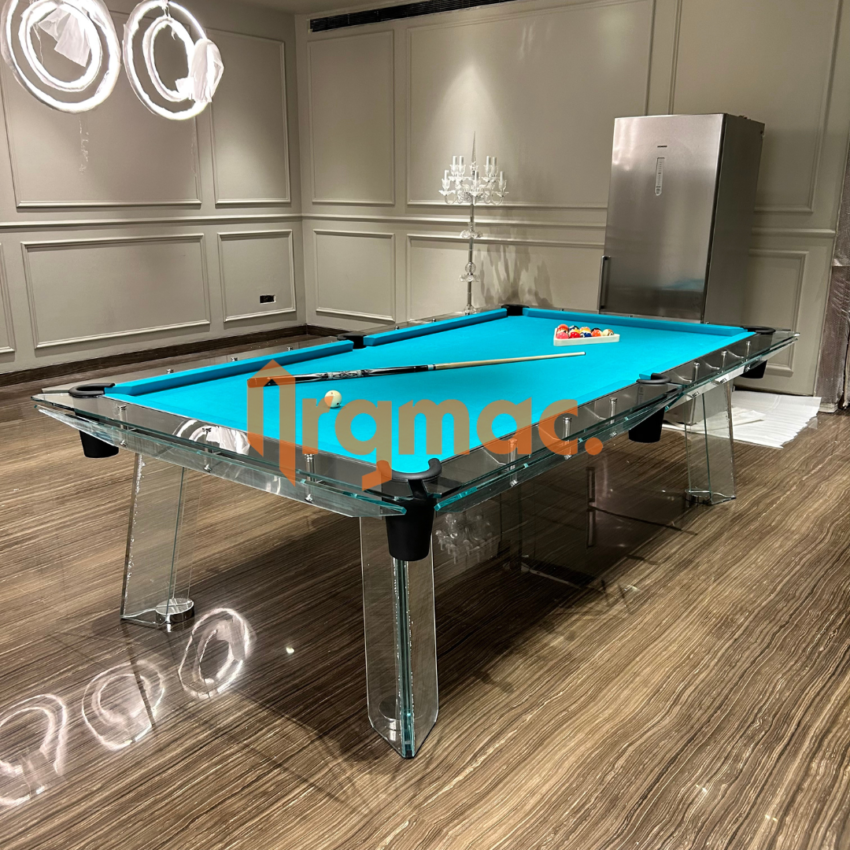
The Avena measures 9 feet by 5 feet overall, with an 8 by 4 playing area and a height of 30 inches. For that size, plan on a room of roughly 19 feet by 15 feet. It sounds generous until you stand at a corner pocket and try to line up a shot along the long rail with a bookshelf behind you.
If only one side is tight, you still have options. Plenty of home rooms work with full clearance on three sides and a shorter solution on the fourth.
Pool Cue Length Changes the Answer
A standard pool cue runs 57 to 58 inches, and every clearance figure above assumes that length. Shorten the cue, and the room requirement shrinks with it.
A 52-inch cue buys back roughly half a foot on each side, and a 48-inch cue nearly a foot. Keeping one or two short cues in the rack is the cheapest fix for a room that is one wall too narrow.
Choosing a Billiards Pool Table You Will Still Like in Ten Years
Once the room is settled, the decision moves to materials and finish. This is where taste finally gets a say, and where it helps to know what actually changes with time.
Slate, Cloth, and Cushions on a Pool Table
Cloth is the part you will replace and the part that changes the game most. Worsted cloth plays fast with less roll-off. Napped cloth plays slower and grips more, which many casual players prefer because the balls stop where they expect.
Color is not only cosmetic. Darker cloth hides wear and chalk marks but shows less contrast in low light, so if your game room runs dim, factor that in. The Avena lets you specify cloth color at order, along with the veneer finish in PU matt, satin, or gloss.
Fitting the Pool Table to the Room
A table this size becomes the center of gravity of the room whether you design it that way or not, so it’s worth designing around instead of squeezing it in.
Use the metals and woods that you have. The Avena runs fluted pedestal legs with brushed gold accents, leather drop pockets, and an inclined base, which sits well with walnut marble and warm brass and fights with cold chrome. Use a low fixture over the table instead of ceiling spots that cast player shadows directly across the shot line.
FAQs
What size billiards pool table should I buy for a home? An 8 by 4 playing area suits most homes, giving a full game without demanding a hall.
What pool cue length works in a tight room? Keep a 52-inch and a 48-inch pool cue alongside your full-length ones. They cover the awkward corner without changing anything about the table.
Does the cloth color on a pool table affect play? Not the physics, but it affects visibility. Dark cloth hides wear well and needs better lighting to keep contrast on the balls.
Can the Avena pool table be customized? Yes. Veneer finish, cloth color, and other details can be specified at order, and ARGMAC handles customization as part of the build.
Conclusion: The Pool Table That Actually Gets Played
A pool table is not a purchase you repeat. It only happens once, it weighs a half ton, and it stays where you put it. That is where the appeal is—its permanence. That is why you should spend more time with the measuring tape than with the finish swatches at the start.
Then set the room up properly. Grade the table on the level of the bed, the response of the cushions, and the feel of the cue in your hand at the rail. The fun part of the decision is the cloth color and veneer, and you can change your mind later. Structure is not.
See the Avena Pool Table at argmac.com and speak to the ARGMAC team about sizing, finish, and cloth for the room you have in mind.