
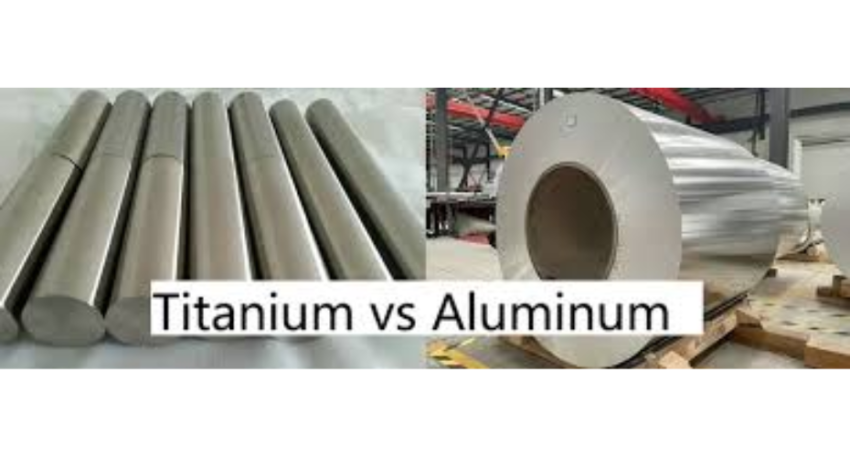
When sourcing components from a leading flange manufacturer in India, engineers and procurement specialists often face a critical material selection: Titanium or Aluminum? While both are celebrated for being “lightweight” and “high-performance,” their behavior under physical and thermal stress diverges drastically. For sectors like aerospace, defense, and subsea oil and gas—where “extreme” is the daily baseline—choosing the wrong alloy is more than a budget error; it is a potential failure risk.
1. The Temperature Threshold: Where Aluminum Fades
Aluminum alloys are the undisputed champions of the “room temperature” world. They are highly cost-effective, easily machined, and offer a strength-to-weight ratio that makes them ideal for the automotive and consumer electronics sectors. However, aluminum has a relatively low melting point of approximately 660°C.
- The Structural Drop-off: The primary limitation of aluminum is its thermal stability. Most aluminum forgings begin to lose their structural integrity once temperatures exceed 150°C (300°F). Beyond this point, the material softens significantly, leading to potential warping or joint failure in high-heat industrial processes.
- The Cryogenic Exception: Interestingly, aluminum performs better than almost any other metal in extreme cold. In cryogenic applications—such as liquid nitrogen storage or space exploration components—aluminum actually gains toughness and ductility without becoming brittle, a rare and valuable trait in metallurgy.
2. Titanium: The High-Heat Powerhouse
If your application involves jet engines, high-pressure steam lines, or advanced exhaust systems, Titanium is the undisputed king. Titanium alloys, such as the ubiquitous Ti-6Al-4V (Grade 5), maintain their mechanical properties and structural rigidity at temperatures up to 600°C.
- Creep Resistance: One of Titanium’s most valuable traits is its resistance to “creep”—the tendency of a metal to slowly deform under persistent mechanical stress at high temperatures. In high-pressure flange connections, superior creep resistance prevents leaks and catastrophic joint failure over long-term operation.
- Corrosion in India’s Climate: For coastal industrial plants or offshore rigs in India, the environment is a constant threat. Titanium’s natural, self-healing oxide layer provides near-total immunity to saltwater corrosion and chlorides. Unlike aluminum, which requires heavy anodizing or specialized coatings to survive marine environments, titanium is inherently “fit and forget,” reducing long-term maintenance costs.
3. Forging Challenges: Why Your Manufacturer Matters
Forging these two metals requires vastly different equipment, thermal cycles, and metallurgical expertise. As a specialized flange manufacturer in India, we emphasize that the forging process is just as critical as the base element.
Feature
Aluminum Forging
Titanium Forging
Forging Temp
350°C – 500°C
870°C – 980°C
Equipment
Standard hydraulic presses
High-tonnage, precision-controlled presses
Atmospheric Control
Standard
Requires strict inert atmosphere/vacuum
Cost Profile
Budget-friendly
Premium investment
Common Use
Automotive, Cryogenics
Aerospace, Chemical ProcessingWhy Source from a Flange Manufacturer in India?
India has rapidly evolved into a global hub for high-grade alloy forging, competing directly with Western Tier-1 suppliers. By partnering with an Indian expert, you gain several strategic advantages:
- Global Standards: Modern Indian forges operate under rigorous ASTM, ASME, and DIN specifications, ensuring your titanium or aluminum flanges meet international safety and quality codes.
- Advanced Machining: The integration of 5-axis CNC machining allows for complex flange geometries and tight tolerances that were once impossible to achieve at scale.
- Supply Chain Agility: With a robust local ecosystem, Indian manufacturers offer significantly faster lead times for critical infrastructure projects compared to traditional European or North American hubs.
Conclusion: Making the Final Call
The choice ultimately boils down to your specific operating environment. Choose Aluminum if your project is budget-sensitive, operates below 150°C, or involves cryogenic storage. Choose Titanium for any “mission-critical” component exposed to high heat, extreme pressure, or corrosive chemicals.
As a premier flange manufacturer in India, we specialize in both titanium and high-strength aluminum alloys, ensuring your infrastructure is built to last.