
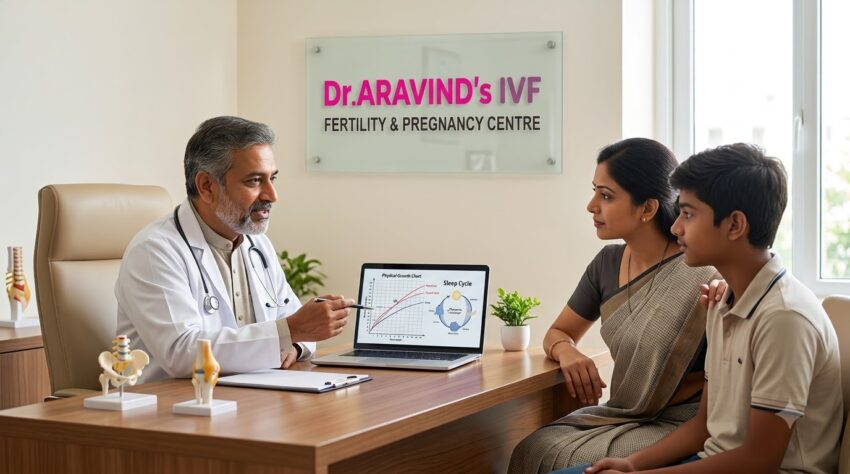
What Is Nightfall in Men is a common question during the teenage years, especially when a boy notices semen on his underwear after waking up. Nightfall, medically called a nocturnal emission, is involuntary ejaculation that occurs during sleep. It can happen without masturbation or conscious sexual activity.
For most teenagers, it is a normal part of puberty and does not mean that anything is wrong with the body.
Why Can It Start During Puberty?
Puberty brings major physical and hormonal changes. Testosterone levels increase, the reproductive organs mature, and sexual responses become more noticeable.
During sleep, the brain can produce sexual dreams or trigger physical arousal without conscious intention. Sometimes this response may end in ejaculation.
Not every teenager experiences nightfall, and those who do may notice it at different frequencies. There is no fixed age or schedule that applies to everyone.
Does Every Teenage Boy Experience It?
No.
Some boys may experience nocturnal emissions occasionally, while others may have them more frequently. Some may never notice them at all.
This variation is normal.
Comparing frequency with friends or online discussions can create unnecessary anxiety because individual sexual development is different.
Does Nightfall Mean Sexual Activity?
Not necessarily.
An emission can happen without masturbation, sexual intercourse, or even a remembered sexual dream.
The body can respond to hormonal and nervous-system activity during sleep automatically.
Therefore, a teenager should not feel guilty or ashamed if it happens.
Does It Cause Weakness?
One of the most common misconceptions is that losing semen causes weakness.
Normal ejaculation does not permanently drain physical strength or energy.
If a teenager feels tired after waking, the tiredness may be related to interrupted sleep, stress, inadequate rest, or another factor rather than the emission itself.
Persistent fatigue should be discussed separately with a healthcare professional.
Does It Reduce Sperm?
Nocturnal emissions do not normally cause permanent sperm loss.
The testes continue producing sperm, while the reproductive system naturally manages sperm that are not ejaculated.
A teenager does not need to take supplements, special drinks, or medicines simply because an emission has occurred.
Can It Affect Future Fertility?
Nightfall itself does not generally contribute directly to infertility.
Future reproductive health depends on many factors, including sperm production, hormones, reproductive anatomy, general health, and lifestyle.
Experiencing nightfall during puberty does not mean that a person will have difficulty becoming a father later.
If fertility concerns arise in adulthood, proper medical evaluation is much more useful than judging fertility based on nocturnal emissions.
A Best IVF centre in Calicut may provide fertility assessment for adults experiencing genuine conception difficulties, but ordinary teenage nightfall does not require IVF treatment.
Can It Be Prevented?
There is no guaranteed method for completely preventing normal nocturnal emissions.
Teenagers may encounter online advice suggesting special diets, sleeping positions, herbal medicines, or supplements.
Such claims should be approached carefully.
Healthy habits such as regular physical activity, balanced nutrition, adequate sleep, and stress management are beneficial for general health, but they should not be presented as guaranteed ways to stop nightfall.
When Should Parents Be Concerned?
Parents generally do not need to worry about occasional nightfall by itself.
A teenager may benefit from medical advice if there is:
- Pain during ejaculation
- Blood in semen
- Burning during urination
- Unusual genital discharge
- Persistent pelvic discomfort
- Significant sleep disruption
- Severe anxiety about the episodes
- Other unusual sexual or urinary symptoms
A doctor can determine whether these symptoms are related to normal development or require further evaluation.
How Can Parents Talk About It?
Having a supportive and understanding conversation can be very helpful.
Instead of presenting nightfall as something embarrassing or unhealthy, parents can explain that the body goes through natural changes during puberty.
Teenagers should also know that asking a doctor questions about sexual development is completely appropriate.
Reliable medical information can prevent fear caused by myths shared online or among peers.
Common Myths
Myth: Nightfall makes teenagers physically weak.
Normal episodes do not cause permanent weakness.
Myth: It means the teenager is sexually overactive.
No. It can happen without conscious sexual activity.
Myth: Every boy should experience it.
No. Frequency varies, and some never experience it.
Myth: It damages future fertility.
Normal nocturnal emissions are not a direct cause of infertility.
Myth: Medicine is needed to stop it.
Usually not. Normal episodes generally do not require treatment.
Conclusion
Understanding What Is Nightfall in Men can help teenagers and parents view nocturnal emissions as a normal part of male sexual development rather than something frightening or embarrassing. Occasional episodes generally do not cause weakness, permanent sperm loss, or future infertility.
If pain, blood in semen, urinary symptoms, significant distress, or another unusual change occurs, speak with a qualified healthcare professional. For adults who later experience genuine conception difficulties, a Best fertility clinic in Kerala can provide appropriate reproductive evaluation and guidance.
Frequently Asked Questions
Is nightfall normal during puberty?
Yes. It can occur as part of normal sexual development.
Does it happen at a particular age?
There is no fixed age. Puberty and sexual development vary between individuals.
Should teenagers take medicine for it?
Occasional nightfall generally does not require medication.
Does it mean testosterone is too high?
No. Nightfall frequency cannot be used to determine testosterone levels.
Can nightfall stop naturally?
Its frequency may change over time as sexual development and individual circumstances change.