
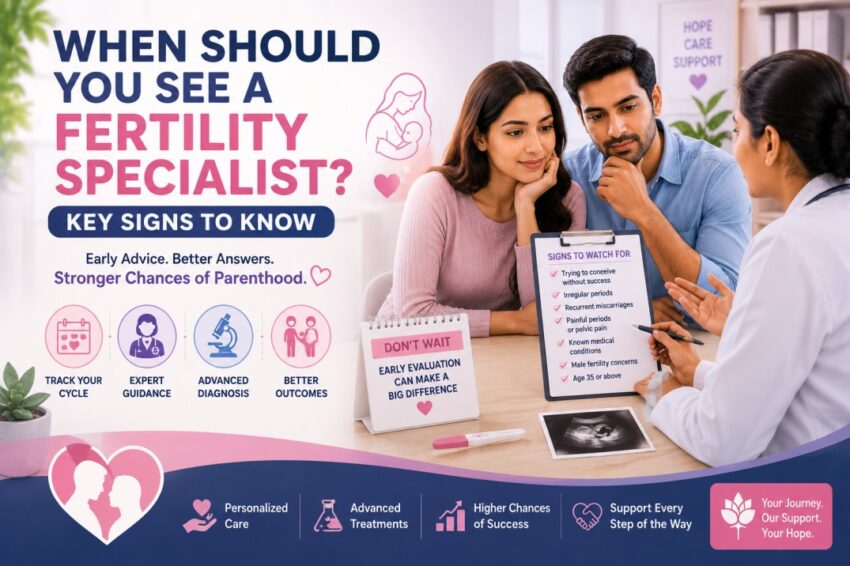
Trying to conceive can be an exciting journey, but for some couples, pregnancy doesn’t happen as quickly as expected. While it’s normal for conception to take several months, there comes a point when seeking professional help is the right decision.
Knowing when to see a fertility specialist can help identify underlying fertility issues early and improve your chances of successful treatment. Whether you’re just starting your family planning journey or have been trying to conceive for some time, understanding the warning signs can make a significant difference.
In this guide, we’ll discuss the common infertility signs, when to consult a fertility doctor, and what to expect during your first appointment.
Who Is a Fertility Specialist?
A fertility doctor, also known as a reproductive endocrinologist or fertility specialist, is a medical professional trained to diagnose and treat infertility in both men and women.
They help identify the underlying causes of fertility problems and recommend personalized treatment options, including lifestyle changes, medications, IUI, IVF, or other assisted reproductive technologies.
How Long Should You Try Before Seeing a Fertility Specialist?
For most healthy couples:
- If you’re under 35 years old: Consult a fertility specialist after 12 months of regular, unprotected intercourse without pregnancy.
- If you’re 35 or older: Seek medical advice after 6 months of trying to conceive.
- If you’re over 40: It’s recommended to consult a fertility specialist as soon as you decide to start a family.
Age plays a major role in fertility, especially for women, so early evaluation can improve treatment outcomes.
Key Signs You Should See a Fertility Specialist
1. You’ve Been Trying to Conceive Without Success
One of the most common reasons to visit a fertility doctor is difficulty getting pregnant despite regular, unprotected intercourse.
If you’ve reached the recommended timeframe based on your age, it’s time for a fertility evaluation.
2. Irregular or Absent Periods
Irregular menstrual cycles may indicate problems with ovulation.
Possible causes include:
- Polycystic Ovary Syndrome (PCOS)
- Thyroid disorders
- Hormonal imbalances
- Premature ovarian insufficiency
Regular ovulation is essential for natural conception.
3. Recurrent Miscarriages
Experiencing two or more miscarriages may indicate an underlying reproductive issue.
A fertility specialist can investigate potential causes, including:
- Genetic factors
- Hormonal imbalances
- Uterine abnormalities
- Autoimmune conditions
Early diagnosis may improve future pregnancy outcomes.
4. Known Medical Conditions Affecting Fertility
Consult a fertility specialist if you have conditions such as:
- Endometriosis
- PCOS
- Fibroids
- Blocked fallopian tubes
- Diabetes
- Autoimmune diseases
Managing these conditions early may improve fertility.
5. Male Fertility Concerns
Infertility is not only a women’s health issue.
Men should also seek evaluation if they experience:
- Low sperm count
- Poor sperm motility
- Erectile dysfunction
- Ejaculation problems
- History of testicular injury or surgery
- Previous chemotherapy or radiation
A semen analysis is often the first step in assessing male fertility.
6. You’re Over 35
Female fertility gradually declines with age, particularly after 35.
If you’re over 35 and have been trying to conceive for six months without success, don’t delay seeking medical advice.
Earlier treatment often leads to better results.
7. Painful Periods or Pelvic Pain
Severe menstrual pain isn’t always normal.
Persistent pelvic pain may be linked to:
- Endometriosis
- Pelvic inflammatory disease (PID)
- Ovarian cysts
These conditions can affect fertility if left untreated.
8. Previous Cancer Treatment
Chemotherapy and radiation therapy may affect egg or sperm production.
If you’ve undergone cancer treatment and wish to have children, consult a fertility specialist to discuss your options.
9. Multiple Failed Fertility Treatments
If you’ve already undergone fertility treatments such as ovulation induction or IUI without success, a specialist can evaluate whether advanced treatments like IVF may be appropriate.
10. Family History of Infertility or Early Menopause
A family history of:
- Early menopause
- Genetic disorders
- Infertility
may increase your risk of fertility problems.
Early fertility assessment can help you plan ahead.
What Happens During Your First Fertility Consultation?
During your first appointment, the fertility specialist will review your medical history and recommend appropriate tests.
These may include:
For Women
- Hormone blood tests
- Ovulation assessment
- Pelvic ultrasound
- Ovarian reserve testing
- Uterine evaluation
For Men
- Semen analysis
- Hormone testing
- Physical examination
These evaluations help identify the cause of infertility and guide treatment decisions.
Can Lifestyle Affect Fertility?
Yes. Lifestyle plays an important role in reproductive health.
Healthy habits that support fertility include:
- Maintaining a healthy weight
- Eating a balanced diet
- Exercising regularly
- Sleeping 7–8 hours per night
- Avoiding smoking
- Limiting alcohol
- Managing stress
Even small lifestyle improvements can positively influence fertility.
Fertility Treatments Your Doctor May Recommend
Depending on the diagnosis, treatment options may include:
- Lifestyle modifications
- Fertility medications
- Ovulation induction
- Intrauterine Insemination (IUI)
- In Vitro Fertilization (IVF)
- Intracytoplasmic Sperm Injection (ICSI)
- Fertility preservation (egg or sperm freezing)
Your treatment plan will be tailored to your individual needs.
Frequently Asked Questions
When should I see a fertility doctor?
If you’re under 35 and have been trying to conceive for one year, or over 35 and trying for six months without success, it’s time to consult a fertility specialist.
Can both partners be tested?
Yes. Fertility evaluations typically involve both partners because male infertility contributes to nearly half of infertility cases.
Is infertility always treatable?
Many causes of infertility can be managed or treated with lifestyle changes, medication, surgery, or assisted reproductive technologies.
Does stress cause infertility?
Stress alone usually doesn’t cause infertility, but chronic stress may affect hormone balance and overall reproductive health.
Can I improve fertility naturally?
Healthy eating, maintaining a healthy weight, regular exercise, quitting smoking, reducing alcohol intake, and managing stress may improve fertility for some individuals.
Final Thoughts
Knowing when to see a fertility specialist is one of the most important steps in your fertility journey. If you’ve been trying to conceive without success, have irregular periods, recurrent miscarriages, male fertility concerns, or medical conditions that affect reproduction, seeking expert guidance early can improve your chances of a successful pregnancy.
Remember, infertility affects both men and women, and early diagnosis often leads to more treatment options and better outcomes.
At Ferti.Health, we’re dedicated to providing trusted, evidence-based fertility information to help individuals and couples make informed decisions on their path to parenthood.