
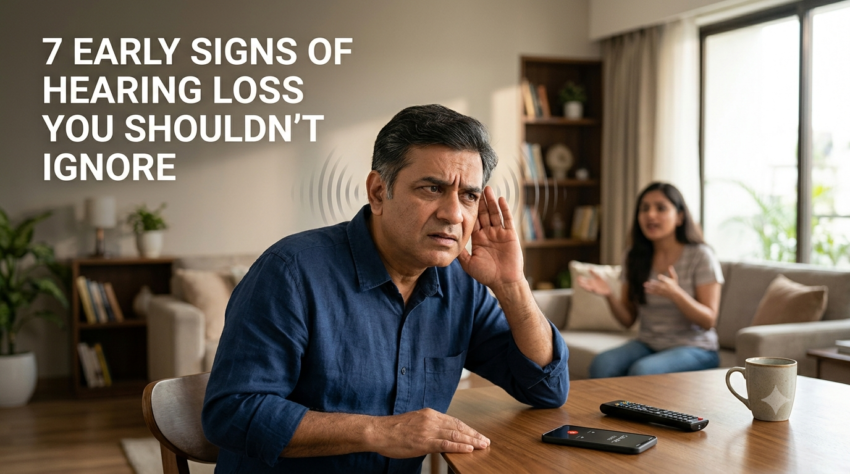
Hearing loss rarely arrives overnight. For most people, it creeps in so gradually that friends and family often notice it before the person experiencing it does. Recognizing the early warning signs can make the difference between years of struggling through conversations and getting help while treatment is simplest and most effective.
1. You Keep Asking People to Repeat Themselves
If “what did you say?” has become a regular part of your vocabulary, it’s worth paying attention. Occasional mishearing is normal, but a pattern of needing repetition — especially in one-on-one conversations — is often one of the earliest and clearest signs of hearing loss.
2. The TV Volume Keeps Creeping Up
Family members complaining that the television is “too loud” is one of the most common reasons people finally book a hearing test. If others in the room are wincing at the volume while you find it just right, your ears may be compensating for a loss you haven’t consciously noticed.
3. Restaurants and Group Settings Feel Exhausted
Background noise is one of the first places hearing loss shows up. Following a conversation in a noisy restaurant, at a family dinner, or in a busy office requires your brain to work overtime to separate speech from clutter—and that mental strain leaves many people avoiding social situations altogether.
4. Certain Sounds Seem to Disappear
High-frequency sounds are usually the first to go. This includes consonants like “s,” “f,” and “th,” as well as birdsong, doorbells, and the beep of a microwave. Speech can start to sound mumbled even when the volume is fine, because it’s clarity—not loudness—that’s affected first.
5. You Struggle on the Phone
Without visual cues like lip movement and facial expressions, phone calls demand more from your hearing. Difficulty understanding callers, especially with unfamiliar voices or on speakerphone, is a common early indicator.
6. Ringing or Buzzing in the Ears
Tinnitus — a persistent ringing, buzzing, or hissing sound — often accompanies hearing loss, even when the loss itself is mild. If you’ve started noticing phantom sounds, particularly in quiet environments, it’s a good reason to get your hearing checked.
7. Fatigue After Social Situations
Straining to hear is tiring. If you find yourself mentally drained after gatherings, meetings, or phone calls in a way you didn’t used to be, your brain may be compensating for hearing loss you haven’t yet acknowledged.
What to Do Next
None of these signs on their own are a diagnosis, but together they’re a strong signal to get a professional hearing evaluation. Modern hearing aids have changed dramatically in the last decade—today’s devices are smaller, smarter, and far more capable of restoring natural, effortless listening than the bulky aids many people still picture.
Brands like Beltone, backed by over 85 years of hearing healthcare experience, now offer AI-driven sound processing, Bluetooth streaming, and rechargeable batteries that adapt automatically to your environment. If any of the signs above sound familiar, it’s worth exploring the range of Beltone hearing aid models available and booking a free hearing assessment to understand exactly where you stand.
Catching hearing loss early doesn’t just make treatment easier—research consistently links untreated hearing loss to increased risk of cognitive decline, social isolation, and depression. Your ears, and your relationships, are worth the ten minutes it takes to get checked.