

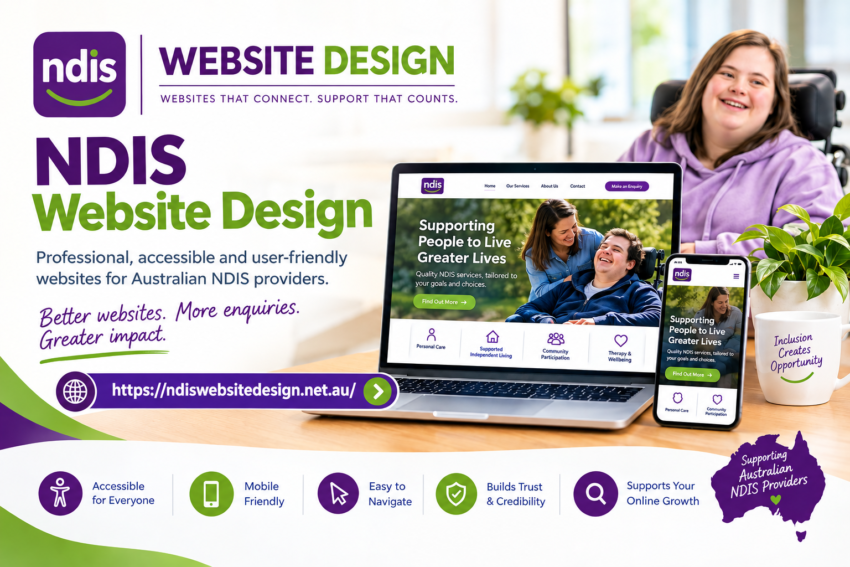
For an NDIS provider, your website should do more than display your business information. It should help visitors understand your services, find the information they need and take the next step with confidence.
A well-planned NDIS website design can make your organisation easier to discover, easier to navigate and easier to contact. Here are seven important features every NDIS provider website should consider.
1. Clear and Accessible Navigation
Visitors should be able to find important information without searching through multiple pages. Keep your navigation simple and organise your content into clear sections such as Services, About Us, Areas We Serve and Contact.
Accessibility should also be considered throughout the design, including readable text, suitable colour contrast, descriptive links and keyboard-friendly navigation.
2. Detailed Service Pages
Each major service should have its own dedicated page. Instead of listing everything on one page, explain what the service includes, who it may suit and how your organisation delivers it.
For example, providers may create separate pages for support coordination, personal care, community participation, SIL or other services they offer.
Dedicated service pages also give search engines clearer information about your business.
3. Mobile-Friendly Experience
Many people browse websites using smartphones and tablets. Your website should automatically adapt to different screen sizes without making visitors zoom, scroll sideways or struggle to tap buttons.
A mobile-friendly layout should include easy-to-read content, simple menus, visible contact options and forms that work smoothly on smaller screens.
4. Strong Contact and Enquiry Options
Make it easy for visitors to contact your organisation. Display your phone number, email address and enquiry form in noticeable locations.
You can also include clear calls to action such as “Enquire About Our Services” or “Contact Our Team”.
Reducing the number of steps between finding your website and making an enquiry can create a smoother experience for potential clients and referral partners.
5. Trust-Building Information
People want to know who they are contacting before reaching out. Your website should provide useful information about your organisation, team, experience, service approach and locations.
Where appropriate, include testimonials, accreditations, registration information and other genuine trust signals.
Keep the information accurate and up to date so visitors can make informed decisions about your services.
6. SEO-Friendly Website Structure
A visually appealing website still needs to be discoverable in search results. Your pages should have clear headings, useful page titles, descriptive URLs, relevant content and appropriate internal links.
NDIS SEO services can support providers by improving website visibility, targeting relevant search queries and identifying opportunities to attract more organic traffic.
SEO should be considered during website planning rather than added as an afterthought.
7. Fast, Secure and Easy-to-Use Website
Website performance can affect both user experience and search visibility. Large images, unnecessary scripts and poorly configured features can make pages slower to load.
Your website should be optimised for speed, use secure HTTPS, work consistently across modern browsers and provide a smooth experience from the first page visit to the final enquiry.
Build a Website That Supports Your NDIS Business
Your website is an important part of how people discover and understand your organisation online. Combining accessible NDIS website design, useful service content, mobile usability and SEO can create a stronger online presence.
With the right structure and ongoing NDIS SEO services, your website can become more than an online brochure, it can support visibility, enquiries and long-term business growth.