
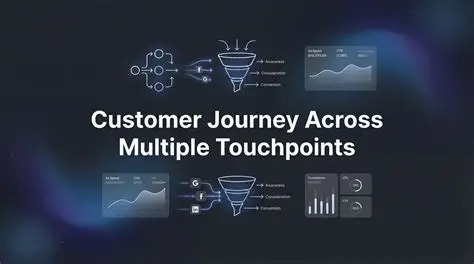
Most buyers don’t decide after seeing a brand once. Research from Gartner puts the average B2B buyer at roughly 27 touchpoints before a purchase decision, spread across different channels, devices, and moments. Consumer journeys are shorter but still layered, with shoppers commonly moving through several channels before they buy. That reality changes how a single campaign should be planned.
A good campaign isn’t one ad or one email. It’s a central idea that can be shaped to fit many places a customer might encounter it. A skilled digital marketing and advertising agency takes that core idea and stretches it into a series of connected moments, so the same message keeps showing up wherever the buyer happens to be looking. Here are nine practical ways that happens.
- Break long-form content into smaller pieces
A single webinar, research report, or pillar blog post holds enough material for weeks of content. An agency can pull quotes, statistics, and short lessons out of one long asset and turn them into social posts, email tips, short videos, and infographics.
This approach reaches people who would never sit through a 40-minute webinar but will read a two-line takeaway on LinkedIn. One production effort becomes many small entries into the customer’s day.
- Adapt the message for each channel instead of copying it
Reposting the same wording everywhere tends to fall flat. Repurposing means adjusting the format, length, and tone to fit each platform while keeping the core idea intact.
A campaign message might look like this across channels:
|
Channel |
Format |
Angle |
|
|
Short reel |
Visual demonstration |
|
|
Text post with data |
Professional insight |
|
|
Newsletter feature |
Practical how-to |
|
Blog |
Long-form guide |
Complete explanation |
|
Paid ads |
Retargeting banner |
Reminder and offer |
Each version feels native to where it appears, yet a customer who sees several of them recognizes one consistent brand.
- Build a landing page that ties the campaign together
Paid ads, social posts, and emails all need somewhere to send people. A dedicated campaign landing page gives every touchpoint a shared destination, and it keeps the message and the offer consistent from the first click to the final decision.
Gartner has found that many B2B buyers report gaps between what a company’s website says and what its sales reps tell them. A well-built landing page closes that gap. This is where a website design company matters, since the page has to load quickly, work on mobile, and guide visitors toward a single clear action without friction.
- Use retargeting to bring visitors back
Most people who see a campaign the first time won’t act right away. Retargeting shows follow-up ads to people who visited a page or engaged with a post but didn’t convert.
Instead of paying to reach cold strangers again, the agency keeps the brand in front of a warm audience that already showed interest. It’s one of the more efficient ways to add touchpoints without creating entirely new content.
- Turn campaign themes into an email sequence
A one-time email is a single touchpoint. A sequence is many. An agency can take a campaign’s central theme and build a series of emails that unfold over days or weeks, each one adding a new angle rather than repeating the last.
Marketing automation tools such as Mailchimp, HubSpot, or ActiveCampaign make this practical by sending the right message based on what a person clicked or bought before. That keeps the sequence relevant instead of generic.
- Extend reach through earned and shared channels
Not every touchpoint has to be paid for. Reviews, press mentions, guest articles, partner shares, and organic social conversation all count, and buyers often trust these third-party sources more because they feel impartial.
An agency can seed campaign ideas into these earned spaces, pitching a data point to a journalist or shaping a talking point that partners are happy to share. These indirect moments carry real weight during the research stage, when buyers are validating whether a brand is credible.
- Repackage results into case studies and proof
Once a campaign produces outcomes, those outcomes become new content. A customer story, a before-and-after example, or a short results summary gives future buyers the evidence they look for.
Proof-based content works well deep in the buying journey, when someone is comparing options and needs reassurance. It’s also highly reusable, appearing on the website, in sales conversations, in emails, and in ads.
- Convert visuals into multiple formats
A single set of campaign visuals can be cut and resized for many placements. One design system can supply square social graphics, vertical stories, display banners, email headers, and blog images.
Keeping the visual language consistent helps people recognize the campaign instantly, even when they only glimpse it. This is another area where design and marketing overlap, since strong visual consistency depends on planning the assets as a family from the start rather than improvising each one.
- Coordinate timing so touchpoints reinforce each other
Scattered content is easy to ignore. Coordinated content compounds. When a blog post, a social push, an email, and a paid campaign go out in a planned sequence, each one reminds the audience of the others.
A digital marketing and advertising agency maps this timing across the customer journey, from first awareness to post-purchase follow-up, so the touchpoints build on one another instead of competing for attention. Post-purchase messages like thank-you emails and loyalty offers extend the journey even further, turning single buyers into repeat customers.
Why one campaign, many touchpoints, beats many separate efforts
Running nine disconnected campaigns is expensive and confusing. Running one campaign expressed nine ways is efficient and coherent. The customer sees a steady, familiar message at each stage, which builds the confidence that eventually leads to a decision.
This is the kind of joined-up planning that Wisoft Solutions focuses on, combining marketing strategy with the technical side of web design so that campaigns and the pages behind them work as one system rather than separate parts.
Key takeaways
- Buyers need many interactions before deciding, so one touchpoint is rarely enough.
- Repurposing adapts a single idea to fit each channel rather than copying it.
- A strong landing page and consistent visuals hold the whole campaign together.
- Retargeting and email sequences add touchpoints without constant new production.
- Coordinated timing makes each touchpoint reinforce the others.
Frequently asked questions
What counts as a customer touchpoint?
A touchpoint is any moment a person interacts with a brand, including ads, emails, social posts, website visits, reviews, and post-purchase messages. Both direct interactions you control and indirect ones like press mentions count.
How many touchpoints does a customer need before buying?
It varies by industry and price. Gartner’s research points to an average near 27 touchpoints for B2B decisions, while simpler consumer purchases can take fewer. The point is that a single exposure rarely drives a sale.
Is repurposing content the same as reposting it?
No. Reposting shares identical content in the same form. Repurposing reshapes the core idea to suit each channel’s format and audience, which tends to perform better because the content feels native to where it appears.
Do I need a new website for a multi-touchpoint campaign?
Not always, but campaigns depend on pages that load fast, work on mobile, and guide visitors clearly. If your current site can’t do that, working with a website design company on landing pages or improvements is often worth it.
How does a digital marketing and advertising agency decide which touchpoints to use?
An agency maps the customer journey, identifies where the target audience spends time, and matches each stage to a suitable channel and format. The mix depends on the goal, the budget, and where buyers make decisions.
Turn your next campaign into a connected journey
If your marketing feels like a series of one-off pushes that don’t build on each other, the fix usually isn’t more content. It’s better planning around a single strong idea. Explore how Wisoft Solutions approaches connected campaigns and web design to help your message reach customers wherever they are.