
There’s a persistent frustration in the fisheries management world. The data that managers need to make good decisions in real time has rarely been available in real time. Population estimates are modeled from samples. Species breakdowns are extrapolated from partial counts. Run timing is inferred from historical averages adjusted for current conditions. The gap between what’s known and what’s needed has been a structural feature of the field for decades.
At Whooshh Innovations, we built the FishL Recognition system to close that gap. And we believe it represents the best fish imaging equipment currently available for deployment in fisheries passage and monitoring applications.
That’s a strong claim. But the deployment record supports it.
What Does the FishL Recognition System Actually Capture?
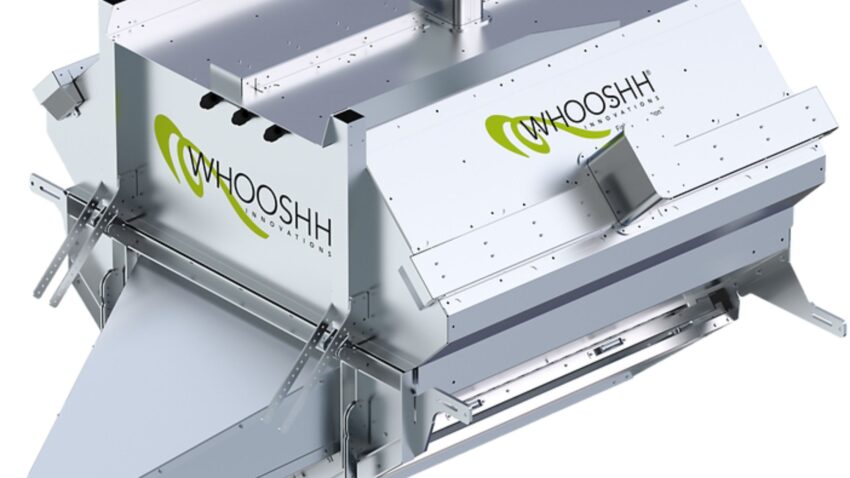
The system uses a hood-like structure with a V-shaped light-diffusion layer that creates a smooth, controlled slide for fish passing through the imaging zone. As each fish slides through, six cameras capture 18 images simultaneously: three cameras use near-infrared spectrum and three use visible light spectrum. The dual-spectrum approach allows the system to capture detail that a single-spectrum setup misses, particularly under variable ambient light conditions or with turbid, sediment-laden water.
AI algorithms process the 18-image set in milliseconds and derive the following for each individual fish:
- Species classification using machine learning models trained on thousands of verified images across multiple Pacific and Atlantic species
- Fork length and girth measurements derived computationally from the multi-angle image set
- Wild versus hatchery origin based on adipose fin presence or absence
- Injury status, including scale loss, fin damage, and lesion presence where visible
- Tag presence detection for PIT-tagged or externally tagged fish
- Timestamp, water temperature, and ambient flow rate at the time of passage
Every fish record is logged automatically with its full data set and associated image files, uploaded to cloud storage or retained locally depending on connectivity at the deployment site.
Why Does Multi-Spectrum Imaging Matter in Field Conditions?
Field conditions are not laboratory conditions. A fish passage facility on a major river system deals with turbid water, variable light, fish arriving at different angles and speeds, and seasonal changes in water clarity. A system that performs well in ideal conditions but degrades in field conditions is not a system that operators can rely on for compliance documentation.
The FishL system was developed in collaboration with leading experts in machine vision technology from the horticulture sector, where high-speed imaging of organic objects in variable field conditions is a solved problem. The dual-spectrum camera architecture and the V-shaped light diffusion layer that creates consistent illumination on each fish are design elements that directly address field condition variability.
The Bonneville Adult Fish Facility deployment, one of the most demanding freshwater monitoring environments in North America, produced over 220,000 classified fish images from 12 species in a single season. That volume of data, in that environment, speaks to what the system can do outside a lab. Visit the FishL Recognition product page for full technical specifications.
What Does This Change for Compliance and Research Programs?
Here’s what the best fish imaging equipment delivers that manual monitoring programs cannot:
- A complete record of every fish, not a sample, not an estimate
- Image files that provide verification for every classification decision, creating an auditable compliance record
- Real-time data availability that allows within-season operational decisions rather than post-season analysis
- Species-level data at the individual fish level that enables selective sorting through integration with the GateKeeper system
- Reduction in staffing requirements for monitoring programs, replacing intermittent human sampling with continuous automated classification
For FERC licensing compliance, the image-verified passage record the FishL system generates is materially stronger than the estimated count data that manual monitoring programs produce. For researchers studying run composition, migration timing, or population dynamics, the data resolution and completeness is significantly beyond what conventional approaches deliver.
Where Else Can This Technology Be Applied?
Beyond fixed-installation passage monitoring, the FishL system is deployable as a standalone mobile scanner that Whooshh has loaned to universities, USGS monitoring programs, and Native Tribe fisheries management programs for research deployments. It integrates directly with the HarvestSelect commercial sorting system and the Guardian invasive species removal platform.
The underlying imaging and classification technology is the same across all these applications. What changes is the surrounding infrastructure, which is modular enough to fit into contexts ranging from a hatchery sorting station to a major hydroelectric dam facility.
Explore the full Whooshh Innovations product ecosystem to understand how the imaging capability connects to the broader management platform. And read our published blog on why fish scanning and sorting is the next big thing in aquatic management for more on where this technology is heading.
When you’re ready to talk about a deployment, connect with the Whooshh team directly.