

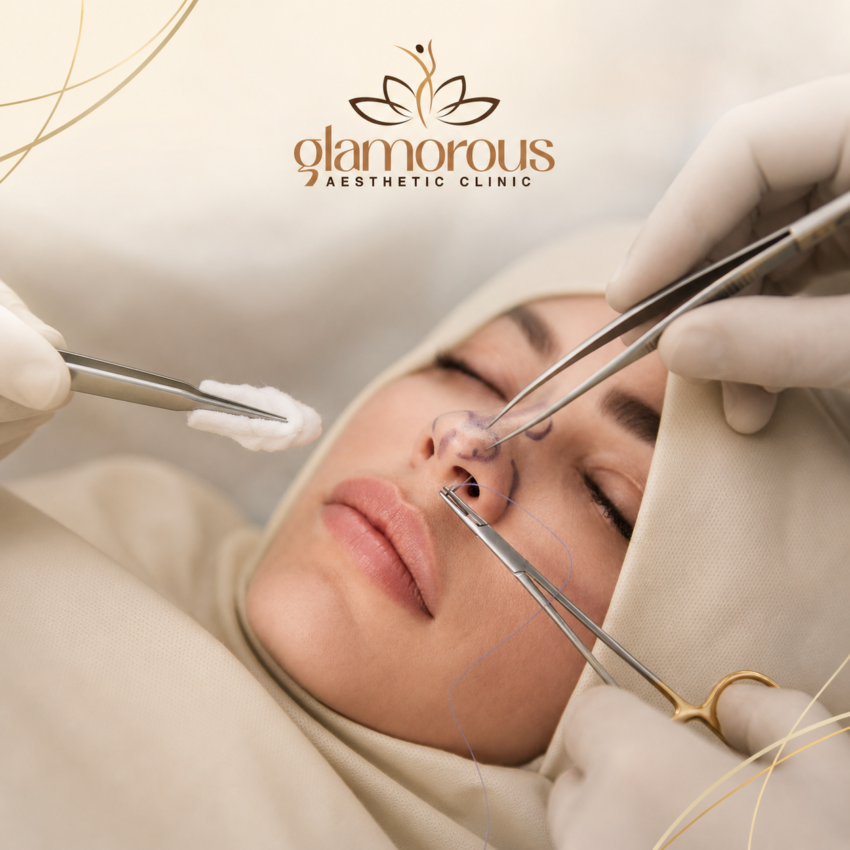
When patients ask how natural their results will look, they are really asking whether the nose will belong to their face. A natural result is rarely the most dramatic one. It is the one that no longer draws attention to itself. Achieving that outcome depends on careful anatomical assessment and disciplined surgical planning. For patients considering Rhinoplasty in Islamabad understanding this process is the best way to set realistic expectations and choose a surgeon with confidence.
What “Natural” Actually Means?
Natural does not mean small, straight or symmetrical in a textbook sense. Most attractive noses have subtle irregularities, gentle curves and a degree of asymmetry. A natural result respects the patient’s ethnic features, skin type, age and facial structure, and it keeps the nose in proportion with the eyes, lips and chin.
For this reason, an experienced surgeon begins with a question rather than a technique: what does this particular face need? The answer comes from a systematic assessment of each structural component of the nose.
The Structural Assessment
The Nasal Bones
The upper third of the nose is bony. Surgeons evaluate the width of the nasal bones, the height of the bridge they form, and whether a dorsal hump or a bony asymmetry is present. This matters because the bones determine the foundation on which everything else rests. If they are too wide or uneven, the bridge will look broad or crooked no matter how well the lower nose is refined. Assessment here guides whether the bones need to be smoothed, narrowed or carefully repositioned.
The Cartilage
The lower two thirds of the nose are shaped by cartilage. The upper lateral cartilages support the middle section, while the lower lateral cartilages define the tip and nostrils. Surgeons examine their strength, symmetry and thickness. Cartilage that is weak may collapse over time, while cartilage that is bulky or misaligned may produce a rounded or boxy tip. Understanding this framework helps the surgeon decide how much to refine and how much to reinforce, which is central to a result that remains stable and natural.
The Septum
The septum is the central wall dividing the nasal passages. Beyond its role in breathing, it is also a source of structural support and, when needed, a source of cartilage for grafting. A deviated septum can create external crookedness as well as airflow difficulty. Evaluating it ensures that the nose is planned as both a functional and an aesthetic structure, because a nose that looks refined but breathes poorly has not been truly successful.
The Nasal Tip
The tip is the most expressive part of the nose and the most delicate to modify. Surgeons assess its projection, rotation, width and definition, along with the shape of the nostrils and the angle between the nose and upper lip. Subtle changes here have a visible effect. An over-rotated or over-refined tip is one of the most common reasons a nose looks operated on, so restraint is the guiding principle.
The Bridge
The bridge, or dorsum, forms the line seen in profile and from the front. Surgeons study its height, straightness and transition into the forehead at the radix. A smooth, gently defined line looks natural, while an abrupt or overly narrow bridge can appear artificial. The goal is a line that flows naturally from brow to tip in harmony with the rest of the face.
Overall Facial Proportions
No nose is judged in isolation. Surgeons analyze the face as a whole, including the balance between forehead, nose, lips and chin, the width of the eyes, and the facial profile. A modest chin can make a nose appear larger than it is, and a strong brow can alter perceived bridge height. This broader view allows the surgeon to design a nose that complements the entire face and, in some cases, to discuss whether other adjustments would improve overall harmony.
The Procedure in Logical Stages
Once the assessment is complete, surgery follows a sequence in which each stage serves a defined purpose.
Stage one: consultation and planning. Photographs, measurements and discussion establish both anatomy and aesthetic goals. The purpose is alignment, so that surgeon and patient share a clear and realistic vision before any decision is made.
Stage two: anesthesia and access. The procedure is performed under anesthesia for comfort and safety. Incisions are made either inside the nostrils, in the closed approach, or with a small additional incision across the columella, in the open approach. The purpose is to gain the visibility and access needed for the planned changes while keeping scarring minimal.
Stage three: structural work. The surgeon addresses the foundation first, correcting the septum if needed and refining the bones and cartilage that support the nose. The purpose of working in this order is stability. Changes to the surface only hold their shape if the underlying framework is sound.
Stage four: reshaping the bridge and tip. With the framework prepared, the surgeon refines the dorsal line and sculpts the tip, sometimes using small cartilage grafts to add support or definition. The purpose is to create the planned contour while preserving strength, which prevents the over-reduced look associated with unnatural results.
Stage five: closure and support. Incisions are closed, and a splint or internal support is placed. The purpose is to protect the new structure and guide the tissues as they begin to settle.
Stage six: healing and refinement. The nose changes gradually as swelling subsides, often over many months. The purpose of follow-up visits is to monitor progress and ensure the result matures as intended. Patience is part of the process, since the final contour emerges slowly.
Why Restraint Produces the Most Natural Results?
Natural results come from conservative decisions made repeatedly. Removing too much bone or cartilage may create a nose that looks sharp or pinched, and it can weaken breathing. Preserving structure, reinforcing where necessary and changing only what the face requires creates a nose that looks balanced and ages gracefully .Technology can assist with planning, but judgment remains the decisive factor. Digital imaging may help visualize possibilities, though it is an illustration rather than a promise. Every patient heals differently, and responsible surgeons are transparent about this.
Questions to Ask Before You Decide
Patients exploring Rhinoplasty in Islamabad benefit from asking thoughtful questions during consultation. How will my bones, cartilage and septum influence the plan? How will the result relate to my other facial features? What approach is recommended, and why? How is breathing protected? What can realistically be achieved given my anatomy and skin thickness? A surgeon who answers clearly and honestly, without exaggerated claims, is demonstrating the very qualities that tend to produce natural outcomes.
Conclusion
A natural-looking rhinoplasty is the product of understanding rather than imitation. By assessing the nasal bones, cartilage, septum, tip, bridge and overall facial proportions, a surgeon can plan changes that respect the individual face instead of applying a standard template. .For anyone considering Rhinoplasty in Islamabad, the most important step is a thorough consultation with a qualified surgeon who takes the time to explain the reasoning behind each decision. When anatomy is respected and restraint guides the plan, the result is a nose that looks refined, balanced and entirely your own.
Read More :https://www.smartseoarticle.com/can-my-nose-change-after-final-healing/