

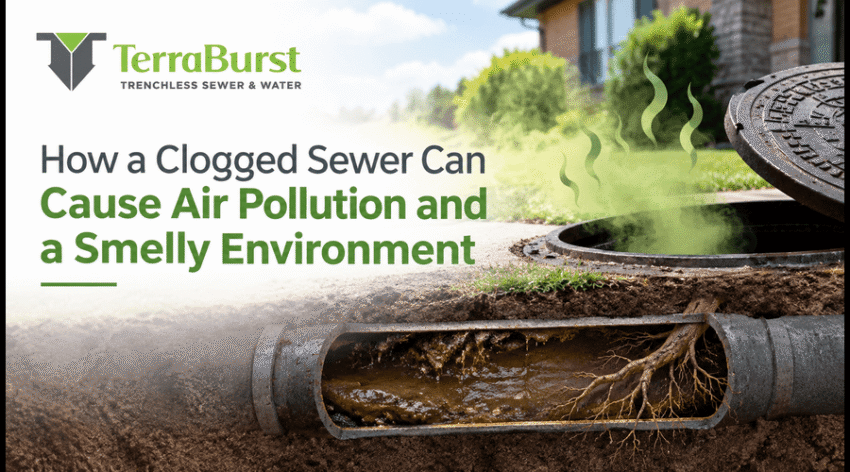
A clogged sewer is more than a plumbing inconvenience. When wastewater cannot flow properly through a sewer line, it can create unpleasant odors, allow harmful gases to accumulate, and contribute to poor air quality around homes and commercial properties. If the blockage is left untreated, the problem can become more serious and may eventually lead to sewer backups, property damage, and unhealthy environmental conditions.
Understanding why a clogged sewer creates bad smells and how professional sewer contractors can resolve the problem is important for protecting both your property and the surrounding environment.
Why Does a Clogged Sewer Produce Bad Odors?
A properly functioning sewer system carries wastewater away from a property and allows gases to be safely managed through the plumbing and ventilation system. A blockage disrupts this process.
When organic waste becomes trapped inside a sewer pipe, bacteria begin breaking it down. This process can produce gases such as hydrogen sulfide, methane, ammonia, and other unpleasant-smelling compounds. Hydrogen sulfide is particularly recognizable because it can produce a rotten-egg smell.
As wastewater sits inside a blocked or partially blocked pipe, these gases can accumulate. Cracks, damaged joints, defective connections, or poorly sealed sections of the sewer line can then allow odors to escape into the surrounding area.
How Can a Clogged Sewer Affect Air Quality?
A sewer blockage does not automatically mean that outdoor air becomes dangerously polluted. However, persistent sewer problems can contribute to unpleasant and potentially unhealthy environmental conditions.
Several factors can contribute:
- Accumulated organic waste: Waste trapped inside the pipe provides an environment for bacterial decomposition.
- Sewer gases: Decomposition can release foul-smelling gases.
- Poor ventilation: Blocked or damaged sewer systems can interfere with normal gas movement.
- Leaking sewer lines: Cracks and broken joints may allow contaminated wastewater and gases to escape.
- Standing wastewater: Stagnant wastewater can increase odor and microbial activity.
- Drainage problems: Overflowing or backing-up sewage can expose the surrounding environment to contaminants.
For this reason, persistent sewer odors should not simply be covered with air fresheners. The underlying plumbing problem needs to be identified and corrected.
Common Signs of a Blocked or Damaged Sewer Line
A sewer blockage may not always begin with a complete backup. Homeowners should pay attention to early warning signs, including:
- Slow-draining sinks, tubs, or floor drains.
- Frequent toilet backups.
- Gurgling sounds from drains or toilets.
- Persistent sewage odors.
- Multiple drains becoming slow at the same time.
- Sewage or wastewater appearing around floor drains.
- Wet or unusually green patches of ground above a sewer line.
- Repeated blockages despite regular drain cleaning.
When several fixtures experience drainage problems simultaneously, the issue may be deeper in the main sewer line rather than being limited to one household drain.
How Can a Trenchless Sewer Repair Contractor Help?
A professional trenchless sewer repair contractor can investigate the source of the blockage and determine whether the pipe has additional problems such as cracks, root intrusion, corrosion, collapsed sections, or damaged joints.
One important step is CCTV sewer line inspection. A specialized inspection camera can travel through the sewer pipe and provide a clear view of the pipe’s interior. This helps contractors locate blockages and identify the condition of the surrounding pipe without immediately excavating the property.
Depending on the condition of the sewer line, a contractor may recommend:
- Professional sewer cleaning to remove accumulated debris.
- Root removal where tree roots have entered the pipe.
- Trenchless pipe lining for suitable damaged pipes.
- Trenchless pipe replacement where the existing pipe has extensive structural damage.
- Targeted repairs for isolated defects.
- Sewer line inspection and maintenance to prevent recurring problems.
Why Trenchless Repair Can Be a Better Solution
Traditional sewer replacement can require extensive excavation through driveways, landscaping, sidewalks, or other surfaces. Trenchless techniques can reduce the need for large-scale digging by accessing the damaged pipe through limited access points.
This can mean less excavation, reduced disruption to the property, and a more efficient approach to repairing certain underground sewer problems.
Most importantly, trenchless repair addresses the condition of the sewer pipe rather than simply masking the symptoms. Once the blockage, damage, or leakage is properly resolved, wastewater can flow normally again and persistent sewer odors may be reduced.
Don’t Ignore Persistent Sewer Odors
A bad sewer smell is not simply an unpleasant household problem. It can be a warning that wastewater is not moving correctly or that a sewer pipe has become damaged.
If your property has recurring blockages, slow drainage, sewage odors, or signs of a damaged underground sewer line, professional inspection can help identify the actual cause before the problem becomes more expensive.
A qualified trenchless sewer repair contractor can inspect the underground pipe, identify the source of the problem, and recommend the least disruptive repair option for the condition of the sewer system.