

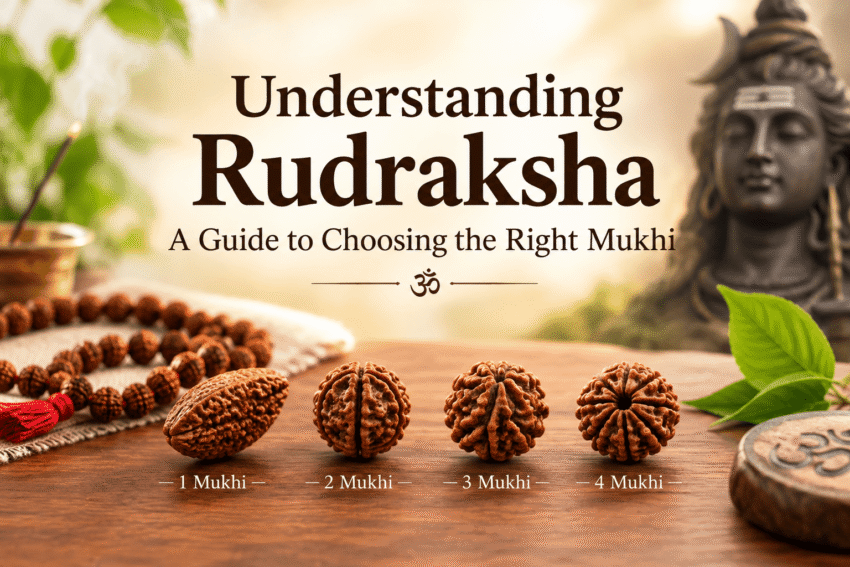
Rudraksha beads have been respected in Indian spiritual traditions for centuries. They are traditionally connected with Lord Shiva and are commonly used during meditation, prayer, chanting, and other spiritual practices. One of the main ways these sacred beads are identified is by their mukhi, or the natural lines running along their surface.
Different mukhi varieties are traditionally associated with different deities, qualities, and spiritual intentions. Understanding these associations can make it easier to choose a bead that matches your personal goals and beliefs.
What Does Mukhi Mean in Rudraksha?
The word “mukhi” refers to the natural faces or divisions visible on a Rudraksha bead. These lines generally run from one end of the seed toward the other. The number of natural divisions determines its traditional classification.
For example, a bead with one natural face is described as one Mukhi, while a bead with four natural faces belongs to the four-Mukhi category. Traditional sources associate different counts with particular forms of divinity and qualities.
It is important to remember that these meanings come from religious and cultural traditions. They should be understood as spiritual symbolism rather than guaranteed results.
1 Mukhi Rudraksha
The 1 Mukhi Rudraksha is traditionally associated with Lord Shiva and is regarded as one of the most spiritually significant varieties. It represents unity, concentration, inner awareness, and a focused approach to spiritual practice.
Because genuine specimens are considered rare, authenticity is especially important when purchasing this type of bead. Buyers should pay attention to natural formation, quality, source, and available authenticity documentation instead of choosing solely on appearance or price.
Traditionally, people interested in meditation, spiritual discipline, and deeper self-awareness may be drawn toward this variety.
2 Mukhi Rudraksha
The 2 Mukhi Rudraksha is traditionally connected with Ardhanarishvara, representing the union of Shiva and Shakti. Its symbolism focuses on harmony, balance, unity, and the relationship between complementary energies.
This makes it particularly meaningful for people who associate their spiritual practice with relationships, cooperation, emotional balance, or inner harmony. It can also serve as a reminder that balance is an important part of personal growth.
When choosing this bead, buyers should look for clearly formed natural lines and avoid products where the mukhi markings appear artificially carved.
3 Mukhi Rudraksha
The 3 Mukhi Rudraksha is traditionally associated with Agni, the sacred fire. Fire has long represented transformation, purification, renewal, and the ability to move beyond what no longer serves us.
For this reason, traditional practitioners may select this variety when they want to symbolically focus on confidence, transformation, fresh beginnings, and letting go of past burdens.
Rather than viewing the bead as a guaranteed solution to personal problems, it can be approached as a spiritual reminder to develop determination, self-awareness, and a positive mindset.
4 Mukhi Rudraksha
The 4 Mukhi Rudraksha is traditionally associated with Lord Brahma and is connected with knowledge, creativity, learning, communication, and intellectual development.
Because of these traditional associations, students, teachers, writers, speakers, and people interested in learning may find this variety particularly meaningful. It can represent the importance of gaining knowledge and expressing ideas with clarity.
As with other Rudraksha varieties, the natural structure of the bead should be examined carefully before purchase.
How to Choose the Right Rudraksha
Choosing a Rudraksha should begin with understanding your personal intention. Instead of selecting a bead simply because it is considered powerful or popular, consider what its traditional symbolism means to you.
You can also consider the following factors:
- Natural formation: The mukhi lines should appear naturally formed rather than artificially created.
- Authenticity: Purchase from a trustworthy seller who provides clear information about the bead.
- Condition: Look for a bead that is structurally sound and free from suspicious cracks or alterations.
- Purpose: Choose according to your spiritual practice and the traditional meaning you connect with.
- Comfort: If you plan to wear it regularly, select an appropriate thread, chain, or setting.
- Personal faith: Your own spiritual beliefs and practices should remain central to the decision.
Caring for Your Rudraksha
Proper care can help preserve the natural condition of a Rudraksha bead. Keep it away from harsh chemicals, perfumes, and unnecessary moisture. When cleaning is required, gentle handling is preferable to aggressive scrubbing.
Many devotees also include their beads in regular prayer or meditation practices. The specific rituals may vary according to family traditions, spiritual teachers, and personal beliefs.
Final Thoughts
Rudraksha is much more than a decorative natural seed for many people. Its importance comes from its connection with devotion, tradition, meditation, and spiritual practice.
The four varieties discussed here each carry different traditional symbolism. Understanding those meanings can help you make a more thoughtful choice rather than selecting a bead based only on appearance.
Whether your interest is spiritual discipline, meditation, harmony, transformation, learning, or personal reflection, the most meaningful approach is to choose with knowledge and respect for the tradition behind the bead.