
When people think of traveling to the Arabian Gulf, glitzy skyscrapers, luxury shopping malls, and vast desert landscapes often come to mind first. However, tucked away in the archipelago of Bahrain is a deeply rooted artistic soul that dates back thousands of years. From the ancient Dilmun civilization to a modern, thriving contemporary art scene, this island nation offers an incredible cultural journey.
If you are planning a trip to this beautiful corner of the Middle East, exploring its museums and art galleries is the best way to understand its past and feel its modern creative pulse. Here is your ultimate guide to the must-visit cultural spaces in Bahrain.
Why is Bahrain’s art and museum scene a hidden treasure in the Middle East?
Unlike some of its neighbors who built massive cultural institutions from scratch in recent decades, Bahrain’s relationship with art and history is organic. The country’s history spans over 6,000 years, serving as the ancient seat of the Dilmun civilization and a legendary center for the global natural pearl trade.
This historic wealth has created a society that deeply values preservation and creative expression. In Bahrain, you do not just walk into sterile galleries; you step into restored 1930s traditional houses, renovated judicial buildings, and coastal forts that tell a stories of adaptation, resilience, and creative evolution.
Where can you explore 6,000 years of history at the Bahrain National Museum?
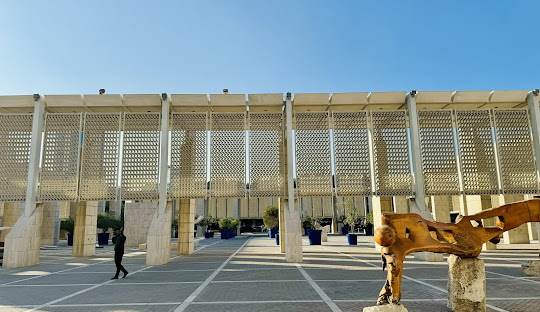
Located on an artificial peninsula in Manama overlooking the island of Muharraq, the Bahrain National Museum is the grand starting point for any cultural visitor. Opened in 1988, this architectural landmark with its striking white travertine marble facade houses a treasure trove of historical artifacts.
Inside, the museum is divided into six main halls:
- The Hall of Graves: Highlights ancient burial practices and displays an actual reconstructed burial mound transported from the archaeological site of A’ali.
- The Hall of Dilmun: Showcases spectacular trading artifacts, including Dilmunite stamp seals and pottery dating back to 5000 BC.
- The Hall of Tylos and Islam: Covers the Greek-influenced eras of Bahrain’s history alongside rare 7th-century Islamic items, such as timber beams from the historic Khamis Mosque.
- The Halls of Customs, Traditions, and Crafts: Features life-sized recreations of a pre-oil Bahraini souq, complete with traditional weavers, blacksmiths, and mock-ups of classic family homes.
What makes Beit Al Quran a world-renowned destination for Islamic art?
Situated in Hoora, Manama, Beit Al Quran (meaning House of Quran) is a stunning multi-purpose complex dedicated to Islamic arts. Established in 1990 by Dr. Abdul Latif Jassim Kanoo, the institution grew from his private collection of rare manuscripts into one of the world’s most prestigious Islamic museums.
The building’s design is inspired by 12th-century mosque architecture and features a dramatic stained-glass dome. The exhibition halls house an incredible collection of over 10,000 Qurans and manuscripts. Among its treasures are:
- A rare manuscript written during the reign of the third Caliph, Uthman bin Affan, from the mid-7th century.
- The first printed version of the Quran from Germany (1694).
- Incredibly small miniature Qurans inscribed meticulously on individual grains of rice and chickpeas.
How does the Qal’at al-Bahrain Site Museum bring a UNESCO World Heritage site to life?
Perched on the northern coast, the ancient fort of Qal’at al-Bahrain (the Bahrain Fort) was designated a UNESCO World Heritage Site in 2005. Directly opposite this imposing 16th-century Portuguese fortress is its dedicated Site Museum, which opened in 2008.
The museum houses five chronologically organized galleries that showcase more than 500 excavated artifacts. As you walk through the space, you can trace the fort’s occupation through successive empires, including the Dilmun, Tylos, Islamic, and Portuguese periods. Once you finish looking at the ancient weapons and pottery, you can sit at the museum’s coastal cafe and enjoy panoramic views of the sea and the fortress walls.
Why should you visit the historic Busaad Art Gallery in Muharraq?
For those who love visual arts and Arabic typography, the Busaad Art Gallery is an absolute gem. Founded by the legendary Bahraini artist Ebrahim Busaad, this gallery is located inside the very house where he was born in 1954.
The building is a beautifully restored 1930s family home that showcases traditional Bahraini architecture, complete with delicate wooden balconies. Inside, visitors can view Busaad’s bold, colorful canvases alongside his masterfully executed Arabic calligraphy. The gallery perfectly bridges classic cultural design with vibrant, modern Middle Eastern art.
What is the story behind the Dar Al Naft Oil Museum at the foot of Jebel Dukhan?
Bahrain was the very first country on the Arab side of the Gulf to discover oil in 1932. To commemorate this monumental shift, the Dar Al Naft Oil Museum (House of Oil) was opened in 1992 near Awali, right next to Discovery Well #1—the exact spot where oil was first struck.
The museum is housed in a neoclassical white stone building surrounded by operating oil pumps. Inside, you can explore:
- Fascinating historical photographs, maps, and exploration gear from the early 1930s.
- A massive collection of local rocks, minerals, and fossils, including a 50-million-year-old shark tooth.
- A grand “desert rose” gypsum crystal, which is one of the largest ever discovered in the region.
How does Al Riwaq Art Space champion contemporary art and design in Bahrain?
If you want to see what young, modern Bahraini creatives are up to, head straight to Al Riwaq Art Space in Manama. Founded in 1998, Al Riwaq is a non-profit organization dedicated to fostering contemporary art and design.
The creative campus features a rotating art gallery, a library, co-working spaces, and a peaceful garden cafe. It is a bustling social hub that hosts workshops on everything from Islamic tile-making to botanical dyeing. It is the perfect place to grab a coffee, meet local designers, and purchase unique, independent regional art.
What makes Maison Jamsheer a stunning architectural portal to the past?
Nestled in the narrow, winding alleys of Muharraq, Maison Jamsheer is a heritage house over a century old. Belonging to the famous Jamsheer family, this beautifully restored home now serves as a vibrant cultural center.
The house is a sensory masterpiece with its sky-blue windows, heavy wooden doors, and an open central courtyard featuring a leafy tree and a trickling water jar. Inside the preserved rooms, you will find antique household items, a classic sewing machine, and old wooden clocks. Maison Jamsheer frequently hosts independent art exhibitions, music performances, and community workshops.
How does the Museum of Pearl Diving capture the essence of Bahrain’s ocean heritage?
Before oil, Bahrain was the pearling capital of the world, with divers risking their lives in the warm waters of the Gulf to harvest natural pearls. The Museum of Pearl Diving in Manama pays tribute to this grueling yet beautiful maritime history.
The museum is housed inside a grand 1937 building that originally served as Bahrain’s first High Court. Today, it showcases:
- Traditional wooden shipbuilding models and authentic diving equipment.
- Historical photographs of the divers and merchants who built the nation’s early wealth.
- Specialized displays featuring the traditional musical instruments and folk songs that divers used to keep their spirits up during long months at sea.
Why is the boutique setting of 56 Art Gallery perfect for art collectors?
Located in the quiet neighborhood of Gufool in Manama, 56 Art Gallery is housed in a carefully restored 1968 mid-century building designed by Mahmood Akbari. Reopened in 2023, its primary mission is to make fine art collecting highly accessible to residents and travelers alike.
The gallery curates paintings and sculptures from talented Bahraini and GCC (Gulf Cooperation Council) artists. Because of its intimate boutique setup, visitors can easily engage with the gallery staff, attend artist talks, and learn the deeper meanings behind the contemporary regional pieces on display.
How does Hend Gallery preserve Muharraq’s deep-rooted artistic identity?
Established in 2009 by the renowned local sculptor Ali Al-Mahmeed, Hend Gallery is another essential cultural stop in Muharraq. Muharraq has always had a strong connection to maritime history, poetry, and the visual arts, and Hend Gallery acts as a custodian of that local heritage.
The gallery organizes a rich schedule of solo and group exhibitions, art seminars, and hand-on workshops. It prides itself on giving emerging local talents a platform alongside established international artists, fostering an ongoing dialogue within the Middle Eastern art community.
What are the best practical tips for navigating Bahrain’s cultural sites?
To make the most of your cultural tour of Bahrain, keep these practical tips in mind:
- Check Opening Times: Many smaller galleries and museums in Bahrain operate on split shifts (e.g., open from 9:00 AM to 1:00 PM, closing for a few hours, and reopening from 4:00 PM to 8:00 PM). Always double-check their hours on Google Maps before heading out.
- Dress Code: While Bahrain is relatively liberal, visiting cultural and heritage sites requires respectful clothing. Keep your shoulders and knees covered.
- Getting Around: While public buses exist, using ride-sharing apps like Uber or Careem is by far the most convenient way to move between Manama and the historic streets of Muharraq.
How do you secure a Bahrain tourist visa quickly to start your journey?
Before you can lose yourself in the calligraphy at Beit Al Quran or walk the ramparts of Bahrain Fort, you will need to sort out your entry paperwork. Fortunately, getting a visa does not have to be a complicated or stressful task.
To enjoy a completely hassle-free travel experience, you can easily apply for Bahrain tourist visa online.
Why Choose Our Visa Services?
- Reliable Travel Visa Services: Our global, customer-first approach has successfully helped thousands of travelers secure their entry to Bahrain without any unexpected hurdles.
- Round-the-Clock Assistance: We believe in continuous support. Our visa experts are available 24/7 to resolve your queries, guaranteeing a response to your needs within 72 hours.
- Experienced Visa Consultants: Skip the guesswork. Our consultants review your application carefully, ensuring it is fully compliant with Bahraini immigration guidelines to maximize your approval rates.
- Efficient Visa Application Process: Our online platform is streamlined for speed. You can submit your complete application in just a few minutes using our simplified digital form.
Start planning your cultural itinerary today, get your tourist visa sorted, and prepare to discover the incredible artistic heart of Bahrain!