

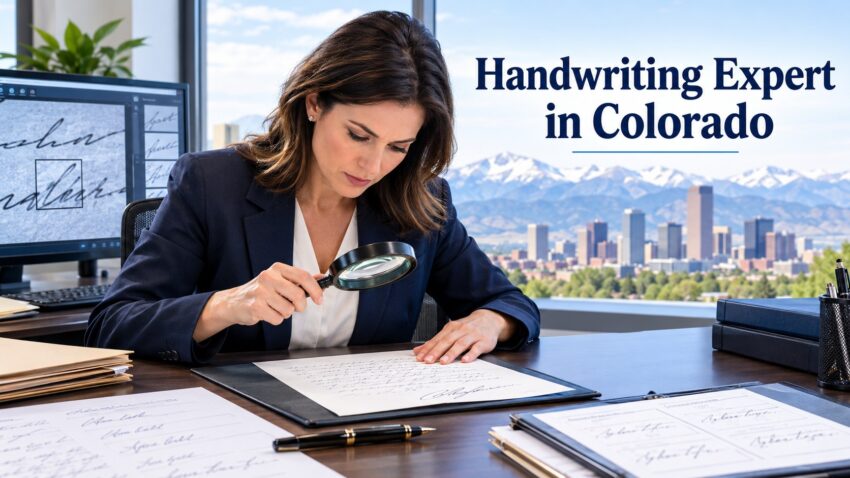
Yes. A handwriting expert in Colorado can strengthen a case involving document fraud. The expert compares a disputed signature with known samples. Next, the expert writes a clear report. Judges and juries can then weigh the findings against other proof.
Fraud over a will, a check, or a contract can shake a whole family or business. Strong evidence can settle the matter. This guide explains how the process works, what courts expect, and how to pick the right professional.
Why Fraud Cases Need More Than a Hunch
Fraud claims often come down to one question. Did this person really write this? Witnesses may disagree. Memories fade. A trained examiner offers a fact-based answer instead. The stakes are high. In Colorado, forgery is a class 5 felony. The presumptive prison range for a class 5 felony is one to three years. Civil cases carry real risk too. A forged deed or will can move an entire estate.
What an Examiner Checks
Examiners study habits, not just looks. Every person writes with small, steady traits. A forger rarely copies all of them. Common checks include:
- Letter shape and size: The examiner measures how each letter is built. Forgers often draw slowly, so the shapes look stiff.
- Spacing and slant: Real writing keeps a steady rhythm. Copied writing often shifts from line to line.
- Pen pressure and flow: Microscopes show where the pen paused or lifted. Shaky strokes can signal a copy.
- Ink and paper: Special light tools can show whether two entries were made at different times. This helps expose added lines.
How Known Samples Shape the Result
Good samples matter a great deal. The examiner needs real writing to compare. Ten or more genuine signatures often give a stronger base than one or two. The samples should also match the date and style of the disputed item. Originals are the best choice. Copies hide pressure marks and ink detail. For this reason, lawyers should send every document for expert review in its original form.
Here is what to gather:
- Older and newer samples: Writing changes with age, so a range of dates helps.
- Everyday writing: Checks, forms, cards, and notes show natural habits.
- A clear paper trail: Each document for expert study should be labeled, with a note on who held it and when.
Meeting Colorado Court Standards
Colorado judges act as gatekeepers. Under Colorado Rule of Evidence 702 and the 2001 Shreck decision, the court checks whether expert methods are reliable. The expert must be qualified. The method must also be sound. Credentials help here. The American Board of Forensic Document Examiners sets a high bar. Candidates need a bachelor’s degree and two years of full-time training. A written, repeatable method also helps.
Courts like findings that another examiner could test. Timing counts as well. Colorado generally gives prosecutors three years to file most felony charges. Early action protects evidence. A handwriting expert in Colorado should know these local rules well.
Where an Expert Helps Most
Handwriting review fits many kinds of disputes. Four common examples follow.
- Wills and estates: Family members sometimes question a late signature. An expert can compare it with older samples.
- Contracts and deeds: A swapped page or fake initials can change a deal. Examiners look for added or replaced text.
- Checks and loans: Altered amounts or forged endorsements leave clues in ink and stroke order.
- Threat letters and notes: When no name appears, an examiner can compare the writing with a suspect’s samples.
Limits to Keep in Mind
An expert cannot promise a win. Some samples are too short. Some signatures are too simple. Honest examiners say so. They may call a result strong, probable, or inconclusive. This honesty builds trust with the court. Still, an opinion works best with other proof. Bank records, emails, and witness accounts can back it up. Together, they tip the scales.
How to Choose the Right Expert
Take time to vet any candidate. Before hiring a handwriting expert in Colorado, ask these questions:
- Is the examiner board certified?
- Has the expert testified before, and in which courts?
- Can the expert explain each step in plain words?
- Are the reports clear, complete, and well organized?
Final Thoughts
Document fraud cases rise or fall on proof. A skilled examiner adds science to a he-said, she-said fight. Colorado’s court rules make credentials important. Careful samples and original records matter just as much.
With the right preparation, expert analysis can bring clarity to a hard dispute. Professional firms such as America’s Handwriting Expert show how forensic document examination can support lawyers and families who need clear answers.