
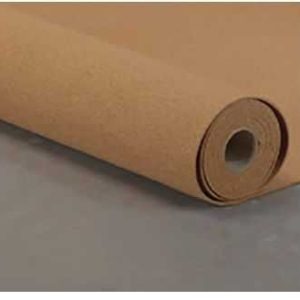
Floor underlay is an essential component of any flooring system, influencing comfort, durability, and acoustic performance. While it often remains hidden beneath the finished surface, its impact on noise reduction and floor stability is significant. The right underlay can minimize sound transmission, improve walking comfort, and extend the lifespan of flooring materials. Understanding its benefits helps property owners make smarter choices for long-term performance and satisfaction.
Beyond Carpet Underlay: The Acoustic Case
Most homeowners associate floor underlay with carpet comfort and thermal insulation. But in hard flooring applications — engineered wood, laminate, luxury vinyl tile — underlay is doing something more technically significant: it is the primary line of defence against impact noise transmission to the floors below. Choosing the wrong product is one of the most common reasons that new floors in flats and conversions fail acoustic compliance tests.
The acoustic performance of an underlay is measured by its dynamic stiffness (s’) — a lower value indicates a more resilient, acoustically effective product. Many budget underlays sold primarily on the basis of thermal properties have high dynamic stiffness values and provide minimal acoustic benefit despite their apparent thickness.
How Acoustic Underlay Works
A quality acoustic underlay works by introducing a resilient layer between the hard floor surface above and the structural substrate below. When a foot strikes the floor, the underlay absorbs the initial energy spike and spreads it over a longer time period, reducing the peak force transmitted into the structure. The key parameters are the material’s ability to do this consistently under the loads it will experience over its service life — some foam products compress permanently after a few years, losing a large proportion of their original acoustic benefit.
For floating floors over concrete substrates, underlay is the only realistic point where resilience can be introduced without a more extensive floating screed system. For timber subfloors, underlay works alongside the natural resilience of the joisted assembly to compound the overall acoustic improvement.
Comparing Common Underlay Materials
Polyethylene foam is the most widely used underlay material due to its low cost and ease of handling. Its acoustic performance is modest — suitable for low-demand applications but rarely sufficient for Part E compliance in residential conversions. Rubber crumb underlays, made from recycled tyre material, offer significantly better dynamic stiffness values and more consistent performance over time.
Polyurethane foam underlays represent a step up in acoustic performance, with higher density variants achieving dynamic stiffness values well suited to most residential applications. They are also more dimensionally stable than polyethylene, maintaining their performance over the full service life of the floor.
The Appeal of Corkment Underlay
Among the natural material options, corkment underlay a composite of natural cork granules and cement binder — has attracted significant interest for its combination of acoustic, thermal, and environmental properties. Cork is naturally resilient and has excellent vibration-damping characteristics, while the cementitious matrix adds the mass that enhances its low-frequency blocking performance. The result is an underlay with acoustic credentials that rival engineered rubber products, alongside the sustainability profile of a natural material with very low embedded carbon.
Corkment products are also highly durable — cork does not compress permanently under load in the way that foam underlays can, making them a strong choice for high-traffic commercial applications where the floor finish will remain in place for many years.
Installation Notes
All acoustic underlays require careful installation to perform as specified. Joints between sheets should be taped with an appropriate tape to prevent sound bridging through the seams. Upstands at the wall perimeter — where the underlay turns up behind the skirting board — prevent direct contact between the floating floor and the wall, which would create a flanking path that undermines the whole system.
Conclusion
Floor underlay is a high-leverage investment in acoustic performance, and the difference between a budget product and a properly specified acoustic version is often far greater than its cost difference. Insulation Point Limited stocks a comprehensive range of acoustic and specialty underlay products, including natural and engineered options, to suit every project specification.