
Behavioral health providers face unique documentation challenges that differ significantly from those in many other medical specialties. Mental health evaluations, therapy sessions, medication management visits, and ongoing treatment planning often require detailed notes that capture complex patient histories, symptoms, interventions, and progress over time.
As documentation requirements continue to grow, many psychiatrists, psychologists, therapists, and behavioral health organizations are searching for ways to improve efficiency without compromising patient care. One increasingly effective solution is the use of virtual medical scribes.
Virtual scribes help behavioral health professionals manage documentation tasks in real time, allowing providers to focus more fully on patients while maintaining accurate and compliant medical records. This support can significantly improve workflow, reduce administrative burden, and enhance both provider and patient experiences.
Understanding the Documentation Challenges in Behavioral Health
Behavioral health documentation is often more narrative and detailed than documentation in many other specialties. Providers must accurately capture:
- Patient history and presenting concerns
- Mental status examinations
- Treatment plans
- Medication management decisions
- Progress notes
- Risk assessments
- Therapy interventions
- Follow-up recommendations
Unlike brief procedural visits, behavioral health encounters frequently involve lengthy conversations that require extensive documentation. Providers must balance active listening, therapeutic engagement, and clinical note-taking throughout each appointment.
As a result, many clinicians spend significant time completing documentation after patient visits, often extending their workdays well into evenings and weekends.
What Is a Virtual Medical Scribe?
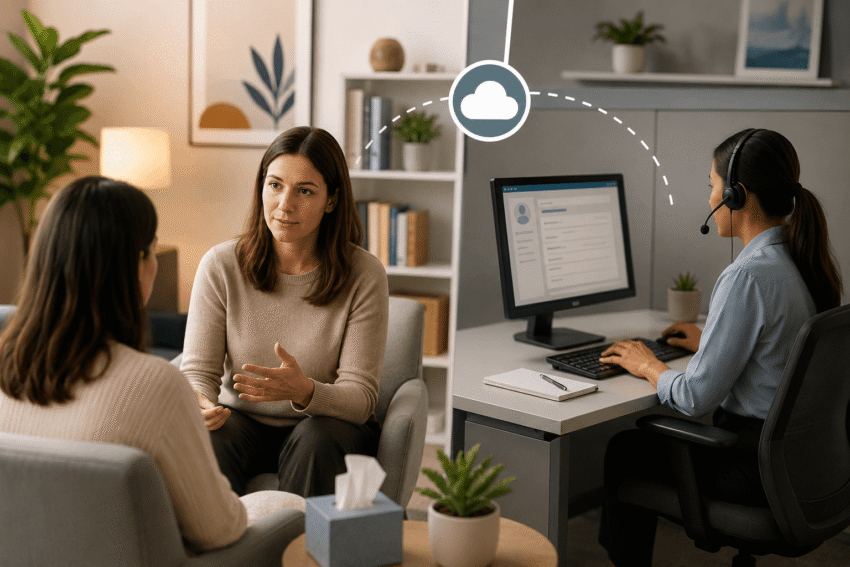
A virtual medical scribe is a trained documentation professional who remotely assists healthcare providers by documenting patient encounters in real time.
Using secure audio connections and HIPAA-compliant technology, virtual scribes listen to patient visits and create detailed clinical documentation within the electronic health record (EHR). Providers review and approve notes before they become part of the permanent medical record.
In behavioral health settings, virtual scribes can support documentation for:
- Psychiatry appointments
- Medication management visits
- Behavioral health consultations
- Therapy sessions
- Follow-up evaluations
- Intake assessments
This allows clinicians to remain focused on patient interactions rather than administrative tasks.
How Virtual Scribes Improve Behavioral Health Workflow
More Provider Attention on Patients
Behavioral health care depends heavily on communication, trust, and therapeutic relationships.
When providers are occupied with typing notes during appointments, eye contact and patient engagement can suffer. Patients may feel less heard or less connected during important conversations.
Virtual scribes remove much of the documentation burden from the provider’s workload, allowing clinicians to focus their attention on:
- Active listening
- Therapeutic communication
- Observation of nonverbal cues
- Building patient trust
- Clinical decision-making
This creates a more natural and patient-centered encounter.
Reduced After-Hours Documentation
One of the biggest contributors to provider burnout in behavioral health is “pajama time”—the hours spent completing charts after the clinical day ends.
Behavioral health notes are often detailed and time-consuming to complete. Without support, providers may spend several additional hours each day documenting patient encounters.
Virtual scribes help complete documentation during or immediately after visits, significantly reducing after-hours charting responsibilities.
As a result, providers can:
- Finish work earlier
- Improve work-life balance
- Reduce stress
- Minimize documentation fatigue
Improved Documentation Quality
Behavioral health documentation requires precision and completeness.
Missing details can impact treatment planning, continuity of care, reimbursement, compliance, and patient outcomes. Virtual scribes are trained to capture comprehensive information while following provider preferences and documentation standards.
Benefits include:
- More detailed progress notes
- Better documentation consistency
- Improved treatment plan tracking
- Accurate recording of patient history
- Enhanced continuity across visits
Comprehensive documentation helps support both clinical and operational goals.
Increased Provider Productivity
Many behavioral health practices face growing patient demand while struggling with clinician shortages.
Documentation demands often limit the number of patients providers can reasonably see each day. By reducing administrative workload, virtual scribes can help clinicians manage their schedules more efficiently.
Providers may be able to:
- See additional patients
- Reduce appointment backlogs
- Improve scheduling flexibility
- Increase clinic capacity
This efficiency can help practices meet rising demand without sacrificing care quality.
Supporting Telepsychiatry and Virtual Care
The rapid growth of telehealth has transformed behavioral health delivery.
Many mental health services now occur through virtual visits, creating new workflow challenges related to documentation and technology management. Virtual scribes integrate naturally into telehealth environments by remotely supporting providers during online appointments.
For telepsychiatry practices, virtual scribes can:
- Document visits in real time
- Manage EHR workflows
- Track treatment plans
- Assist with follow-up documentation
- Reduce administrative distractions
This support allows providers to focus on delivering effective virtual care while maintaining complete records.
Enhancing Compliance and Risk Management
Behavioral health providers must comply with complex regulatory, privacy, and documentation requirements.
Incomplete documentation can create compliance risks related to:
- Medical necessity requirements
- Insurance audits
- Treatment documentation standards
- Medication management records
- Risk assessments
Virtual scribes help ensure important information is captured consistently and accurately.
Standardized documentation processes can improve record quality while supporting organizational compliance efforts.
Helping Reduce Provider Burnout
Burnout remains a significant challenge across behavioral health professions.
High patient volumes, emotional demands, staffing shortages, and increasing administrative responsibilities contribute to provider exhaustion. Documentation requirements are frequently cited as one of the most frustrating aspects of clinical practice.
Virtual scribes help address a major source of administrative burden by taking on much of the documentation workload.
Benefits may include:
- Less clerical work
- Greater job satisfaction
- Improved efficiency
- Better work-life balance
- Reduced cognitive overload
When providers spend more time practicing medicine and less time documenting, overall professional satisfaction often improves.
Benefits for Behavioral Health Organizations
The advantages of virtual scribes extend beyond individual clinicians.
Behavioral health organizations may benefit through:
Improved Operational Efficiency
Faster documentation workflows help practices operate more smoothly while reducing chart completion delays.
Better Provider Retention
Reducing administrative burden can improve clinician satisfaction and help organizations retain valuable staff.
Increased Revenue Opportunities
Greater provider efficiency may allow practices to accommodate more patient visits and improve scheduling capacity.
Enhanced Patient Experience
Patients often report higher satisfaction when providers can focus fully on conversations rather than computer screens.
Stronger Documentation Consistency
Standardized documentation processes support quality improvement initiatives and organizational goals.
Choosing the Right Virtual Scribe Solution
Not all virtual scribe programs are equally suited for behavioral health settings.
Organizations should look for providers that offer:
- Behavioral health documentation expertise
- HIPAA-compliant workflows
- EHR-specific training
- Psychiatry and mental health experience
- Consistent provider-scribe pairing
- Strong quality assurance processes
Specialized training is particularly important because behavioral health documentation requires an understanding of mental health terminology, treatment plans, and clinical workflows.
Conclusion
Behavioral health professionals face some of the most demanding documentation requirements in healthcare. Detailed patient encounters, extensive treatment planning, and growing administrative responsibilities can create significant workflow challenges and contribute to provider burnout.
Virtual medical scribes offer an effective solution by reducing documentation burdens, improving note quality, supporting compliance, and allowing clinicians to focus more fully on patient care. As behavioral health organizations continue to seek ways to improve efficiency and provider satisfaction, virtual scribes are becoming an increasingly valuable part of modern behavioral health workflows.
By streamlining documentation and enhancing operational efficiency, virtual scribes help create a better experience for providers, organizations, and—most importantly—the patients they serve.