
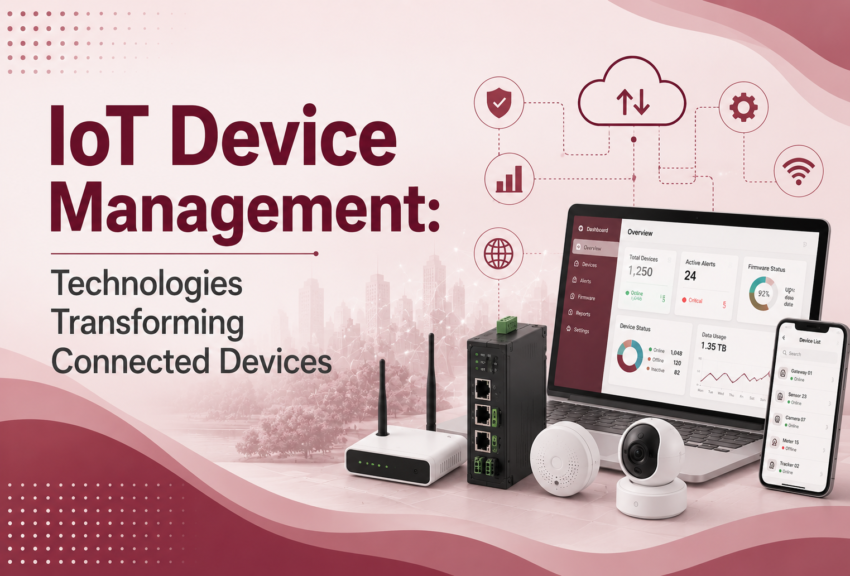
The rapid growth of the Internet of Things (IoT) has connected billions of devices across industries, enabling businesses to automate processes, collect real-time data, and improve operational efficiency. From smart factories and healthcare systems to connected vehicles and smart homes, IoT devices are becoming an essential part of modern digital infrastructure.
However, managing thousands or even millions of connected devices is a complex task. Organizations need a reliable way to deploy, monitor, secure, update, and troubleshoot devices throughout their lifecycle. This is where IoT Device Management plays a critical role. In this blog, we’ll explore what IoT device management is, the technologies transforming connected devices, its benefits, applications, challenges, and future trends.
What Is IoT Device Management?
IoT Device Management is the process of provisioning, configuring, monitoring, maintaining, securing, and updating connected IoT devices throughout their lifecycle.
An IoT device management platform enables organizations to remotely manage devices deployed across multiple locations. It provides centralized control over connected sensors, gateways, machines, and smart equipment, ensuring they remain secure, operational, and up to date.
Common devices managed through IoT platforms include:
- Smart sensors
- Industrial machines
- Smart meters
- Connected vehicles
- Medical devices
- Environmental monitoring systems
- Smart appliances
- Wearable devices
Why IoT Device Management Is Important
As IoT deployments grow, manually managing devices becomes inefficient and error-prone.
IoT device management helps organizations:
- Maintain device performance
- Improve system reliability
- Reduce maintenance costs
- Enhance security
- Automate software updates
- Monitor device health
- Scale IoT deployments efficiently
Without proper management, organizations risk device failures, security vulnerabilities, and operational disruptions.
How IoT Device Management Works
An IoT device management platform automates several key functions.
1. Device Registration
Every IoT device is registered and assigned a unique identity before joining the network.
Registration includes:
- Device identification
- Authentication
- Security credentials
- Configuration settings
2. Device Provisioning
Provisioning prepares devices for operation by configuring:
- Network settings
- Security policies
- Communication protocols
- User permissions
Remote provisioning eliminates manual setup at deployment sites.
3. Device Monitoring
The platform continuously monitors:
- Device status
- Battery level
- Signal strength
- Sensor readings
- CPU and memory usage
- Connectivity
Real-time dashboards help administrators identify problems quickly.
4. Remote Configuration
Administrators can remotely modify device settings without physical access.
Examples include:
- Changing operating parameters
- Updating communication settings
- Adjusting sensor thresholds
- Restarting devices
5. Firmware and Software Updates
IoT platforms support Over-the-Air (OTA) updates, allowing organizations to deploy firmware patches and new features remotely.
OTA updates help:
- Fix software bugs
- Improve device performance
- Add new functionality
- Address security vulnerabilities
6. Device Retirement
When devices reach the end of their lifecycle, administrators can securely deactivate and remove them from the network.
Technologies Transforming IoT Device Management
Several advanced technologies are making IoT device management smarter, faster, and more secure.
1. Internet of Things (IoT)
IoT technology connects physical devices to cloud platforms, enabling remote monitoring and centralized management.
Connected devices continuously exchange operational data that supports automation and analytics.
2. Cloud Computing
Cloud platforms provide:
- Centralized device management
- Secure data storage
- Remote access
- Scalable infrastructure
- High availability
Cloud-based management allows organizations to oversee devices deployed anywhere in the world.
3. Artificial Intelligence (AI)
AI analyzes device performance data to:
- Detect anomalies
- Predict failures
- Optimize performance
- Automate troubleshooting
- Recommend maintenance actions
AI improves reliability while reducing manual intervention.
4. Machine Learning
Machine learning continuously improves system intelligence by identifying patterns in operational data.
Applications include:
- Predictive maintenance
- Device health scoring
- Fault detection
- Usage optimization
5. Edge Computing
Edge computing processes data closer to connected devices instead of relying entirely on cloud infrastructure.
Benefits include:
- Faster response times
- Lower latency
- Reduced bandwidth usage
- Improved reliability
This is particularly useful for industrial automation and mission-critical systems.
6. Digital Twins
Digital twins create virtual models of physical devices.
Organizations can simulate:
- Device performance
- Equipment failures
- Maintenance scenarios
- Configuration changes
This improves planning and operational efficiency.
7. 5G Connectivity
5G networks provide:
- Faster communication
- Lower latency
- Higher device capacity
- Improved network reliability
These capabilities support large-scale IoT deployments.
8. Blockchain Technology
Blockchain enhances device security by creating tamper-resistant records for:
- Device identity
- Authentication
- Data sharing
- Firmware verification
This reduces the risk of unauthorized access.
Benefits of IoT Device Management
Centralized Device Control
Organizations can manage thousands of connected devices from a single dashboard, simplifying administration.
Improved Security
IoT device management strengthens security through:
- Device authentication
- Encryption
- Access control
- OTA security updates
- Continuous monitoring
Reduced Maintenance Costs
Remote diagnostics and automated updates minimize on-site maintenance visits, reducing operational expenses.
Better Device Performance
Continuous monitoring ensures devices operate efficiently and helps identify issues before they impact operations.
Scalability
IoT platforms support the deployment and management of large fleets of connected devices across multiple locations.
Predictive Maintenance
AI-powered analytics detect early signs of equipment failure, allowing maintenance teams to address issues proactively.
Regulatory Compliance
Organizations can maintain audit trails, security policies, and firmware versions to support compliance with industry regulations.
Applications of IoT Device Management
Manufacturing
Manufacturers manage:
- Industrial robots
- Production equipment
- Smart sensors
- Automated assembly lines
Remote monitoring improves production efficiency and reduces downtime.
Healthcare
Hospitals manage:
- Medical monitoring devices
- Connected diagnostic equipment
- Patient wearables
- Smart infusion pumps
Continuous monitoring enhances patient care and equipment reliability.
Smart Cities
Municipalities manage:
- Smart streetlights
- Traffic systems
- Environmental sensors
- Waste management devices
- Water monitoring systems
These connected devices improve urban services.
Agriculture
Farmers remotely manage:
- Irrigation controllers
- Soil moisture sensors
- Livestock monitoring devices
- Weather stations
This improves productivity while conserving resources.
Energy and Utilities
Utility providers monitor:
- Smart meters
- Power grids
- Renewable energy systems
- Water distribution infrastructure
IoT management improves operational efficiency and service reliability.
Transportation and Logistics
Fleet operators manage:
- GPS trackers
- Vehicle diagnostics
- Cargo monitoring systems
- Fuel monitoring devices
Real-time monitoring supports efficient logistics operations.
Challenges of IoT Device Management
Despite its advantages, organizations face several challenges.
Security Risks
Connected devices can become targets for cyberattacks if not properly secured.
Best practices include:
- Strong authentication
- Data encryption
- Secure boot processes
- Regular firmware updates
- Continuous threat monitoring
Device Compatibility
Managing devices from multiple manufacturers may require support for different communication protocols and standards.
Network Connectivity
Reliable internet connectivity is essential for remote monitoring and device updates, especially in remote locations.
Data Management
Large IoT deployments generate significant amounts of operational data that require secure storage, processing, and analysis.
Lifecycle Management
Organizations must effectively manage devices from deployment through maintenance and eventual retirement to maintain performance and security.
Best Practices for IoT Device Management
To maximize the value of IoT device management, organizations should:
- Use secure device authentication and encryption.
- Implement role-based access controls.
- Schedule regular OTA firmware updates.
- Monitor device health continuously.
- Standardize communication protocols where possible.
- Maintain detailed device inventories.
- Back up configuration settings regularly.
- Automate alerts for abnormal device behavior.
- Train IT teams on IoT security and lifecycle management.
Future Trends in IoT Device Management
The future of IoT device management will be shaped by several emerging technologies.
AI-Driven Automation
AI will automate diagnostics, software updates, and performance optimization with minimal human intervention.
Zero-Trust Security
Organizations will increasingly adopt zero-trust architectures, verifying every device before granting network access.
Edge AI
Artificial intelligence running directly on edge devices will improve decision-making while reducing latency.
Autonomous Device Management
Future platforms will automatically detect, configure, secure, and optimize connected devices without manual intervention.
Sustainable IoT
Energy-efficient hardware, low-power communication protocols, and optimized software will reduce environmental impact and extend device lifespan.
Expanded 5G Adoption
As 5G networks become more widespread, organizations will benefit from faster connectivity, lower latency, and the ability to manage larger numbers of connected devices.
Industries Benefiting from IoT Device Management
IoT device management is helping organizations across numerous sectors improve efficiency and scalability, including:
- Manufacturing
- Healthcare
- Agriculture
- Energy and utilities
- Smart cities
- Transportation and logistics
- Retail
- Oil and gas
- Telecommunications
- Building automation
These industries rely on centralized device management to ensure reliable operations and maximize the value of their IoT investments.
Conclusion
IoT Device Management is a critical component of successful IoT deployments. It enables organizations to securely deploy, monitor, update, and maintain connected devices throughout their lifecycle while improving performance, reducing operational costs, and strengthening security.
Technologies such as cloud computing, Artificial Intelligence, machine learning, edge computing, digital twins, blockchain, and 5G are transforming how connected devices are managed. These innovations make IoT ecosystems more intelligent, scalable, and resilient.