

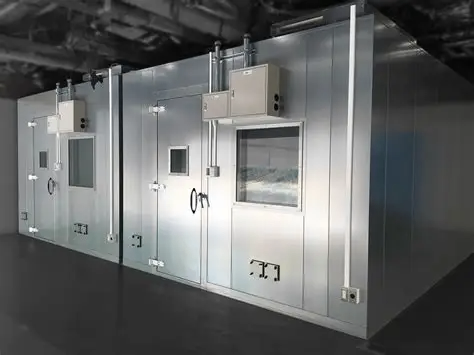
Not every lab has the budget, time or spare building to construct a fixed test room from scratch. Walls get poured, schedules slip and the finished space cannot move when the company does. A Modular Anechoic Chamber solves much of this by arriving as ready-made panels that are assembled on site.
What Is It?
It is an echo-free test room built from factory-made sections instead of site-built construction. Each panel carries the structure, insulation and absorbing wedges together, so once the pieces are bolted into place you have a sealed room where reflections are controlled and outside noise stays out.
How Does the Modular Approach Work?
Panels are designed, cut and tested in a factory where quality is easier to control. They are then shipped, joined with tight seals and finished with doors, ventilation and floor treatment.
Why Choose Modular Over Fixed Construction?
- Faster installation: much of the work is done before delivery.
- Consistent quality: factory conditions give predictable performance.
- Relocation: the chamber can be taken apart and moved to a new site.
- Expansion: extra sections can be added as your testing grows.
Types You Can Get
A Modular Anechoic Chamber can be acoustic, built with foam or mineral wool wedges for noise and audio testing, or EMC and RF, built with shielded panels and radio-wave absorbers for antenna and electronics work. It can also be fully anechoic, with every surface treated, or semi-anechoic, with a hard floor to copy real-world conditions.
Where It Is Used
- Automotive and aerospace component noise checks
- Appliance and power tool sound rating
- Speaker, microphone and headphone tuning
- Phone and wearable device testing
- Wireless and antenna performance studies
- University and research labs
What to Look For
- Absorber depth: it sets the lowest frequency the room can handle properly.
- Panel strength and joints: poor joints leak sound or interference.
- Vibration isolation: a floating floor keeps building shake away from the test area.
- Door and ventilation design: quiet airflow and tight seals protect results.
- Verified performance: ask for measured data against recognised standards.
A Modular Anechoic Chamber is only as good as these details.
Planning Your Chamber
Start with what you will measure. Note the frequency range, product size, weight and test distance, plus the standards you must meet.
Common Mistakes
- Choosing on price alone. Thin absorbers lose accuracy at low frequencies.
- Ignoring the building. Floors, ceilings and nearby equipment affect isolation.
- Skipping acceptance tests. Always measure the finished room before handover.
- Forgetting upkeep. Dust, damaged wedges and worn seals reduce accuracy over time.
Care and Maintenance
Keep the room clean and avoid touching the absorbers. Inspect panel joints, door seals and filters regularly, and retest every few years. If you ever relocate, ask for the chamber to be re-verified after reassembly, since a Modular Anechoic Chamber can shift slightly during transport.
Working With an Experienced Supplier
SomNandi Industries offers acoustic and test chamber solutions for industrial and research users across India, with designs shaped around each customer’s own testing needs.
Final Thoughts
Flexibility is the real strength of modular construction: faster setup, easier growth and a room that can follow your lab wherever it goes. Define your requirements, insist on verified results and choose a partner who understands your tests. When you are ready to plan a Modular Anechoic Chamber, share your goals with SomNandi Industries and build a room that fits.