
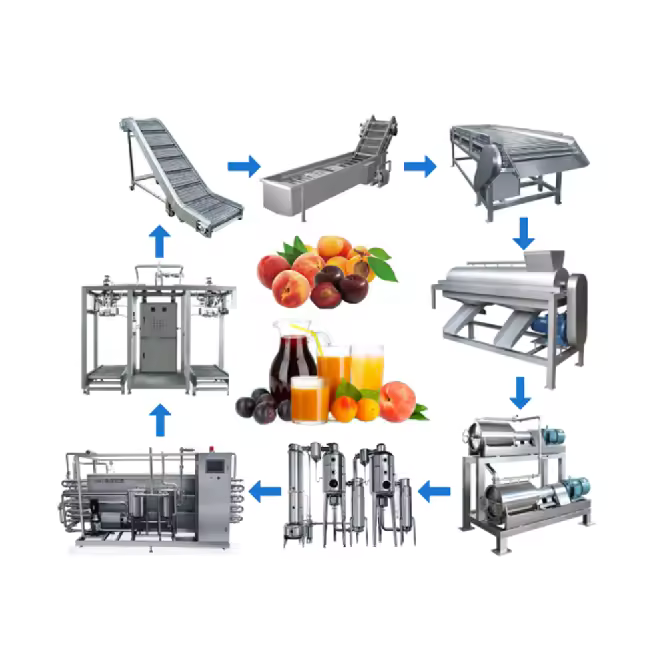
Pakistan’s fruit processing industry is sitting on enormous untapped potential. With abundant harvests of mangoes, guavas, tomatoes, citrus, and dates produced across Sindh, Punjab, and Khyber Pakhtunkhwa every season, the gap between raw agricultural output and value-added processed product represents one of the most accessible entrepreneurial opportunities in the country’s food manufacturing sector. At the heart of capturing that opportunity is one critical investment: a properly configured pulp plant. Whether you are entering the market as a fresh juice producer, a puree exporter, or a sauce and ketchup manufacturer, understanding pulp processing equipment is the first step toward building a viable, scalable operation.
What is a Pulp Plant?
A pulp plant is an integrated industrial processing system designed to convert whole fresh fruit into refined pulp, puree, or juice concentrate through a series of mechanical stages — washing, sorting, crushing, pulping, refining, deaeration, and pasteurisation. The output is a consistent, commercially usable fruit pulp that can be packaged for retail, processed further into beverages or condiments, or preserved for export in aseptic bulk containers.
Unlike a single machine, a pulp plant represents a complete production line in which each stage is engineered to work in sequence. The quality, hygiene standard, and throughput capacity of the final pulp are directly determined by the specifications of every stage in that line. For entrepreneurs entering the fruit processing business, understanding what each component does — and why it matters — is essential before committing any capital.
Key Features & Benefits
A well-designed pulp plant delivers operational and commercial advantages that justify its position as the core investment in any fruit processing business:
- End-to-End Automated Processing: From fruit intake to finished pulp output, a complete pulp plant minimises manual handling at every stage, reducing labour costs, limiting contamination risk, and maintaining consistent output quality across the entire production run.
- High Juice and Pulp Yield: Precision-engineered pulping and refining equipment extracts the maximum usable pulp from each kilogram of raw fruit, directly improving your raw material cost efficiency and profitability per tonne processed.
- Versatility Across Fruit Varieties: Quality pulp plants are configurable for different fruit types — from fibrous mangoes and guavas to watery tomatoes and citrus — through interchangeable screens, adjustable crusher speeds, and adaptable pulper settings.
- Integrated Pasteurisation for Shelf Life: Built-in tubular or plate heat exchangers pasteurise the pulp inline, eliminating microbial load without the need for artificial preservatives — a critical requirement for export markets and modern retail buyers.
- Aseptic and Hot-Fill Packaging Compatibility: Modern pulp plants produce output that is ready for aseptic bulk filling or hot-fill retail packaging, giving processors the flexibility to serve both industrial ingredient buyers and consumer markets simultaneously.
Industrial Applications
A pulp plant serves a broader range of industries than most entrepreneurs initially realise, making it a versatile anchor investment for food processing businesses:
- Mango Pulp and Puree Exporters processing Pakistan’s famous Sindhri and Chaunsa varieties into bulk aseptic pulp for export to the Middle East, Europe, and North America — one of the country’s fastest-growing agricultural export categories
- Juice and Nectar Manufacturers using fruit pulp as the primary ingredient base for bottled juices, juice drinks, and nectar blends sold through retail chains and foodservice channels
- Ketchup, Sauce, and Condiment Producers requiring consistent, seed-free tomato and chilli pulp as the foundational input for cooking sauces, hot sauces, and tomato paste
- Baby Food and Nutritional Product Companies producing smooth, refined fruit purees for infant nutrition and health supplement formulations where purity and consistency are non-negotiable
- Jam, Marmalade, and Confectionery Manufacturers sourcing cooked, refined fruit pulp as the primary ingredient for preserves, fillings, and confectionery centres
- Dairy and Beverage Blenders incorporating tropical fruit pulps — guava, papaya, passion fruit — into flavoured yogurts, smoothies, and mixed fruit beverages
How to Choose the Right One
Selecting a pulp plant is a multi-variable decision that goes well beyond comparing price quotes. These considerations will structure your evaluation:
- Define Your Primary Fruit and Output Type: The fruit variety you intend to process determines the crusher design, screen mesh size, and pulper configuration you need. A plant optimised for mango processing requires different settings and components than one designed for tomato or citrus. Clarify your primary fruit — and any secondary varieties — before specifying equipment.
- Establish Your Target Throughput: Calculate your anticipated daily raw fruit intake in tonnes per hour. This figure drives the sizing of every stage in the line — from the wash tank and elevator capacity to the pulper, pasteuriser, and filling system. Undersizing any single stage creates a bottleneck that constrains the entire plant.
- Assess Pasteurisation and Preservation Requirements: If you intend to export or supply modern retail, inline pasteurisation is not optional. Confirm that the plant includes an appropriately rated heat exchanger, holding tube, and temperature monitoring system capable of meeting your target market’s food safety standards.
- Evaluate Waste Handling Design: Fruit processing generates significant volumes of seeds, skins, and fibre waste. A well-designed pulp plant includes integrated waste conveyance that removes this material cleanly without interrupting production — reducing cleaning burden and enabling by-product recovery for animal feed or composting.
- Verify Stainless Steel Construction Throughout: Every component in direct contact with fruit — wash tanks, crushers, pulpers, screens, pipework, and pasteurisers — must be constructed from food-grade stainless steel. Confirm the steel grade specification in writing and request material certification from any supplier you are seriously considering.
Why Quality Matters
In fruit pulp processing, equipment quality has a direct and immediate effect on the quality of the product reaching your customers. A poorly finished pulper screen allows seed fragments and skin particles into the pulp stream — resulting in gritty, inconsistent output that fails quality tests and damages your brand. An undersized or poorly insulated pasteuriser fails to achieve consistent lethal temperatures, leaving microbial contamination risk in product destined for extended shelf life storage.
For export-oriented processors, the consequences of quality failures are compounded by the regulatory environment. Gulf Cooperation Council importers, European food buyers, and international retail chains increasingly require third-party food safety certification — FSSC 22000, BRC, or HACCP — as a condition of doing business. Meeting these standards begins with the equipment in your processing line, not the paperwork on your desk.
Beyond compliance, build quality determines the total cost of ownership over the plant’s operational life. Stainless steel components correctly welded, polished, and assembled last decades with routine maintenance. Inferior materials and shortcuts in fabrication translate into corrosion, contamination events, and structural failures that shut down production at the worst possible moments — during peak harvest season, when your raw material window is narrow and your order commitments are firm.
Conclusion
For fruit processing entrepreneurs in Pakistan, a well-specified pulp plant is not just a piece of equipment — it is the foundation of a business capable of competing in both domestic and international markets. Getting the specification right from the beginning — matching throughput capacity, fruit variety configuration, pasteurisation standards, and build quality to your commercial goals — is what separates operations that scale profitably from those that struggle to maintain consistent output. If you are currently planning your fruit processing facility or evaluating an equipment upgrade, you can explore fully configured industrial solutions and detailed technical specifications for a dependable Pulp Plant to find the right setup for your production targets and market requirements.