
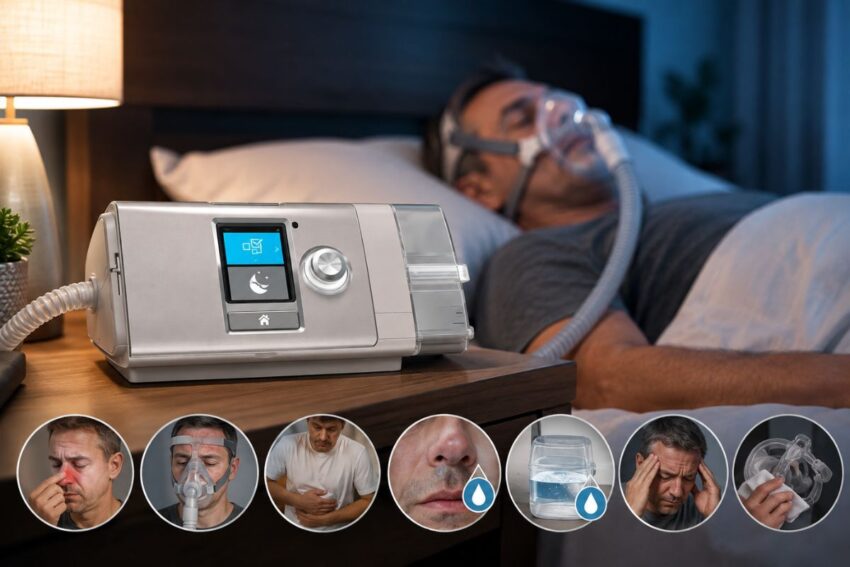
Adjusting to CPAP therapy takes patience, and many users experience a learning curve during the first few weeks. Fortunately, small changes to your daily routine can make treatment more comfortable and improve your overall experience.
Choosing the correct mask is one of the most important factors. A mask that fits well should create a secure seal without causing excessive pressure on the face. If your mask frequently leaks or leaves deep marks on your skin, it may be worth trying a different size or mask style with guidance from your CPAP provider.
Humidity settings can also make a noticeable difference. Dry air may contribute to nasal irritation, congestion, or a sore throat. Many modern CPAP machines include a heated humidifier that adds moisture to the airflow. Experimenting with humidity levels under your provider’s guidance may help reduce dryness and improve comfort.
Keeping your CPAP equipment clean is another essential habit. Regularly washing the mask cushion, tubing, and water chamber helps reduce the buildup of dust, oils, and bacteria. Following the cleaning instructions provided by the manufacturer helps maintain both hygiene and equipment performance.
Many new users also benefit from using the ramp feature available on most CPAP devices. Ramp mode starts therapy at a lower pressure and gradually increases it as you fall asleep, making it easier to adjust to the airflow.
If discomfort continues despite these adjustments, don’t stop using your CPAP machine without speaking to your healthcare provider. Persistent issues such as severe mask leaks, significant bloating, frequent nosebleeds, or worsening breathing should be discussed with a qualified medical professional.
With the right equipment, proper maintenance, and regular follow-up, most people can successfully adapt to CPAP therapy and experience the long-term benefits of improved sleep and better overall health.
Disclaimer: This content is intended for general educational purposes and should not be considered medical advice. Always consult your healthcare provider regarding CPAP therapy or sleep-related concerns.