
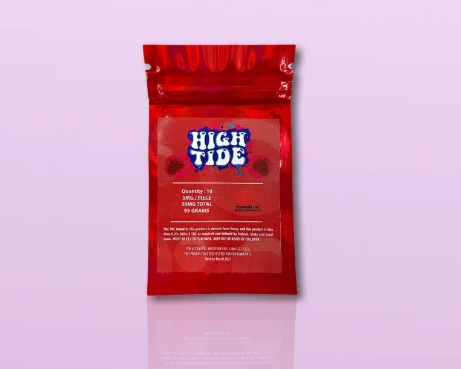
Cannabis-infused foods have developed into a broad category that includes gummies, chocolates, candies and other edible formats. Unlike inhaled cannabis, edible THC passes through the digestive system before its effects become noticeable, which can result in a slower onset and longer-lasting experience. THC candy edibles are therefore products that require careful attention to serving size, THC concentration, labeling and storage. Consumers should also understand that hemp-derived THC can still be psychoactive. The legal and regulatory status of these products varies by jurisdiction, while the U.S. Food and Drug Administration maintains specific positions regarding THC-containing foods and dietary supplements.
What Are THC Candy Edibles?
THC candy edibles are confectionery products formulated with tetrahydrocannabinol, commonly called THC. THC is the cannabinoid primarily responsible for the intoxicating effects associated with cannabis.
Candy-style products can include gummies, chewy pieces, chocolate products and other confectionery formats. The THC may be distributed throughout the product or portioned into individually measured pieces.
The important distinction is that these products are not ordinary candy. THC can affect perception, coordination, reaction time and judgment, so consumers should evaluate the cannabinoid content rather than treating an edible as a conventional snack.
High Tide, for example, identifies its edible collection as including gummies, chocolates and other THC-infused snack formats. The company states that its THC is hemp-derived and that its products undergo third-party laboratory testing for potency and purity.
How Do THC Edibles Work?
After an edible is consumed, THC travels through the digestive system and is subsequently metabolized by the liver. This process differs from inhalation, where cannabinoids enter the bloodstream through the lungs.
Oral consumption can therefore have a delayed onset. The timing depends on factors such as the formulation, individual metabolism, food intake and the amount consumed.
This delayed effect is one of the most important differences between edible and inhaled cannabis. A person may not feel effects immediately and could mistakenly assume that the product has not worked.
The result can be stronger or longer-lasting effects if additional THC is consumed before the initial serving has taken effect.
Why Does THC Potency Matter?
THC potency is usually expressed in milligrams per serving or per package. Both figures can be important.
For example, a package containing several pieces may list the total THC concentration for the entire package while separately identifying the amount in each piece.
Consumers should check:
- THC per serving
- Number of servings
- Total THC per package
- Serving size
- Other cannabinoids
- Ingredient information
- Testing information
A clearly labeled serving size makes it easier to understand how much THC is being consumed.
Because individual sensitivity varies, the numerical amount should be considered alongside personal experience and applicable product guidance rather than assuming that a particular dose will affect everyone identically.
What Is the Difference Between THC and CBD?
THC and CBD are two different cannabinoids found in cannabis.
THC is psychoactive and can produce the intoxicating “high” associated with marijuana. CBD, by contrast, does not produce the same intoxicating effect.
The presence of CBD does not eliminate the effects of THC when both cannabinoids are included in a product. Consumers should therefore examine the individual cannabinoid amounts instead of relying on broad descriptions such as “hemp” or “cannabis.”
The FDA identifies THC and CBD as distinct cannabis-derived compounds and notes THC’s psychoactive properties.
What Does Hemp-Derived THC Mean?
Hemp-derived THC refers to THC sourced from hemp rather than cannabis classified as marijuana under applicable legal definitions.
Under the 2018 federal framework, hemp was defined as Cannabis sativa L. and its derivatives containing no more than 0.3% delta-9 THC on a dry-weight basis. The same federal framework preserved FDA authority over products containing cannabis-derived compounds.
Importantly, “hemp-derived” does not mean “non-intoxicating.” Delta-9 THC remains psychoactive regardless of whether the source material is hemp.
Consumers should therefore look at the actual THC content and product labeling instead of assuming that hemp products cannot produce intoxicating effects.
How Are Gummies Different From Chocolate Edibles?
The basic route of THC delivery is similar, but the product format can influence the overall experience.
Gummies typically use a gelatin or pectin-based structure, while chocolate products incorporate cannabinoids into a fat-containing confectionery matrix. Ingredients, serving sizes and cannabinoid concentrations vary by manufacturer.
Texture and flavor can also influence how a product is consumed. A familiar candy-like format may make portion awareness especially important because the product resembles an ordinary snack.
For this reason, THC-containing candies should remain clearly separated from conventional food products.
Why Is Accurate Labeling Important?
Accurate labeling helps consumers determine exactly what they are consuming.
A useful label should identify the cannabinoid content, serving size, ingredients and manufacturer information. Batch information and laboratory-testing details can provide additional transparency.
Third-party testing can be particularly useful because it allows cannabinoid concentration and certain quality parameters to be evaluated independently.
High Tide states that its batches are third-party lab tested for purity and potency and provides laboratory results through its website.
Consumers should ideally review a certificate of analysis associated with the relevant batch rather than relying exclusively on general product descriptions.
What Is a Certificate of Analysis?
A certificate of analysis, commonly called a COA, is a laboratory document that reports analytical testing results for a particular product or batch.
Depending on the laboratory panel, a COA may provide information about:
- Cannabinoid concentrations
- THC levels
- CBD levels
- Contaminants
- Heavy metals
- Pesticides
- Microbial contaminants
- Batch identification
The usefulness of a COA depends on the quality and scope of the testing performed. Consumers should verify that the report corresponds to the product and batch being considered.
How Long Do Edible THC Effects Last?
The duration of THC effects varies from person to person and depends on several factors.
These can include the amount consumed, metabolism, tolerance, food intake and product formulation.
Oral THC generally has a slower onset and longer duration than inhaled cannabis. This means consumers should account for the possibility that effects may continue for several hours.
The delayed nature of edible THC is particularly important when planning activities after consumption.
Why Should You Avoid Consuming More Too Quickly?
Delayed onset can create a common problem with edible products: consuming additional THC before the first serving has taken effect.
Someone who expects an immediate response may assume the initial serving was insufficient. Once the effects eventually become noticeable, the combined amount can produce stronger intoxication than intended.
This is why product labels and serving information matter. Consumers should follow the product’s stated serving guidance and allow sufficient time to understand the initial effects.
What Are the Safety Concerns With THC Edibles?
THC can impair coordination, attention, judgment and reaction time.
People who consume THC should avoid driving or operating machinery while impaired. Combining intoxicating substances can also increase unpredictability.
Another major concern is accidental ingestion. THC candy can resemble conventional confectionery, creating a risk if products are accessible to children.
The FDA has specifically warned about accidental ingestion of THC-containing edible products by children and reported adverse events associated with such exposures.
THC products should therefore be stored securely and kept in their original, clearly labeled packaging.
How Should THC Candy Be Stored?
Storage is an important part of responsible handling.
THC candy should remain in its original packaging and be stored according to the manufacturer’s instructions. Products should be kept away from children, pets and anyone who should not consume them.
Avoid placing THC candy in containers that could be mistaken for ordinary sweets. Clear labeling and secure storage reduce the possibility of accidental consumption.
Temperature and humidity can also affect confectionery quality, so manufacturer-specific storage recommendations should be followed.
What Is a THC Beverage?
A THC beverage is a liquid product containing a measured amount of THC. These products can include flavored drinks designed to resemble conventional beverages while delivering cannabinoids.
Liquid formulations may use emulsification technologies to disperse cannabinoids through the beverage. High Tide describes its beverages as using a water-soluble formula and nano-emulsion technology, which the company says is intended to support rapid absorption.
However, consumers should not assume that every THC beverage has the same onset time. Formulation, dose and individual physiology can all affect the experience.
Are THC Edibles Legal Everywhere?
No. Cannabis and hemp-derived cannabinoid regulations vary considerably between jurisdictions.
At the federal level, the FDA states that THC and CBD cannot be marketed as dietary supplements and that federal law prohibits introducing food containing added THC or CBD into interstate commerce under the circumstances described by the agency.
At the same time, individual states have developed their own cannabis and hemp regulations. Some jurisdictions permit particular hemp-derived THC products under specific conditions, while others impose restrictions or prohibitions.
Consumers should therefore verify the laws applicable to their location before purchasing, possessing or consuming these products.
Why Should Consumers Be Careful With Product Claims?
Cannabinoid products are sometimes marketed using health, wellness or therapeutic language.
Consumers should distinguish between general product descriptions and scientifically or legally substantiated medical claims. The FDA has taken enforcement action against companies marketing certain cannabis-derived products with unlawful or unapproved disease-related claims.
THC products should not be assumed to treat a medical condition simply because marketing materials make a health-related suggestion.
For medical concerns, consumers should consult a qualified healthcare professional rather than relying on an edible product’s promotional claims.
What Should Consumers Check Before Buying?
A straightforward checklist can make product evaluation easier.
Look for:
- Clearly stated THC content
- Serving-size information
- Complete ingredient labeling
- Batch identification
- Accessible laboratory testing
- Manufacturer information
- Appropriate storage instructions
- Current legal status in the relevant jurisdiction
These details can help distinguish transparent product information from vague descriptions.
Why Is Responsible Storage Especially Important?
Candy-style THC products can create a greater risk of accidental ingestion because their appearance and flavor may resemble ordinary sweets.
The FDA has documented concerns involving THC-containing foods that resemble familiar food products and has warned about accidental ingestion by children.
Secure storage is therefore not simply a matter of preserving product quality. It is also an important safety measure.
Products should remain inaccessible to children and pets, and consumers should avoid transferring them into unmarked containers.
Conclusion
THC-infused candy represents one of the many formats used to deliver cannabinoids orally. The primary considerations are not simply flavor or product format but THC concentration, serving size, labeling, laboratory testing, storage and local regulations. Because edible THC can have delayed and prolonged effects, understanding the product before consuming it is particularly important. The same principles apply when comparing candy with a grape THC drink. A beverage may use a liquid formulation and technologies designed to disperse THC, while a candy delivers the cannabinoid through a solid confectionery format. High Tide describes its beverages as using water-soluble and nano-emulsion technology and lists grape among its available flavors.