

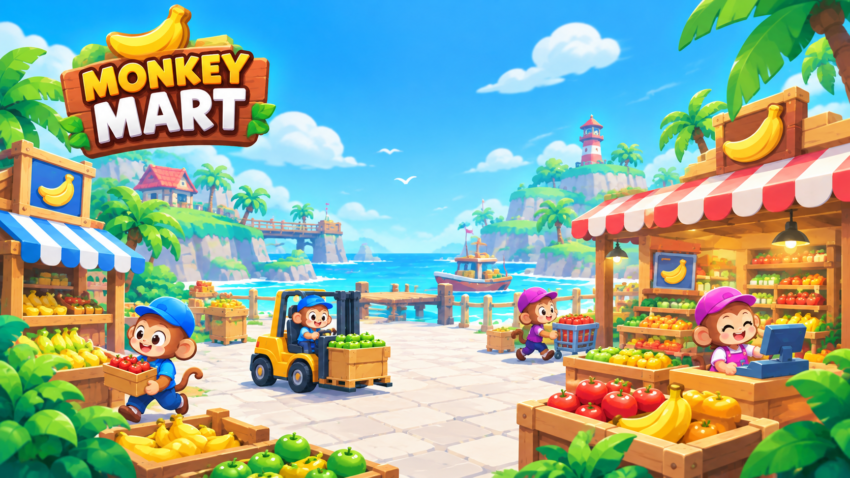
Ever dreamt of running your own bustling business, but with a tropical twist and a cast of adorable primates? Then you’re in for a treat with Monkey Mart, a delightfully addictive and surprisingly strategic management game that’s perfect for a quick pick-me-up or a longer, engaging session. Whether you’re a seasoned gamer or just looking for a new casual distraction, Monkey Mart offers a charming blend of simple mechanics and satisfying progression.
Welcome to the Jungle Emporium: An Introduction to Monkey Mart
Monkey Mart puts you in the tiny, entrepreneurial shoes of a monkey who’s decided to open their very own supermarket. But this isn’t your average grocery store; here, you’re not just selling products, you’re growing them! From bananas cultivated right outside to freshly squeezed juice, your little monkey avatar is a one-stop-shop for agricultural excellence and retail prowess. The game’s vibrant, cartoony graphics and cheerful soundtrack immediately draw you into its lighthearted world, making it an inviting experience for players of all ages. It’s a game that thrives on efficiency, a touch of strategy, and the pure joy of watching your enterprise flourish.
From Planting to Profit: Understanding the Gameplay Loop
The core gameplay of Monkey Mart is deceptively simple, yet it offers plenty of room for optimization and growth. You start with a small plot of land and a humble selection of goods. Here’s a breakdown of the typical day in your monkey’s life:
Planting and Harvesting: Your initial offerings will likely be bananas. You’ll plant banana trees, wait for them to ripen, and then harvest the delicious fruit. This cycle expands as you unlock more products.
Processing: Many items in Monkey Mart aren’t sold raw. Bananas, for example, can be processed into delightful banana juice or even more complex concoctions later on. This involves carrying your harvested goods to a processing station, waiting for the transformation, and then moving the finished product to the shelves.
Stocking and Selling: Once processed, your goods need to be placed on shelves for eager customers to purchase. Your monkey automatically stocks shelves as long as there are products available. Customers will then flock to your store, pick up their desired items, and pay at the checkout.
Upgrades and Expansion: The money you earn from sales is crucial for your business’s growth. You can invest in a variety of upgrades:
Speed: Make your monkey move faster to cover more ground.
Carry Capacity: Allow your monkey to carry more items at once, reducing trips.
New Products: Unlock new crops like corn, coffee, and even dairy products. Each new product introduces a new planting area and often new processing stations.
New Aisles/Sections: Expand your store to accommodate more products and customers.
Helpers: As your store grows, you can hire additional monkey employees to assist with harvesting, stocking, or even manning the checkout. This is where the game truly starts to shine, as you delegate tasks and watch your team work together.
The beauty of the gameplay lies in its continuous loop. Harvest, process, sell, earn, upgrade, repeat. Each upgrade feels impactful, directly improving your efficiency and allowing you to handle a greater volume of customers and products.
Tips for a Thriving Tropical Business
To truly excel in Monkey Mart, a few strategies can help you maximize your profits and minimize your stress:
Prioritize Speed and Carry Capacity Early On: Before you start hiring a large workforce, investing in your main monkey’s speed and carry capacity is paramount. This allows you to harvest and stock much more efficiently, generating more initial income to fuel further upgrades.
Focus on One Product Line at a Time: While it’s tempting to unlock every new product immediately, it’s often more efficient to fully develop one product line before moving to the next. For example, get your banana production and juice making running smoothly before introducing corn. This prevents your store from becoming overwhelmed and helps you manage resources better.
Strategic Placement of Processors and Shelves: As your store expands, think about the flow of goods. Placing processing stations close to their respective crops and then near the shelves they supply can significantly reduce travel time for your monkey and employees.
Automate with Helpers Wisely: When you start hiring helpers, consider where they’ll have the biggest impact. A helper dedicated to harvesting a specific crop can free up your main monkey for more complex tasks like stocking multiple aisles or running the checkout. Similarly, a dedicated stocker for a busy aisle can prevent empty shelves.
Don’t Forget the Checkout! A bottleneck at the checkout means customers leave without paying. Ensure you have enough checkout counters and/or efficient checkout staff to keep the flow smooth.
Patience is a Virtue (Especially for Upgrades): Some upgrades can be quite expensive. Don’t be afraid to grind for a bit to save up for a significant upgrade that will drastically improve your efficiency, rather than spending small amounts on minor, less impactful improvements.
The Sweet Taste of Success: Conclusion
Monkey Mart is more than just a time-killer; it’s a charming lesson in supply chain management, resource allocation, and the satisfying feeling of building something from the ground up. Its intuitive controls, adorable aesthetic, and progressive gameplay loop make it incredibly easy to pick up and play. You can easily find yourself lost in the rhythm of harvesting bananas, processing coffee, and watching your monkey employees efficiently serve a continuous stream of happy customers. So, if you’re looking for a delightful and engaging game to brighten your day and test your entrepreneurial spirit, give Monkey Mart a try. You might just find yourself addicted to the sweet success of your thriving jungle emporium!