
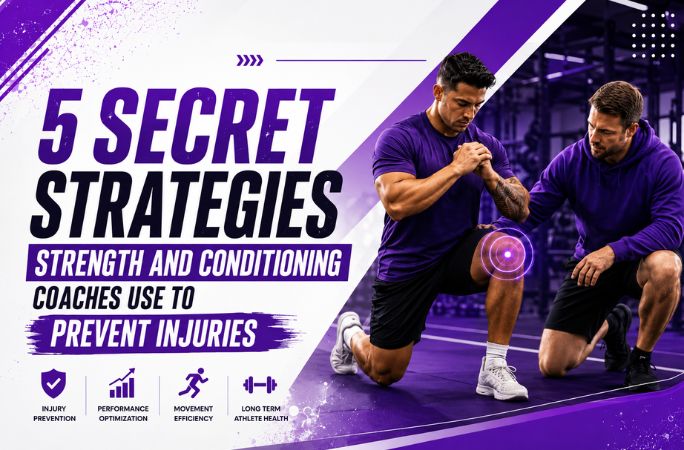
Athletes train to become stronger, faster, and more powerful—but improving performance should never come at the expense of staying healthy.
A skilled strength and conditioning coach does more than create challenging workouts. The right coach evaluates an athlete’s movement, training demands, strength levels, recovery, and progression to build a program that supports both performance and long-term durability.
This is especially important because athletes can be exposed to high training loads, repetitive movements, sudden changes in intensity, and sport-specific physical demands. Effective sports performance training therefore needs to develop performance while managing unnecessary injury risk.
So, what separates effective strength and conditioning programs from workouts that simply make athletes tired?
Here are five strategies experienced coaches use to help athletes train smarter and perform consistently.
1. Start With an Athlete Assessment—Not a Generic Workout
One of the biggest mistakes in athletic training is assuming every athlete needs the same program.
A professional strength and conditioning coach begins by understanding the individual athlete. This can include assessing movement quality, mobility, strength, stability, previous training experience, sport-specific demands, and current goals.
For example, a basketball player may need a different approach from a distance runner. A sprinter may require greater emphasis on acceleration, maximal force production, and power, while an endurance athlete may need carefully managed strength work that complements running volume.
Individualization matters because training should match the athlete’s current ability and objectives.
The NSCA emphasizes athlete safety, standards, and appropriate training practices as important components of strength and conditioning.
Key takeaway: Don’t ask, “What is the hardest workout?” Ask, “What does this athlete need right now?”
2. Progress Training Gradually Instead of Chasing Fast Results
More training does not automatically mean better results.
A common reason athletes struggle with injuries is doing too much too soon. Increasing training volume, intensity, frequency, or complexity too rapidly can create unnecessary stress.
Effective strength training for athletes uses progressive overload while giving the body enough time to adapt.
For example, an athlete might gradually increase:
- Resistance
- Training volume
- Sprint intensity
- Jumping or plyometric demands
- Exercise complexity
- Sport-specific workload
The 2026 ACSM position on resistance training reviewed more than 137 systematic reviews involving over 30,000 participants and emphasizes individualized, goal-specific resistance training rather than unnecessarily complicated programming.
A good coach understands that progression is a process.
Train hard enough to create adaptation—but not so aggressively that recovery becomes impossible.
3. Build Strength That Transfers to Sport
Strength training should not exist in isolation.
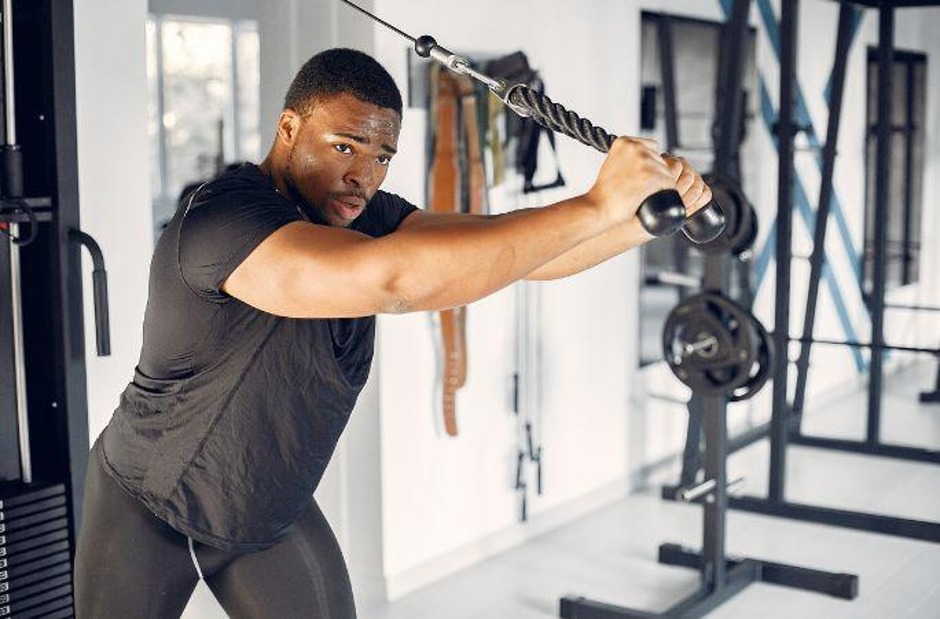
Athletes need strength that can contribute to the movements required by their sport. That’s why quality sports performance training combines strength development with power, speed, coordination, stability, and movement skills.
Depending on the athlete, training may include:
- Squatting and hinging patterns
- Single-leg strength
- Core stability
- Pulling and pushing movements
- Jumping and landing mechanics
- Sprint drills
- Change-of-direction exercises
- Plyometric progressions
- Rotational movements
The objective isn’t simply to increase the amount an athlete can lift. The objective is to improve physical qualities that support performance.
Research summarized by ACSM shows resistance training can improve strength, power, endurance, contraction velocity, balance, and other measures of physical function.
That makes well-designed resistance training an important component of a complete athletic development program.
4. Prioritize Warm-Ups, Movement Quality, and Technique
A strong athlete with poor movement mechanics can still struggle.
That’s why experienced coaches spend time teaching athletes how to move, not simply how much weight to lift.
A quality warm-up can prepare the body for the demands of training. Depending on the sport and session, it may include light aerobic activity, mobility work, activation exercises, movement preparation, and progressively faster or more demanding drills.
The CDC’s Physical Activity Guidelines note that warm-ups are commonly recommended before exercise and that warm-ups for muscle-strengthening activity can involve lighter resistance before heavier work.
Technique matters throughout the entire workout.
A strength and conditioning coach may adjust an exercise when an athlete demonstrates poor positioning, fatigue-related technique breakdown, or insufficient control.
This approach helps athletes develop movement competency before adding unnecessary load or complexity.

5. Treat Recovery as Part of Training
Training creates the stimulus. Recovery allows the athlete to adapt.
This is one of the most overlooked principles in athletic development.
An athlete who continually trains at high intensity without adequate recovery may experience declining performance, excessive fatigue, or difficulty adapting to training.
That’s why a good strength and conditioning coach considers more than the workout itself. Programming may need to account for:
- Training frequency
- Competition schedule
- Sleep
- Recovery between sessions
- Overall training volume
- Sport-specific workload
- Athlete readiness
- Previous injuries
- Stress outside training
NSCA resources also highlight the importance of monitoring training stress and physical preparedness when addressing overtraining and performance.
Recovery doesn’t mean doing nothing. It means giving the athlete an appropriate balance between stress and adaptation.
Read more: 5 Secret Strategies Strength and Conditioning Coaches Use to Prevent Injuries