
Introduction
Ejaculation is a normal part of male sexual function, but it does not automatically mean that sperm are healthy or capable of causing pregnancy. This is an important distinction because fertility depends on several factors that cannot be judged simply by the amount of semen released or how ejaculation feels.
For someone concerned about Infertility in men, it can be confusing to have regular erections, normal ejaculation, and a normal sex drive while still experiencing difficulty conceiving. The reason is that ejaculation and fertility are related, but they are not the same thing.
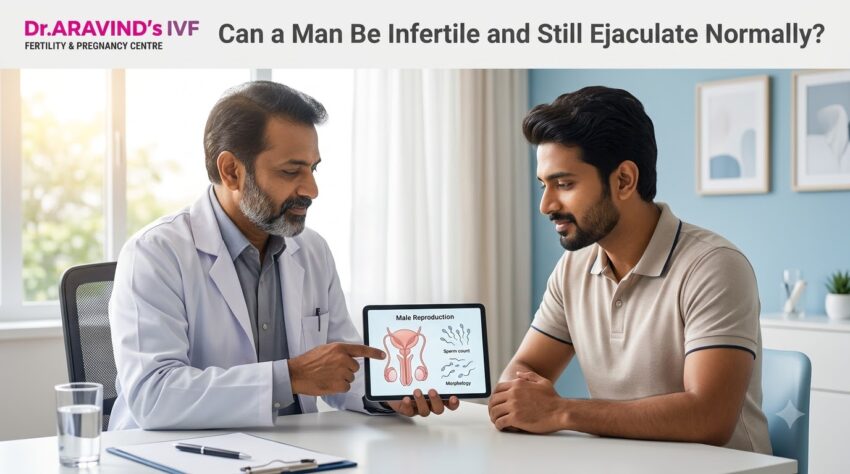
A man may produce and release semen normally while having a low sperm count, poor sperm movement, abnormal sperm shape, or another condition that affects conception. In many cases, these problems have no obvious physical symptoms.
Why Can a Man Ejaculate Normally but Have Fertility Problems?
Semen is the fluid released during ejaculation. It contains sperm along with fluids produced by glands such as the prostate and seminal vesicles. Fertility, however, depends largely on the health and function of the sperm contained within that fluid.
For example, a man may have a normal-looking ejaculation but produce very few sperm. Another man may produce enough sperm, but they may not move effectively enough to reach and fertilize an egg. Sperm may also have structural abnormalities that make fertilization more difficult.
This means that the appearance, amount, or force of ejaculation cannot reliably tell you whether sperm are healthy.
Common Causes of Male Fertility Problems
Several conditions can affect male reproductive health without stopping ejaculation.
Low sperm count: The testes may produce fewer sperm than expected. A lower count can reduce the chance that sperm will reach and fertilize an egg.
Poor sperm motility: Sperm need to move effectively. If many sperm move slowly or abnormally, reaching the egg may become more difficult.
Abnormal sperm morphology: Sperm can vary in shape and structure. A high proportion of abnormal forms may sometimes be associated with reduced fertility.
Varicocele: Enlarged veins around the testicle can affect the local environment of the testes and may be associated with reduced sperm production or quality.
Hormonal problems: Hormones such as testosterone, follicle-stimulating hormone, and luteinizing hormone help regulate sperm production. Hormonal disturbances can interfere with this process.
Reproductive tract blockage: Sperm may be produced normally but prevented from entering the semen because of a blockage in the reproductive tract.
Lifestyle and environmental factors: Smoking, heavy alcohol use, some recreational drugs, obesity, prolonged heat exposure, poor sleep, and certain workplace exposures may negatively affect sperm health.
What About Sexual Performance?
Normal sexual performance does not guarantee normal fertility. A man can have a healthy sex drive, achieve erections, and ejaculate normally while having an issue with sperm production or sperm function.
On the other hand, erectile or ejaculation difficulties can sometimes make conception harder because sperm may not be deposited into the vagina. These conditions should therefore be assessed separately rather than assuming that one automatically explains the other.
Fertility concerns can affect either partner, so both people may benefit from evaluation. A fertility specialist can determine whether the issue involves sperm production, sperm transport, sexual function, or another factor.
What Tests Can Confirm the Problem?
A semen analysis is usually one of the most important initial tests when male fertility is being evaluated. It can provide information about semen volume, sperm concentration, movement, and morphology.
Depending on the situation, a doctor may also recommend:
- A physical examination
- Hormone blood tests
- Scrotal ultrasound
- Tests for infections when appropriate
- Additional sperm testing in selected cases
- Genetic testing for certain sperm-production problems
If you are considering professional evaluation, an IVF Centre in Tamilnadu may provide fertility assessment and discuss appropriate treatment options based on the findings.
It is important not to diagnose yourself from symptoms alone. One semen analysis may also not tell the entire story because sperm production can vary over time. A doctor may recommend repeating the test when appropriate.
Can Male Fertility Problems Be Treated?
Treatment depends on the underlying cause. Some men may benefit from lifestyle changes, treatment of an identified medical condition, or surgery for selected problems such as certain varicoceles or blockages.
When natural conception remains difficult, assisted reproductive techniques may be considered. Depending on sperm count and quality, options can include intrauterine insemination or in-vitro fertilization, sometimes with intracytoplasmic sperm injection, where a single sperm is injected directly into an egg.
The appropriate approach should be based on medical evaluation rather than choosing a treatment simply because ejaculation appears normal.
When Should You See a Doctor?
If pregnancy has not occurred after 12 months of regular unprotected intercourse, a fertility evaluation is generally recommended when the female partner is under 35. If the female partner is 35 or older, evaluation is often recommended after six months. Earlier assessment may be appropriate when there are known reproductive problems, previous testicular surgery or injury, sexual difficulties, or other concerns.
Conclusion
Yes, a man can ejaculate normally and still have fertility difficulties. Ejaculation mainly shows that semen is being released; it does not confirm that sperm count, movement, shape, or function are normal.
If you are worried about Infertility in men, remember that many causes can be investigated and some can be treated or managed. A semen analysis and professional fertility assessment can provide much more useful information than judging fertility by ejaculation alone.