

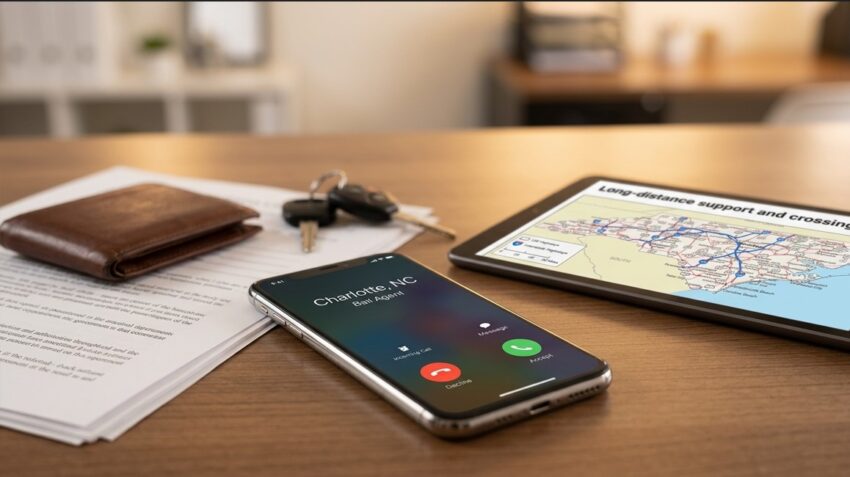
An arrest can become more complicated when the person in custody is in North Carolina while family members or friends live somewhere else. Distance can make it harder to visit the detention facility, gather information, arrange payments, and communicate with the person who has been arrested.
Fortunately, being outside North Carolina does not necessarily mean a family member cannot help with the bail process. People may be able to make arrangements remotely, but they should first gather accurate information and understand what responsibilities may come with the bond.
The process can vary depending on the circumstances of the arrest, the location of the person in custody, and the requirements connected with the particular case.
Start by Confirming Where the Person Is Being Held
The first practical step is finding out exactly where the arrested person is located.
A family member may hear about an arrest through a phone call, text message, or another person. Initial information is not always complete, particularly when the arrest has happened recently.
Before making arrangements, confirm:
- The person’s full legal name
- Date of birth
- Current detention location
- Booking information, if available
- Charges listed in the case
- Bail amount, if already established
- Any available court information
Accurate details are especially important when communication is happening from another state. A mistake in a person’s name or detention location can make it harder to locate the correct information.
Why Distance Can Make the Situation More Complicated
Someone living several states away may not know how the local process works. They may also be unfamiliar with the detention facility, court system, or bail bond procedures in the area.
Traveling immediately is not always practical. Work schedules, transportation costs, family responsibilities, and other commitments can make an in-person response difficult.
That is why remote communication becomes important.
Depending on the circumstances, a person outside North Carolina may need to communicate by telephone, provide identification or documents electronically, discuss payment arrangements, and coordinate with people who are physically closer to the person in custody.
The Difference Between Paying Bail and Arranging a Bond
People sometimes use the terms “bail” and “bond” interchangeably, but they can refer to different parts of the release process.
Bail generally refers to the financial amount or conditions established for release. A bail bond can involve a licensed bonding company providing a guarantee subject to an agreement and applicable requirements.
A family member who lives outside the state may want to ask what options are available instead of assuming that physically traveling to the courthouse or detention facility is required.
The exact process depends on the case and the agency handling the matter.
What Information May Be Needed From Someone Out of State?
A person arranging a bond remotely may be asked to provide personal and financial information. The specific requirements can vary.
Potentially useful information may include:
- Government-issued identification
- Contact information
- Information about the person in custody
- Employment or financial information when required
- Payment information
- Details about the relationship to the person being released
Not every situation requires the same documents. Before sending sensitive information, people should verify who they are communicating with and understand why the information is being requested.
Communication Should Be Clear From the Beginning
When a family member is hundreds of miles away, misunderstandings can happen easily.
For example, one person may believe that a bond has already been arranged while another person is still collecting the required information. Someone might also assume that the person has been released simply because paperwork has been submitted.
Clear communication helps prevent these problems.
It is useful to ask direct questions about what has already been completed, what remains outstanding, and what the expected next steps are. Families should also keep the contact information of the relevant bonding agency, detention facility, and attorney, when applicable.
Practical Issues for Families Living Outside North Carolina
A family member living in another state may need to coordinate several responsibilities at once.
One person may handle financial arrangements, while another relative may be closer to the person in custody and able to provide transportation or practical support after release.
Planning these responsibilities in advance can help.
For example, someone may need to arrange transportation from the detention facility after release. Another person may need to help the accused person contact an attorney or keep track of upcoming court dates.
The bond itself is only one part of the situation.
What Does an Out-of-State Bail Matter Involve?
For people researching Out-of-state bonds in Monroe, NC, the main concern is often how to arrange bail when the person providing assistance is physically located somewhere else.
The process can involve remote communication with a bail bond agency, supplying required information, reviewing an agreement, and handling payment or documentation without traveling to North Carolina. The exact requirements depend on the particular circumstances and the agency’s procedures.
People should ask about each step rather than assuming every remote bond works the same way.
Reviewing the Agreement Before Making a Commitment
Distance should not be a reason to rush through financial documents.
Anyone entering a bail bond agreement should have an opportunity to review the terms and ask questions. This can be particularly important when the person signing the agreement is not physically present in North Carolina.
Before agreeing, a person may want to clarify:
- The total financial responsibility
- Any fees or charges
- Payment requirements
- Responsibilities connected with the agreement
- Conditions that could affect the arrangement
- Procedures for communicating changes
- What happens if the defendant does not appear as required
The exact terms depend on the agreement. If a person does not understand a legal provision, they should consider obtaining appropriate legal advice before signing.
Helping the Person After Release
The family member arranging the bond may not be the same person who helps the defendant after release.
Someone local may need to assist with transportation, temporary accommodation, communication, or other practical needs. If the person lives outside the state and has no local support, this should be considered before release whenever possible.
The goal is not to predict what will happen in the case but to make sure basic arrangements are not overlooked.
A simple plan can answer questions such as:
- Who will pick the person up?
- Where will they go after release?
- How will they attend required appointments?
- Who will keep track of court dates?
- Who should be contacted if circumstances change?
Court Obligations Still Matter
Arranging a bond does not end the underlying case.
The person released from custody may have court appearances or other conditions that must be followed. Family members who helped arrange the bond should understand that the defendant remains responsible for complying with applicable requirements.
If someone moves between states after release, additional questions may arise. The person should obtain appropriate legal guidance before assuming that living elsewhere changes their court obligations.
Court notices and other official documents should be kept in a safe place, and dates should be recorded immediately.
Avoid Relying on Unverified Information
Online searches can produce general information about bail, but individual cases may have different requirements.
Families should be cautious about relying on social media comments, old articles, or advice from people who are unfamiliar with the case. A procedure that applied to another county or another type of charge may not apply to the current situation.
Official sources and qualified professionals are better places to confirm case-specific information.
This is especially relevant when the person arranging the bond is several states away and cannot easily verify information in person.
Questions to Ask a Bail Bond Agency
A short list of questions can make a remote conversation more productive.
A family member might ask:
- Can the bond be arranged by someone who lives outside North Carolina?
- What identification or documentation is required?
- Can documents be completed remotely?
- What payment methods are accepted?
- What financial obligations are connected with the agreement?
- What responsibilities will the person signing the agreement have?
- What information is needed about the person in custody?
- Who should be contacted if additional information becomes available?
These questions do not replace professional advice, but they can help a family member understand the practical process before making a commitment.
Keeping Everyone on the Same Page
A remote bail situation may involve several people: the defendant, relatives, friends, a bail bond agency, detention staff, and possibly an attorney.
Communication can become confusing when everyone has different information.
One useful approach is to keep a written record of important details. Families can record the bail amount, names of contacts, dates, documents submitted, and questions that still need answers.
This does not need to be complicated. A simple notes document or folder can be enough.
Keeping records also makes it easier to refer back to information when conversations happen across different time zones or on different days.
Thinking Beyond the Immediate Emergency
An arrest can create pressure to solve everything immediately. While arranging release may be the first priority, families should also consider what happens afterward.
The person may need legal representation, transportation, a place to stay, or help communicating with employers and family members. These are separate issues, but planning for them can make the period after release more organized.
Most importantly, the person should understand that release does not resolve the underlying case. Future legal obligations still need attention.
Conclusion
Handling a bail matter from another state can involve additional communication and planning, but accurate information and careful coordination can make the process easier to manage. Families should verify the case details, review financial obligations, and understand their responsibilities before entering a bond agreement. For those seeking assistance with a North Carolina bail matter, Ripley’s Affordable Bail Bonding LLC can be contacted to discuss bail bond assistance and the information needed for the situation.