
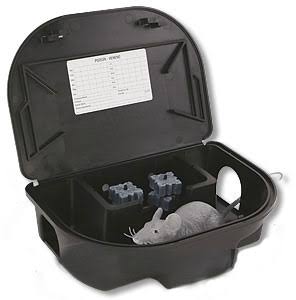
Rats are often associated with dumpsters, garbage areas, basements, and exterior walls, but plumbing systems can also provide an important pathway for sewer-based rodent activity. Damaged, deteriorating, or improperly installed plumbing may give rats access to buildings through sewer lines and other connected infrastructure.
A Sewer Rat Bait Station provides a specialized approach to this problem by bringing rodent monitoring and control directly into an appropriate plumbing clean-out. The Sewer Assassin™ 3-inch, 1-cap station is specifically designed for plumbing systems and can be installed in 3-inch clean-outs, with the product line also available in a 4-inch configuration.
For pest management professionals, this creates an opportunity to investigate rodent activity at a location that conventional exterior bait stations cannot directly reach.
What Is a Sewer Rat Bait Station?
A sewer rat bait station is a specialized rodent control station designed for installation within plumbing infrastructure rather than simply around the outside of a building.
The Sewer Assassin™ is designed to replace an existing clean-out cap and provide a controlled location for monitoring or appropriate pest-control products within the plumbing system. It can be used for both in-ground and in-wall clean-out applications.
This approach is particularly relevant when pest professionals suspect that rats are traveling through sewer or plumbing systems before entering a home or business.
Why Sewer-Based Rodent Control Matters
Traditional rodent stations are commonly positioned around exterior walls, landscaping, dumpsters, garages, and other areas where rodents travel. These locations remain useful, but they may not reveal what is happening below ground.
Sewer systems can provide rodents with concealed pathways. When plumbing is deteriorated, breached, damaged, or improperly installed, rats may potentially exploit those conditions to move toward structures.
The Sewer Assassin™ was developed specifically to address this overlooked pathway by allowing professionals to monitor and control rodent activity within plumbing clean-outs.
How the Sewer Rat Bait Station Works
The concept is straightforward for qualified pest management professionals.
An existing compatible clean-out is identified, and the existing cap can be replaced with the Sewer Assassin™ station. The station provides a secured location for a monitoring block or an appropriate control product.
The system can be configured for:
- In-ground clean-outs
- In-wall clean-outs
- 3-inch plumbing clean-outs
- 4-inch plumbing clean-outs
The manufacturer describes the station as functioning similarly to an exterior bait station while positioning it directly within the plumbing system.
This allows pest professionals to establish a monitoring point closer to the suspected source of sewer-based rodent activity.
Detecting Rodent Activity in Plumbing
One of the valuable aspects of a sewer rat bait station is its monitoring capability.
Not every rat sighting automatically proves that a sewer system is responsible. A professional investigation can help determine whether rodents are actually using plumbing as a pathway.
The Sewer Assassin™ can be used with a non-toxic monitoring approach to help establish whether rodent activity is present within the plumbing system. Continued monitoring can then help professionals evaluate changes in activity.
This can turn an assumption into useful evidence that supports a more informed pest management strategy.
A Practical Solution for Pest Management Professionals
The Sewer Assassin™ was designed specifically with pest management professionals in mind.
Instead of relying exclusively on exterior bait stations, professionals can incorporate plumbing-based monitoring into their existing rodent control programs when appropriate.
This can be particularly useful for properties where:
- Rats repeatedly return
- Rodent activity appears near drains
- Sewer-related entry is suspected
- Conventional exterior control has not fully resolved the issue
- Plumbing deterioration may be contributing to pest access
- Customers report unusual rodent activity involving toilets or drains
The goal is not to replace every conventional rodent control method. Instead, a sewer rat bait station adds another control and monitoring point to the professional’s toolkit.
Key Features of the Sewer Assassin™
The Sewer Assassin™ 3-inch station is constructed from ABS plastic with stainless-steel components intended for durability in plumbing environments. The product includes an 18-inch stainless-steel braided wire with stopper, crimp collars, a 6-inch stainless-steel threaded rod, stainless-steel wing nut, ABS spacer, and rubber plug.
These components are designed to secure the monitoring or treatment material inside the plumbing clean-out.
The station also features a cautionary statement on the clean-out cap, supporting proper identification and responsible use.
In-Ground and In-Wall Applications
Different plumbing configurations require different installation approaches.
In-Ground Installation
For an in-ground clean-out, the station can be positioned vertically within the plumbing access point. The manufacturer provides instructions for suspending the bait or monitoring material at the appropriate position inside the pipe.
In-Wall Installation
For an in-wall clean-out, the station can be installed horizontally. The threaded rod and spacer help position the treatment or monitoring material within the plumbing while allowing the clean-out cap to be secured.
Installation should be performed according to the manufacturer’s instructions and by appropriately qualified professionals.
Why Placement at the Source Can Be Valuable
One of the biggest advantages of a Sewer Rat Bait Station is its source-oriented design.
If rodents are using plumbing as an entry route, treating only the areas where they are eventually seen may leave part of the problem unaddressed.
A sewer-based station can provide a monitoring or control point within the suspected pathway itself.
This creates a more comprehensive strategy:
Identify → Monitor → Control → Inspect → Continue Monitoring
The process can help professionals understand whether sewer-based rodent activity is occurring and determine whether additional measures are necessary.
Sewer Rat Bait Station for Homes
Residential properties can experience sewer-related rodent activity, particularly when plumbing infrastructure has deteriorated or contains vulnerabilities.
Signs that may warrant further investigation can include:
- Repeated rat sightings indoors
- Rodent activity around drains
- Unusual activity near plumbing fixtures
- Recurring infestations despite exterior treatment
- Evidence of damaged or deteriorated plumbing
- Rodent activity concentrated around sewer-related areas
A sewer rat bait station should not be viewed as a substitute for repairing defective plumbing. If a plumbing defect is identified, the appropriate plumbing professional should evaluate and repair it.
Instead, the station can provide pest professionals with a tool for monitoring and controlling suspected sewer-based rodent activity.
Sewer Rat Bait Station for Commercial Properties
Commercial properties can face significant consequences from rodent activity. Restaurants, warehouses, apartment buildings, retail locations, offices, and other facilities may have multiple potential rodent entry points.
A sewer-based station can become part of a broader commercial pest management program where plumbing is identified as a potential pathway.
Professionals can combine plumbing monitoring with:
- Exterior rodent stations
- Structural inspections
- Sanitation improvements
- Waste management
- Entry-point exclusion
- Drainage evaluation
- Routine inspections
This integrated approach can help businesses address both visible and hidden sources of rodent activity.
Sewer Assassin™ and Other Sewer-Based Pests
Although the product is particularly relevant to sewer rat control, the manufacturer describes the Sewer Assassin™ as a tool for addressing other sewer-based pests as well, including American cockroaches and drain flies.
The station can accommodate different pest-management applications depending on the situation and the products being used.
This makes the concept useful beyond rodent control alone.
Professional Installation and Monitoring
A sewer rat bait station should be treated as a professional pest-management tool rather than a casual DIY product.
The manufacturer identifies the product for pest professional use and specifies that only rodenticides labeled for sewer use should be used where applicable. State and local requirements should also be checked before implementation.
Regular monitoring is an important part of the system. The manufacturer recommends frequent monitoring initially until activity slows or stops, followed by ongoing service to help identify renewed rodent or cockroach activity.
The Importance of Using the Correct Rodenticide
Not every rodenticide is appropriate for every environment.
When rodenticide is used in a plumbing system, the product must be labeled for the intended sewer application and used according to its label directions and applicable regulations.
This is an important distinction because plumbing environments can present unique conditions involving water, waste flow, access, and non-target exposure.
Professional pest managers should always verify product labeling, local requirements, and proper application procedures before treatment.
Sewer Rat Bait Station and Long-Term Prevention
A bait station can help manage rodent activity, but long-term prevention still requires attention to the conditions that allow rats to reach a property.
Potential contributing factors include:
- Deteriorating plumbing
- Broken or breached pipes
- Improper plumbing installation
- Accessible food waste
- Unsecured garbage
- Structural openings
- Poor drainage
- Outdoor shelter
- Damaged sewer connections
Where a plumbing defect is responsible for access, pest control and plumbing repair may need to work together.
Why Source-Focused Rodent Control Is Different
A conventional rodent control program often begins at the property perimeter. A sewer-focused program asks a different question:
Could rodents be entering through the plumbing itself?
That question can be especially important when a property experiences repeated rodent activity despite exterior control measures.
The Sewer Assassin™ provides a dedicated tool for investigating and addressing this potential pathway. Rather than waiting for rodents to appear inside a building, pest professionals can establish a control or monitoring point within an appropriate plumbing clean-out.
SewerAssassin: A New Approach to Sewer-Based Rodent Control
SewerAssassin is designed around the idea that effective rodent management begins with understanding how pests enter a property.
The Sewer Assassin™ bait station provides pest management professionals with a specialized option for plumbing-based rodent monitoring and control. Its durable ABS and stainless-steel construction, compatibility with standard 3-inch and 4-inch clean-outs, and ability to support both in-ground and in-wall installations make it a distinctive tool for sewer-focused pest management.
For professionals already providing exterior rodent services, incorporating sewer-based monitoring can expand the scope of their control strategy.
Final Thoughts
A Sewer Rat Bait Station offers a different way to approach rodent problems by focusing on a potential pathway that is often overlooked: the plumbing system.
The Sewer Assassin™ is specifically designed to transform compatible plumbing clean-outs into controlled rodent and sewer-pest monitoring or treatment points. It can be used in residential and commercial applications by pest management professionals and is available in configurations for 3-inch and 4-inch clean-outs.
For recurring rodent problems, identifying the source of activity can be just as important as treating the rodents themselves. By combining sewer-based monitoring with exterior control, exclusion, sanitation, plumbing evaluation, and ongoing inspections, professionals can develop a more comprehensive approach to rodent management.