
Dating apps and matchmaking services have built entire industries around the idea of compatibility. Find someone with the same interests, values, and life goals, and the relationship should work. There is truth in that framing, but decades of research on relationships tell a different story about what actually predicts success.
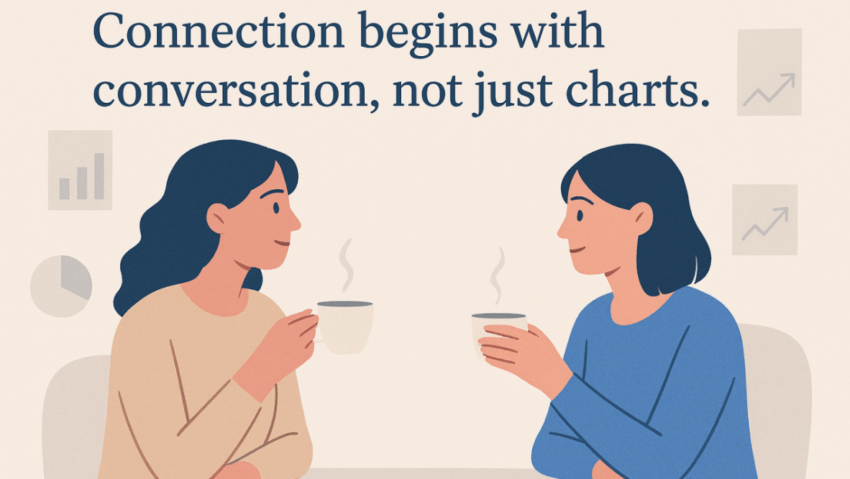
The strongest predictor of a lasting, satisfying relationship is not compatibility. It is how the two people communicate with each other, especially during hard moments. Two people with mismatched hobbies who communicate well tend to fare better than two people with aligned interests who cannot talk through difficulty.
This has real consequences for how people choose partners, how they think about their current relationships, and where they invest their energy when things get hard.
What the Research Actually Shows
John Gottman’s research at the University of Washington has followed thousands of couples over decades. His lab was able to predict, with over ninety percent accuracy, which couples would still be together years later. The predictors were not about shared interests or personality matches. They were about specific communication patterns.
Couples who lasted showed higher rates of what Gottman called turning toward each other during small daily interactions. They repaired after fights. They avoided the four patterns he called the Four Horsemen of relationship failure: criticism, contempt, defensiveness, and stonewalling. They spoke to each other with fondness, even during disagreements.
None of this had much to do with compatibility. Some of the most stable couples in the research had significant differences in temperament, hobbies, and background. What they shared was the ability to talk through those differences without damaging the connection.
Why Compatibility Is Not the Whole Story
Compatibility gets a lot of airtime because it is easy to measure. You can quiz two people on their preferences and calculate a percentage. You cannot quiz them on how they will handle their first fight after moving in together.
The truth is that compatibility on surface things does not predict much. Interests change. Hobbies come and go. Life circumstances shift. What was compatible at twenty-five may not be compatible at forty-five.
Deeper compatibility, in things like values, life direction, and emotional style, matters more. But even here, communication can bridge significant gaps. Two people with different values who can talk honestly about their differences often build stronger relationships than two people with matching values who avoid hard conversations.
What Relationship Communication Actually Is
Relationship communication is not just about the number of hours spent talking. It is about specific patterns.
Listening to Hear Rather Than to Respond
When your partner is telling you something, are you actually taking in what they are saying, or are you already forming your response? The first builds connection. The second builds distance.
Speaking About Your Own Experience
Statements that start with “I feel” or “I need” tend to land differently than statements that start with “you always” or “you never.” Owning your own experience invites conversation. Attacking their behavior invites defense.
Repairing After Ruptures
Every couple has moments that go sideways. What separates couples who last from those who split is if they come back and repair. A short apology, a touch on the arm, or a return to warmth closes the loop before the rupture can fester.
Making Space for Difference
Real communication requires being able to hear something you disagree with without collapsing or attacking. Couples who can hold differences without threat build stronger connections over time.
Turning Toward Small Bids
Most communication in relationships happens in small moments. Your partner mentions something they saw at work. You look up from your phone or you do not. That small choice, repeated hundreds of times a week, tells the relationship more about how you feel than any grand statement.
What Breaks Communication Over Time
Communication problems in relationships almost always develop the same way.
Small issues get swallowed rather than addressed. Over time, they collect. Then a small comment triggers a reaction that seems out of proportion but is actually a response to the collected material.
Stress affects everything. When people are tired, overworked, or dealing with something hard, the capacity for good communication drops. The reactive parts of the brain take over. Listening becomes harder. Defense becomes easier.
Old patterns from earlier relationships and family history play in. If you grew up in a home where certain kinds of conversations felt unsafe, those patterns come back in adult relationships. A partner who does not carry the same history may not know why their comment landed so hard.
Building Better Communication
The good news is that communication is a skill, not a personality trait. It can be built at any point in a relationship.
Small practices tend to help. This includes checking in regularly rather than only during problems, asking questions before assuming the worst, and repairing quickly rather than letting hurts sit.
Bigger practices help too. This includes being willing to look at your own patterns rather than only your partner’s, learning about the specific ways your history shows up in your reactions, and being honest about what you need rather than expecting your partner to guess.
Where Support Fits
For couples wanting to build better communication, working with counselors trained in couples work can help. Practices such as Artisan Counseling in Virginia work with couples across a range of situations, from those in early conflict to those trying to rebuild after years of buildup. The work is practical. It involves seeing the pattern, learning new responses, and practicing them in a safe setting before applying them to the harder moments at home.
Counseling is often most useful earlier than couples think to seek it. Getting help while both people still want to solve the pattern produces better outcomes than waiting until one person has stopped trying.
Words That Actually Build
Why Communication Matters More Than Compatibility is not glamorous. It is often the least exciting part of a relationship, especially in the early years when everything feels easy. Its importance shows up in the middle years, when the initial spark has settled and what is left is two people trying to live a life together. In those middle years, the couples who make it are the ones who talked their way through the hard parts. Compatibility helps, but communication carries.